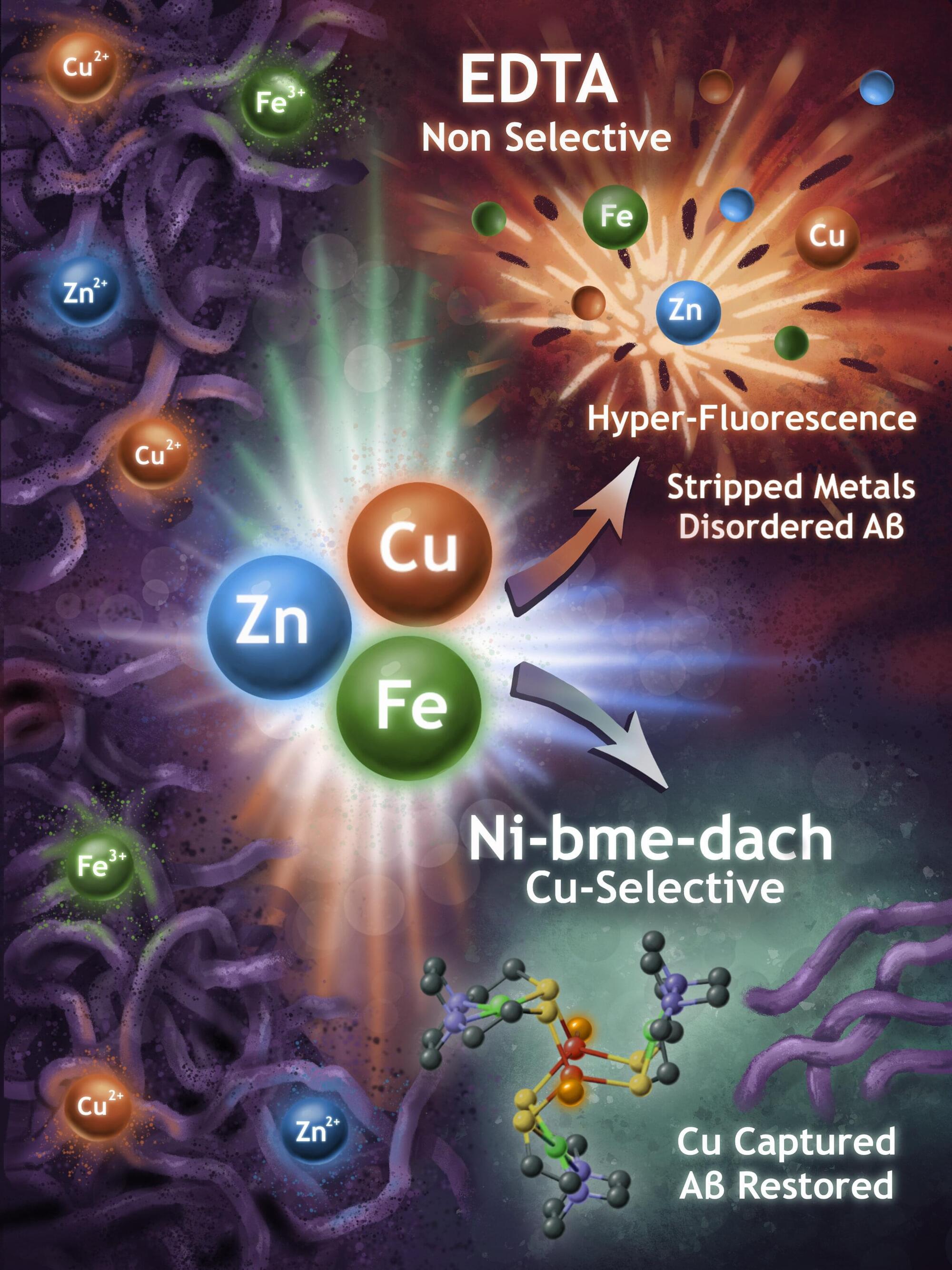
An Oregon State University scientist and a team of undergraduate students have uncovered real-time insights into a chemical process linked with Alzheimer’s disease, paving the way toward better drug designs. The researchers used a molecule measuring technique to observe in a laboratory setting how certain metals can promote the protein clumping that leads to the blocked neural pathways associated with Alzheimer’s. Led by Marilyn Rampersad Mackiewicz, associate professor of chemistry in the OSU College of Science, the research team also watched molecules known as chelators disrupt or reverse the clumping. The findings are published in ACS Omega.
Alzheimer’s disease is the most common form of dementia, a chronic condition of impaired cognitive function that affects large numbers of older adults and their loved ones. According to the Centers for Disease Control and Prevention, Alzheimer’s is the sixth-leading cause of death for people age 65 and older.
In Alzheimer’s patients, aggregations of amyloid-beta proteins interrupt brain cells’ ability to communicate with each other. The brain needs certain metals to work properly, but problems arise when the metals are present in unbalanced quantities.