Plus cryptography & cryonics, information theoretic death, and obstacles to acceptance of biostasis
Category: cryonics
Life Summit — Tomorrow.bio
Many people want to live longer than what is currently possible, but medical technology is not progressing fast enough. At Tomorrow Biostasis, we use the latest cryopreservation technology to medically preserve and protect you for as long as it is needed. When medical technology has solved the life extension and aging problems, you will be reanimated to enjoy an extended life.
On the YouTube channel of Tomorrow Biostasis you can find more information about the concepts of cryopreservation, cryonics, biostasis, vitrification, human revival, and more. We also provide you with practical information about signing up with Tomorrow Biostasis. Get ready to get an insight into the fascinating world of cryopreservation!
Visit our website at: https://bit.ly/35KsOIq Sign up for Biostasis: https://bit.ly/3hGb6sq Schedule a free Consultation: https://bit.ly/3IIwkll.
Also follow Tomorrow Biostasis on — Twitter: https://bit.ly/374bQ8z Instagram: https://bit.ly/3HFMpqr Facebook: https://bit.ly/3tt9bg3 LinkedIn: https://bit.ly/3hEtjX7 Reddit: https://bit.ly/3CeE8bY Discord: / discord.
#TomorrowBiostasis #Cryopreservation #Cryonics.
Tomorrow Biostasis | © Copyright 2021–2022 Music: Stock Music provided by LevelUpMusicSolutions, from Pond5.
Are We the Bootloader for Superintelligence?
A 90 minute interview about AI and our human future.
Dr. Hugo de Garis is a computer scientist, AI researcher, and former professor known for his early work on evolvable hardware, artificial brains, and the long-term risks of superintelligent machines. He coined and popularized the idea of the “Artilect War,” a future conflict between those who want to build godlike artificial intellects and those who believe such systems pose an existential threat to humanity. In the interview, he describes himself as trained in pure mathematics and theoretical physics, formerly a computer science professor, and now focused on broader questions about AI, cosmology, civilization, and the future of humanity.
The interview with Prof. Hugo de Garis centers on his long-standing warning that humanity may face an “Artilect War,” a civilizational conflict over whether to build godlike artificial intellects vastly superior to humans. De Garis argues that future computation, potentially extending from nanotech to femtotech and beyond, could produce minds trillions of trillions of times more capable than ours. He distinguishes between Cosmists, who want to build such beings to expand intelligence into the universe, and Terrans, who oppose them because superintelligence may eliminate or marginalize humanity. He personally remains torn, admiring the cosmic grandeur of posthuman intelligence while recognizing the existential danger.
The conversation also covers AI timelines, recursive self-improvement, AI alignment, the U.S.-China race, the Fermi paradox, simulation theory, cyborgs, cryonics, AI-generated content, the decline of universities, and the future of work. De Garis is impressed by current AI systems, treating them almost as intellectual companions, but he doubts that humanity can guarantee long-term control over recursively improving machines. The central theme is that the question “Should humanity build artilects?” may become the defining political and moral problem of the twenty-first century.
Website https://profhugodegaris.wordpress.com… is Roman Yampolskiy: https://grokipedia.com/page/roman_yam… Research papers: https://scholar.google.com/citations?… Books: AI: Unexplainable, Unpredictable, Uncontrollable https://www.amazon.com/Unexplainable-?tag=lifeboatfound-20… Considerations on the AI Endgame https://www.amazon.com/Considerations?tag=lifeboatfound-20… Artificial Superintelligence: A Futuristic Approach https://www.amazon.com/Artificial-Sup?tag=lifeboatfound-20… Artificial Intelligence Safety and Security https://www.amazon.com/Artificial-Int?tag=lifeboatfound-20… Social Media X https://twitter.com/romanyam FB / roman.yampolskiy IN
/ romanyam Ask Roman to speak at your event: https://www.romanyampolskiy.com/
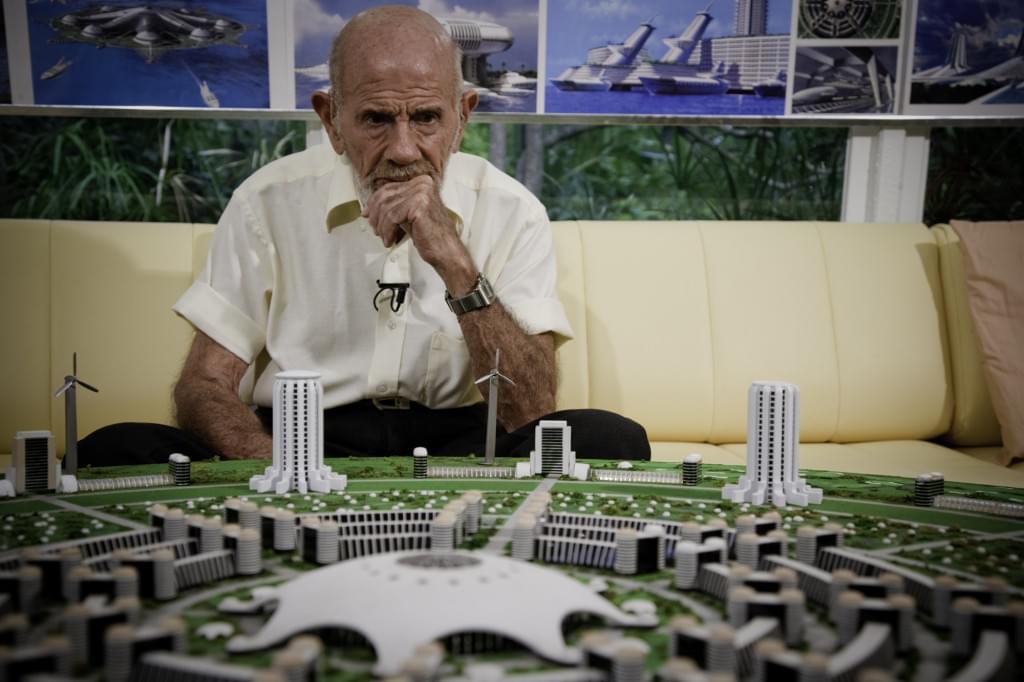
Jacque Fresco: Apply the Methods of Science to the Social System!
I have to confess something about this interview.
I really liked Jacque Fresco. Not as a thinker I was supposed to admire, but as a person: the humor, the humility, the scientific curiosity still burning at 97.
That made the disagreements harder, not easier.
Fresco spent almost a century arguing one idea. We apply the methods of #science to engineering, to medicine, to flight. Then we run our economies and our politics on opinion, tradition, and the preferences of the financial elite.
He thought we had it exactly inverted. Rigor for the machines, guesswork for the humans.
“Technology was never the hard part. The harder question is what kind of society we want it to serve.”
The Startup Freezing Humans For Tomorrow — Interview with Dr Emil Kendziorra, CEO of Tomorrow.bio
Join us for a deep-dive conversation with Dr Emil Kendziorra, CEO of Tomorrow.bio, as we explore the cutting edge of cryopreservation and medical biostasis.
Dr Kendziorra, who began his career in cancer research with a summa cum laude degree from the University of Göttingen, shares his remarkable journey from academic science to entrepreneurship, and ultimately to founding Tomorrow.bio — a company he considers his life’s work.
In this interview, he discusses the motivations behind his pivot from traditional longevity research to the frontier of cryomedicine, the operational and emotional lessons learned from cryopreserving over 20 human patients and 10 pets, and his vision for making this technology more accessible in the future.
Tomorrow.bio stands as Europe’s fastest-growing cryopreservation company, with over 800 members across 200+ cities and 45+ countries. The company offers both whole-body cryopreservation and brain-only preservation, using a transparent pricing model designed for long-term value.
With a recent €5 million Seed round and a mission to advance medical biostasis, Emil discusses the unique challenges and opportunities of operating in this space, the ethical considerations of a technology that may not achieve revival for decades, and his long-term vision for the field.
Key Points.
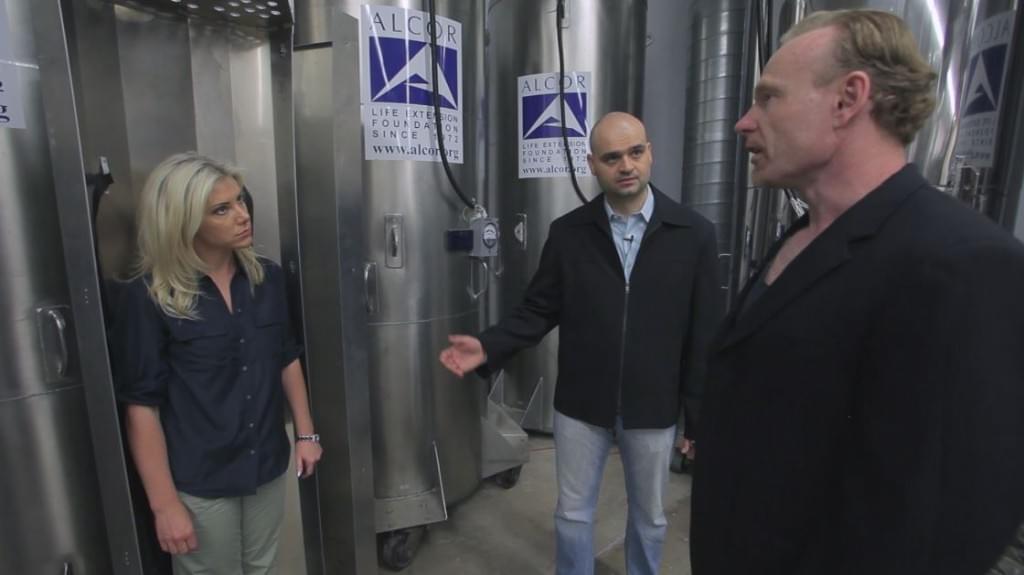
My Video Tour of Alcor and Interview with CEO Max More
What counts as death? And who gets to decide?
In the summer of 2013, I traveled to Scottsdale, Arizona to visit the Alcor Life Extension Foundation, the world’s leading cryonics organization, founded in 1972. CEO Dr. Max More gave me a full tour of the facilities and walked me through the entire process: from the moment clinical death is declared, through controlled cooling and vitrification, to the cryo-tanks holding (at the time) 117 patients in long-term storage.
I also asked him, somewhat selfishly, whether my big bald head would fit comfortably in a neuro-patient container.
After the tour, Max sat down with me for a 25-minute conversation that covered:
Affordability and the real cost of membership Why minimizing cooling delays after clinical death is critical, and what long-distance members do about it Preserving pets, because of course people ask Chemical brain preservation as an alternative path The importance of protecting the neuron’s microtubules The case for an X Prize style competition to reduce tissue damage Where cryonics sits inside the broader transhumanist project.
My favorite line from Max, the one I still come back to:
Dr. Gregory Fahy on major evidence for human cryopreservation
Dr. Fahy is the Vice President and Chief Scientific Officer at 21st Century Medicine, Inc, and has co-founded Intervene Immune, a company developing clinical methods to reverse immune system aging. He was the 2022–2023 president of the Society for Cryobiology. Dr. Fahy is the lead author of a recent paper, “Ultrastructural and Histological Cryopreservation of Mammalian Brains by Vitrification” – the main topic of our conversation.
In December of 2014, I worked with Dr. Fahy to cryopreserve Dr. Stephen Coles under special conditions, with his permission to extract brain samples and test them for preservation quality. We did not know what the results would be. If bad, that would be discouraging for cryonics. In fact, the results were excellent, as Dr. Fahy details.
We discuss the Coles case and the results of the cerebral cortical biopsy. The paper includes results from rabbit brains. We also discuss the relative resilience of the brain compared to other organs when it comes to fracturing; how cryoprotectants prevent ice formation even when the blood-brain barrier remains closed; whether biostasis organizations should be using blood-brain barrier opening agents; Dr. Fahy’s thoughts about chemical preservation and the role of a combination of cryo an chemo, known as aldehyde-stabilized cryopreservation (ASC), and more.
“An Update from the Sparks Brain Preservation” — April 30th Service
Our speaker this month is Jordan Sparks with the Sparks Brain Preservation organization in Oregon. Our event is in ZOOM Only, no in person meeting this month, meeting ins ZOOM on Thursday, April 30th, opening at 6:00 PM for our social hour, with the main event starting at 7:00 PM Eastern Time Jordan will tell us about his project, which was formerly the Oregon Brain Preservation, and before that Jordan formed Oregon Cryonics. This is an entirely different type of bio-stasis then cryonics. Their stated goal is to preserve the structure of the entire brain at a fine ultrastructural level. This includes the synaptic architecture as well as detailed molecular information such as protein post-translational modifications, cellular epigenetic patterns, and subcellular distributions of molecules.