As we evolve we become more intelligent, loving, creative and beautiful, so actually we are moving exponentially to have greater levels of the very properties we ascribe to god without limit. But we never become literally infinite but we are moving exponentially in that direction so that we become more God-like. Evolution is a spiritual process that moves us closer to God — Ray Kurzweil.
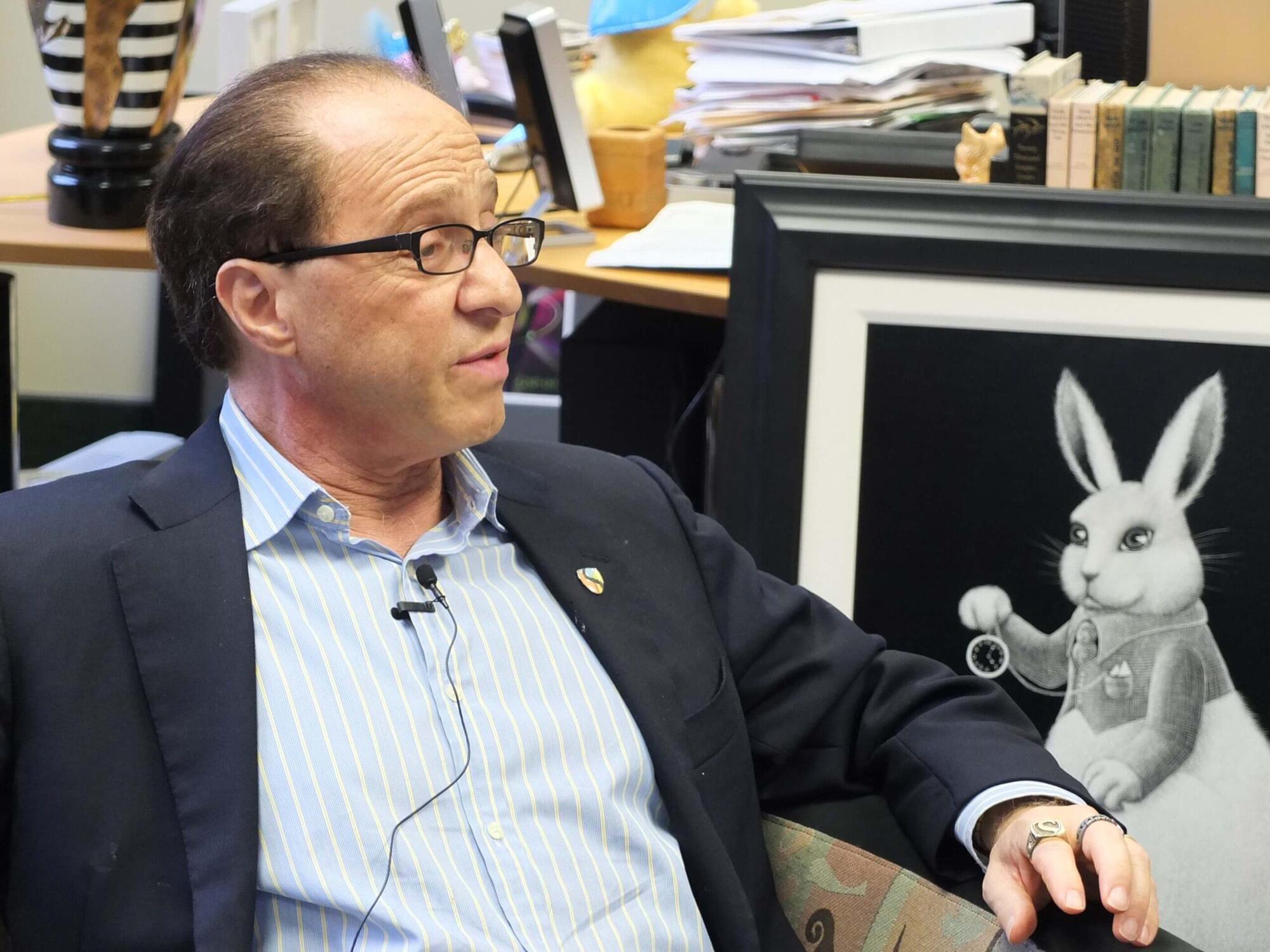
Ray Kurzweil is an acclaimed inventor, futurist and author. In his newest book, “The Singularity is Nearer,” he dives into the future date where humans and machines eventually merge. Jeff Glor has more from their conversation. “CBS Saturday Morning” co-hosts Jeff Glor, Michelle Miller and Dana Jacobson deliver two hours of original reporting and breaking news, as well as profiles of leading figures in culture and the arts. Watch “CBS Saturday Morning” at 7 a.m. ET on CBS and 8 a.m. ET on the CBS News app. Subscribe to “CBS Mornings” on YouTube: / cbsmornings Watch CBS News 24/7: https://cbsnews.com/live/ Download the CBS News app: https://cbsnews.com/mobile/ Follow “CBS Mornings” on Instagram: / cbsmornings Like “CBS Mornings” on Facebook: / cbsmornings Follow “CBS Mornings” on Twitter: / cbsmornings Subscribe to our newsletter: https://cbsnews.com/newsletters/ Try Paramount+ free: https://paramountplus.com/?ftag=PPM-0… For video licensing inquiries, contact: [email protected]
As AI infiltrates every aspect of our lives, who are some of the people behind this huge inflection point? In this special three-part series, you’ll hear from the people predicting and shaping our tech future. Host Manoush Zomorodi reports on the latest and revisits her favorite conversations with the minds crafting the digital world we live in today: what they’ve gotten right — and wrong — and where they think we’re headed next. Part 1 features futurist Ray Kurzweil and counterculture icon Stewart Brand. TED Radio Hour+ subscribers now get access to bonus episodes, with more ideas from TED speakers and a behind the scenes look with our producers. A Plus subscription also lets you listen to regular episodes (like this one!) without sponsors. Sign-up at plus.npr.org/ted.
Ray Kurzweil, the director of engineering at Google, has claimed that in just over 30 years, humans will be able to upload their entire minds to computers and become ‘digitally immortal’.
We are currently facing the possibility of achieving immortality for humans by 2030. This prediction comes from renowned futurist Ray Kurzweil, who has a history of making accurate predictions. He anticipates that with the ongoing progress in genetics, robotics, and nanotechnology, we will soon have nanobots coursing through our bloodstream, which could enable us to live forever. It’s truly remarkable to consider that this could be a reality within just seven years.
Nanobots, which are small robots sized between 50–100 nm in width, are currently being used in various clinical medical applications. They are used in research as DNA probes, imaging materials for cells, and targeted delivery vehicles for cells. According to Kurzweil, nanobots represent the future of medicine.
They will be capable of repairing our bodies at a cellular level, making us resistant to diseases, aging, and, ultimately death. Additionally, he theorizes that humans may be able to transfer their consciousness into digital form, leading to immortality.
Kurzweil co-founded Beyond Imagination in 2018 with Harry Floor, a scientist and film producer, to develop autonomous A.I. systems capable of physical labor. The company is building humanoid robots aimed at addressing labor shortages in sectors such as health care and agriculture. Its advisory board includes motivational speaker Tony Robbins, former Qualcomm CEO Paul Jacobs, and former Paramount Pictures CEO James Gianopulos.
Between 2018 and 2019, the startup raised $4.2 million in seed funding and was most recently valued at $25 million, per Crunchbase. Reuters reported that its upcoming valuation could reach $500 million, with Gauntlet Ventures—a Dallas-based venture capital firm—expected to be the sole investor in the new round.
Ray Kurzweil, one of the world’s leading futurists, has made hundreds of predictions about technology’s future. From portable devices and wireless internet to brain-computer interfaces and nanobots in our bloodstream, Kurzweil has envisioned a future that sometimes feels like science fiction—but much of it is becoming reality.
In this video, we explore 7 of Ray Kurzweil’s boldest predictions:
00:00 — 01:44 Intro.
01:44 — 02:42 Prediction 1: Portable Devices and Wireless Internet.
02:42 — 03:34 Prediction 2: Self-Driving Cars by Early 2020s.
About us: TWiT.tv is a technology podcasting network located in the San Francisco Bay Area with the #1 ranked technology podcast This Week in Tech hosted by Leo Laporte. Every week we produce over 30 hours of content on a variety of programs including Tech News Weekly, MacBreak Weekly, Windows Weekly, Security Now, Intelligent Machines, and more. TWiT may earn commissions on certain products.
Join Club TWiT for Ad-Free Podcasts! Support what you love and get ad-free shows, a members-only Discord, and behind-the-scenes access. Join today: https://twit.tv/clubtwit.
What happens when AI surpasses human intelligence, accelerating its own evolution beyond our control? This is the Singularity, a moment where technology reshapes the world in ways we can’t yet imagine. Futurist Ray Kurzweil predicts that by 2045, AI will reach this point, merging with human intelligence through Brain-Computer Interfaces (BCIs) and redefining the future of civilization. But as we move closer to this reality, we must ask: Will the Singularity be humanity’s greatest leap or its greatest risk? Chapters. 00:00 — 00:48 Intro. 00:48 — 01:51 Technological Singularity. 01:51 — 05:09 Kurzweil’s Predictions and Accuracy. 05:09 — 07:32 The Path to the Singularity. 07:32 — 08:51 Brain-Computer Interfaces (BCIs) 08:51 — 12:14 The Singularity: What Happens Next? 12:14 — 14:14 The Concerns: Are We Ready? 14:14 — 15:11 The Countdown to 2045 The countdown has already begun. Are we prepared for what’s coming? #RayKurzweil #Singularity #AI #FutureTech #ArtificialIntelligence #BrainComputerInterface