Toggle light / dark theme

Get the latest international news and world events from around the world.

Log in for authorized contributors

Blue jean dye could make batteries greener

Sustainability is often described in shades of green, but the future of clean energy may also carry a hint of deep blue. Electric vehicles and energy storage systems could soon draw power from a familiar pigment found in denim.

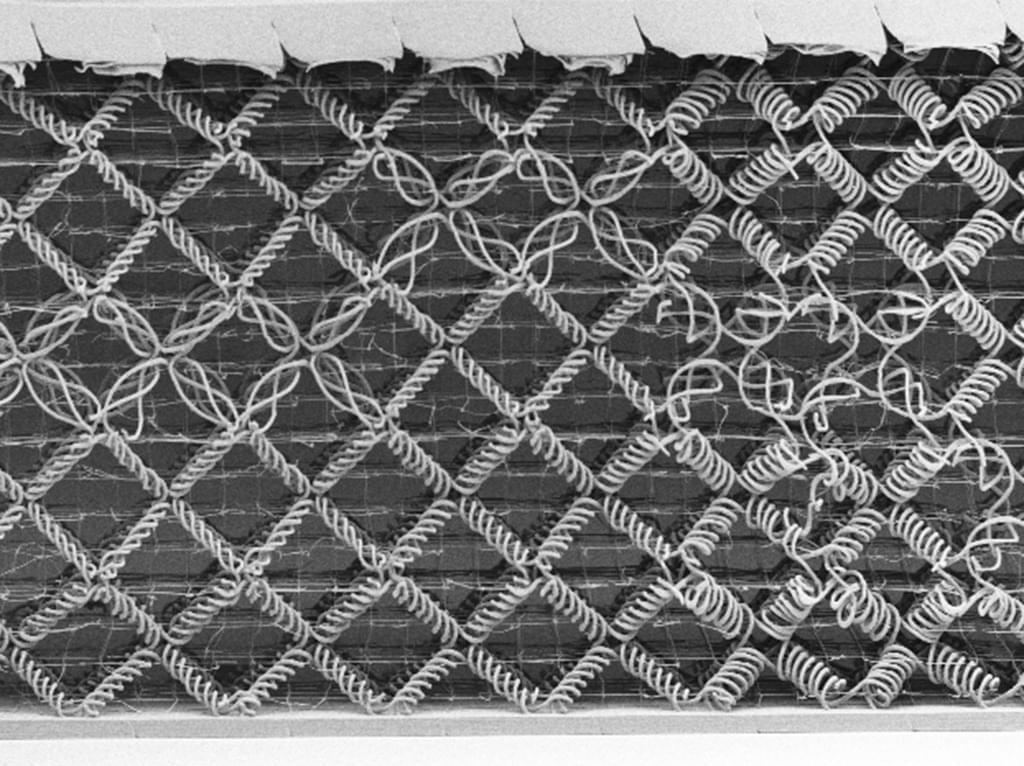
Concordia researchers have found that indigo, the natural dye used to color fabrics for centuries, can help shape the future of safe and sustainable batteries. In a study published in Nature Communications, the team revealed that the common substance supports two essential reactions inside a solid-state battery at the same time. This behavior helps the battery hold more energy, cycle reliably and perform well even in cold conditions.

“We were excited to see that a natural molecule could guide the battery chemistry instead of disrupting it,” says Xia Li, the study’s lead author and associate professor in the Department of Chemical and Materials Engineering. “Indigo helps the battery work in a very steady and predictable way. That is important if we want greener materials to play a role in future energy systems.”

Global shift to sustainable pest management expected to yield long-term benefits

What would happen if farmers around the globe were to switch over to sustainable pest management? An international study headed by the University of Bonn and ETH Zurich focused on precisely this question. The study is based on assessments provided by more than 500 leading experts from around the world who work in various disciplines from ecology to economics.

Sum-frequency microscope can image an invisible 2D material

Researchers from the Physical Chemistry and Theory departments at the Fritz Haber Institute have found a new way to image layers of boron nitride that are only a single atom thick. This material is usually nearly invisible in optical microscopes because it has no optical resonances.

Reconfigurable platform slows lights for on-chip photonic engineering

Integrated circuits are the brains behind modern electronic devices like computers or smart phones. Traditionally, these circuits—also known as chips—rely on electricity to process data. In recent years, scientists have turned their attention to photonic chips, which perform similar tasks using light instead of electricity to improve speed and energy efficiency.

Icy hot plasmas: Fluffy, electrically charged ice grains reveal new plasma dynamics

When a gas is highly energized, its electrons get torn from the parent atoms, resulting in a plasma—the oft-forgotten fourth state of matter (along with solid, liquid, and gas). When we think of plasmas, we normally think of extremely hot phenomena such as the sun, lightning, or maybe arc welding, but there are situations in which icy cold particles are associated with plasmas. Images of distant molecular clouds from the James Webb Space Telescope feature such hot–cold interactions, with frozen dust illuminated by pockets of shocked gas and newborn stars.

Now a team of Caltech researchers has managed to recreate such an icy plasma system in the lab. They created a plasma in which electrons and positively charged ions exist between ultracold electrodes within a mostly neutral gas environment, injected water vapor, and then watched as tiny ice grains spontaneously formed.

They studied the behavior of the grains using a camera with a long-distance microscope lens. The team was surprised to find that extremely “fluffy” grains developed under these conditions and grew into fractal shapes—branching, irregular structures that are self-similar at various scales. And that structure leads to some unexpected physics.

Electrons stay put in layers of mismatched ‘quantum Legos’

Electrons can be elusive, but Cornell researchers using a new computational method can now account for where they go—or don’t go—in certain layered materials.

Physics and engineering researchers have confirmed that in certain quantum materials, known as “misfits” because their crystal structures don’t align perfectly—picture LEGOs where one layer has a square grid and the other a hexagonal grid—electrons mostly stay in their home layers.

This discovery, important for designing materials with quantum properties including superconductivity, overturns a long-standing assumption. For years, scientists believed that large shifts in energy bands in certain misfit materials meant electrons were physically moving from one layer to the other. But the Cornell researchers have found that chemical bonding between the mismatched layers causes electrons to rearrange in a way that increases the number of high-energy electrons, while few electrons move from one layer to the other.

Observing ultrafast magnetic domain changes at the nanoscale with soft X-rays

Scientists at the Max Born Institute have developed a new soft X-ray instrument that can reveal dynamics of magnetic domains on nanometer length and picosecond time scales. By bringing capabilities once exclusive to X-ray free-electron lasers into the laboratory, the work paves the way for routine investigations of ultrafast processes of emergent textures in magnetic materials and beyond.

A dropped fridge magnet offers a simple glimpse into a complex physical phenomenon: although it appears undamaged on the outside, its holding force can weaken because its internal magnetic structure has reorganized into countless tiny regions with opposing magnetization, so-called magnetic domains.

These nanoscale textures are central to modern magnetism research, but observing them at very short time scales has long required access to large-scale X-ray free-electron laser (XFEL) facilities.

Ramanujan’s 100-Year-Old Pi Formula That Hides the Secrets of the Universe

A new study reveals that Srinivasa Ramanujan’s century-old formulas for calculating pi unexpectedly emerge within modern theories of critical phenomena, turbulence, and black holes. In school, many of us first encounter the irrational number π (pi) – rounded off as 3.14, with an infinite number o

/* */