Toggle light / dark theme

Get the latest international news and world events from around the world.

Log in for authorized contributors

Temporal lobe epilepsy: A new strategy to correct abnormal electrical activity

Many patients suffer from epilepsy that cannot be controlled by current medications. Surgical removal of epileptogenic brain regions is effective in only about half of cases, and not all patients are eligible for the procedure. For these individuals, therapeutic options remain severely limited. Researchers from the Paris Brain Institute and the Institut du Fer à Moulin in Paris have now taken an important step forward: they have identified two molecules capable of reducing seizure frequency by targeting a mechanism that has so far received little attention. Their findings are published in Proceedings of the National Academy of Sciences.

For the brain to function normally, it must continuously regulate its electrical activity. One of the key mechanisms involved is GABAergic signaling, a natural inhibitory system that controls neuronal activity and prevents the electrical bursts that characterize epileptic seizures. This braking system depends on a delicate balance: the concentration of chloride inside neurons.

An ion transporter known as KCC2 is responsible for removing excess chloride from nerve cells. When it functions poorly—as observed in many neurological disorders, including mesial temporal lobe epilepsy, the most common form of focal epilepsy in adults—chloride accumulates inside neurons. As a result, GABAergic signals, instead of inhibiting neuronal activity, can paradoxically excite it.

Material previously thought to be quantum is actually a new, non-quantum state of matter

Magnetic materials in a quantum spin liquid phase are of great interest in the pursuit of exotic state of matter and quantum computation. But in the quantum realm, things are not always what they seem. A study, published in Science Advances and co-led by Rice University’s Pengcheng Dai, found that the material cerium magnesium hexalluminate (CeMgAl11 O19) was not actually in a quantum spin liquid phase despite evidence suggesting it was.

“The material had been classified as a quantum spin liquid due to two properties: observation of a continuum of states and lack of magnetic ordering,” said Bin Gao, co-first author and a research scientist at Rice. “But closer observation of the material showed that the underlying cause of these observations wasn’t a quantum spin liquid phase.”

Water-window X-rays without a synchrotron: How graphite flakes could shrink bioimaging tools

Researchers from Nanyang Technological University, Singapore (NTU Singapore) have found a new way to produce X-rays with wavelengths in what is called the “water window.” This new method holds promise in making bioimaging X-ray machines smaller and more flexible to use.

Water-window X-rays are useful for bioimaging because they visualize biological cells at high contrast without staining them or requiring potentially damaging preparation.

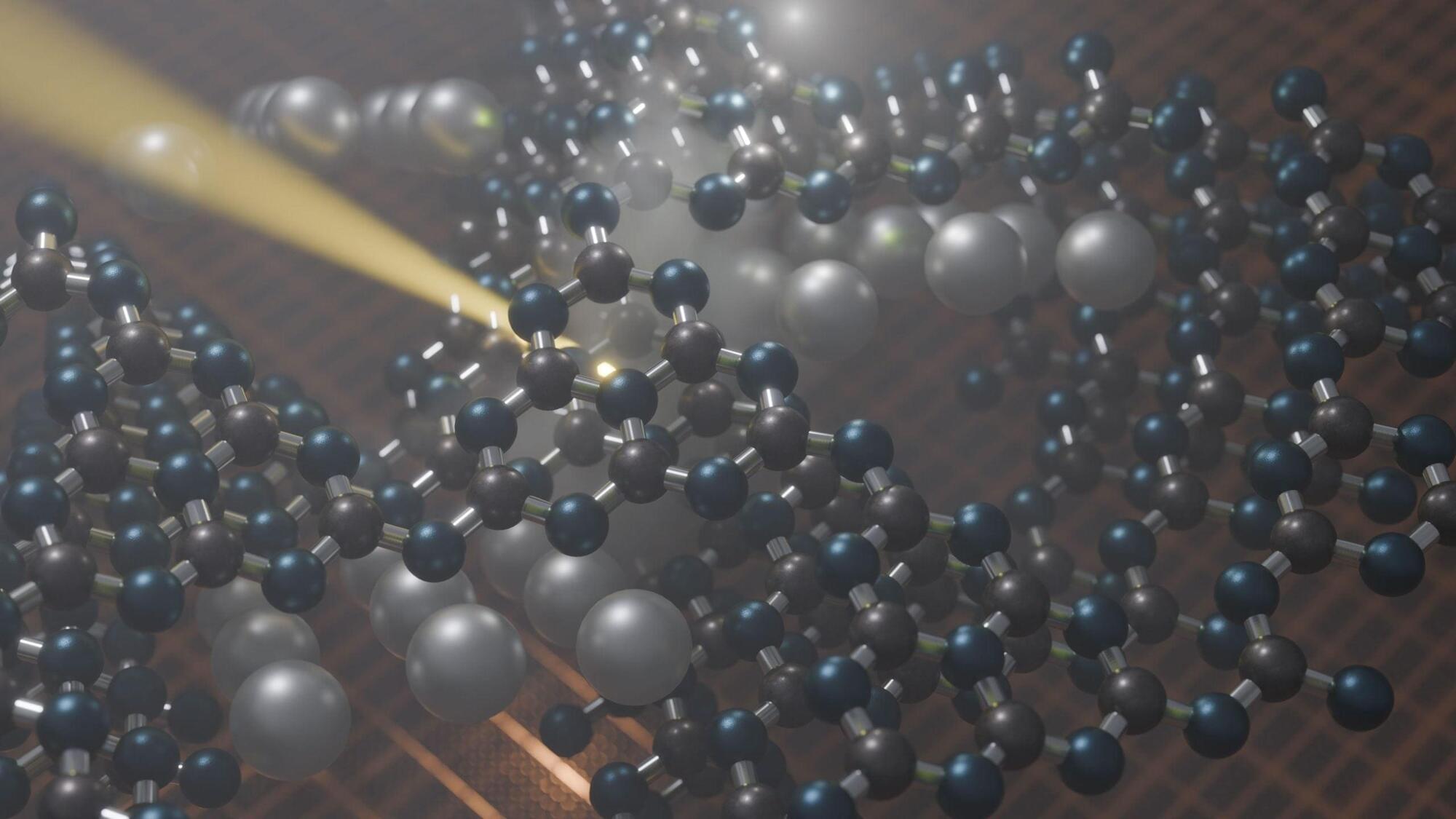
However, some tabletop machines only produce radiation in a fixed range of energies, so more machines are needed if X-rays of varying energies are required to improve image contrast. Even then, they cannot cover the full spectrum of energies in the water window. There are single machines that can flexibly produce X-rays of different energies, but these are expensive synchrotrons larger than a house and difficult for most researchers to access.

Large area MoS₂ reduces energy loss in magnetic memory films

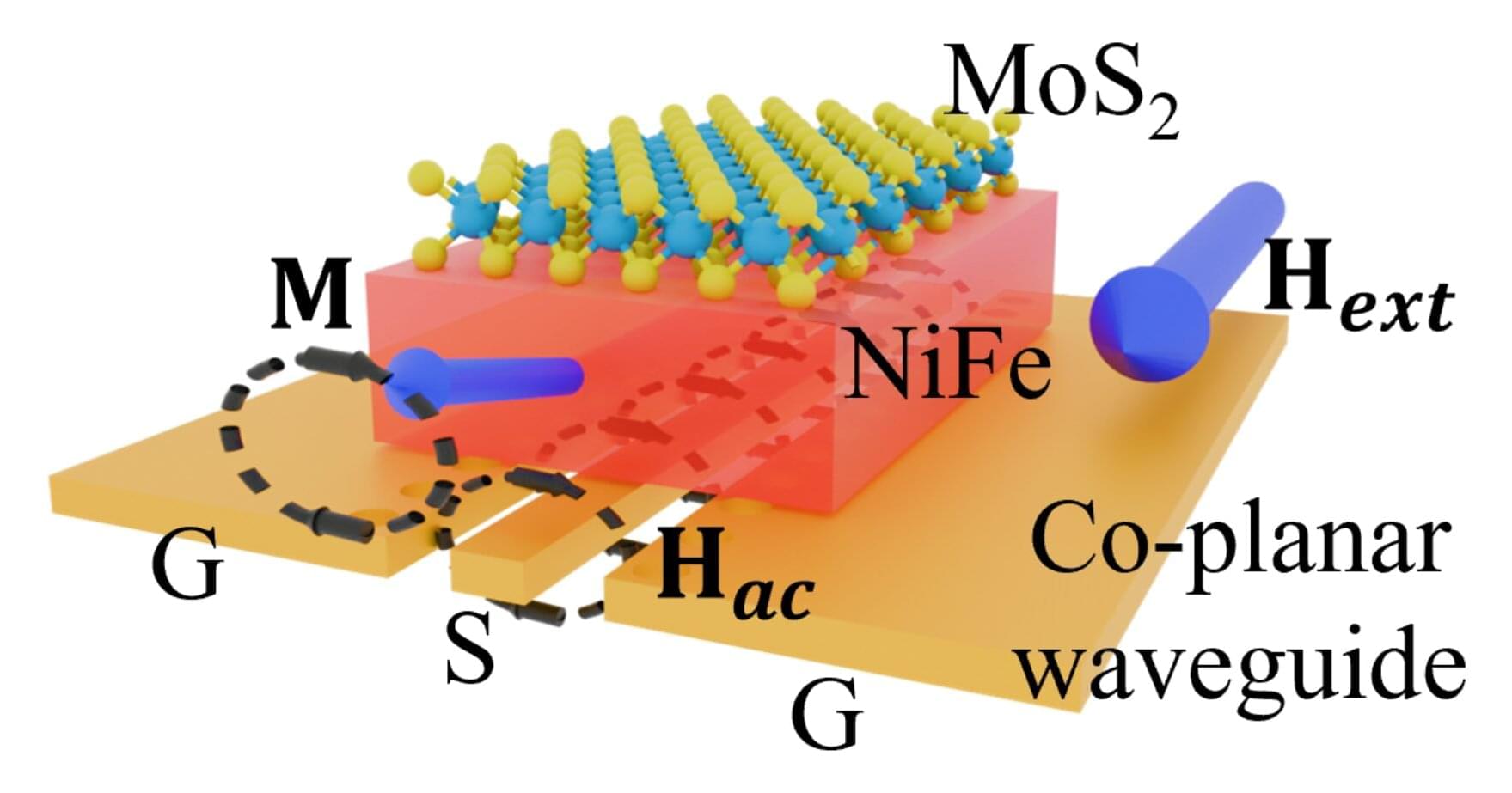
Scientists at the University of Manchester have discovered that placing magnetic films on atomically thin molybdenum disulfide (MoS₂) fundamentally changes how they lose energy, a finding that could bring 2D‑material spintronics a step closer to real devices. The team found that growing a widely used magnetic alloy, permalloy, on ultra‑thin MoS₂ alters the film’s internal crystal structure, changing how and where energy is lost as magnetic spins move. By separating energy losses that occur at the surface of the film from those arising within its internal structure, the researchers provide new design insights for devices that use two‑dimensional (2D) materials to control magnetism more efficiently.

Crucially, the work uses large‑area, manufacturing‑compatible MoS₂, showing that these effects are not confined to laboratory‑scale samples but are relevant for real, scalable spintronic technologies. The study, published in Physical Review Applied, demonstrates that transition‑metal dichalcogenides (TMDs) can alter the fundamental properties of magnetic films. The results highlight the importance of careful comparison with control materials when assessing the impact of 2D layers on magnetic behavior.

Spintronics is an alternative to conventional electronics that uses not only the charge of electrons, but also their spin, to store and process information. This approach underpins emerging technologies for magnetic memory and has potential applications in energy‑efficient, high‑speed computing. A major challenge in spintronics, however, is energy loss: as magnetic spins move, some energy is inevitably dissipated as heat, limiting device speed and efficiency.

Light-guided ‘optovolution’ evolves proteins that switch states on schedule

EPFL researchers have developed a light-based method that can produce proteins that switch states, respond to signals, and even compute, using light and the cell cycle.

Evolution is biology’s powerful method of engineering. It works by generating many variants of DNA, RNA, and proteins inside cells and letting nature “select” the organism that performs best. Early farmers started taking advantage of evolution by interfering with natural selection and letting only the most productive livestock and crops mate.

In laboratories, researchers have developed methods for directed evolution of proteins, especially enzymes and antibodies, that are used in household detergents, medicine, and industry.

Scientists Spin Molecules Inside a Frictionless Superfluid for the First Time

A newly designed optical centrifuge allows scientists to control molecular rotation inside superfluid helium nano-droplets. Physicists have developed a new version of an optical centrifuge that can control how molecules rotate while they are suspended inside liquid helium nano-droplets. The advan

Scientists Map the Hidden Chemistry of Solar-Powered Catalysts

A new computational approach reveals how subtle structural changes in polyheptazine imides can dramatically influence their ability to convert sunlight into chemical energy. Photocatalysis offers a promising way to convert abundant sunlight into useful chemical energy. Among the materials attract

Rethinking the “Goldilocks Zone”: Astronomers May Have Been Looking for Life in the Wrong Places

A new study challenges the traditional boundaries of the habitable zone, showing that liquid water could exist on the dark sides of tidally locked planets or beneath thick ice on distant worlds. For decades, the search for alien life has been guided by a simple idea: find planets in the habitabl

/* */