🚨 THE UNIVERSE NEVER FORGETS. NOT A SINGLE MOMENT. You burned a book. The words are gone. The pages are ash. But physics says every letter still exists — scattered across trillions of particles, encoded in the quantum state of reality. And it’s not just books. Every breath you’ve ever taken. Every word you’ve ever spoken. Every person you’ve ever lost. The information is still here. Right now. Permanently.
🔴 WHAT YOU’LL DISCOVER:
🔴 Why burning something doesn’t destroy its information.
🔴 How Stephen Hawking lost the biggest bet in physics history.
🔴 The black hole war that nearly broke quantum mechanics.
🔴 Why spacetime itself is made of information.
🔴 What this means about death — and why nothing truly disappears.
⚠️ WARNING: After this video, you will never look at destruction the same way again.
Like and subscribe for more reality-breaking physics.
physics, quantum mechanics, information paradox, black holes, Hawking radiation, holographic principle, entropy, universe, science, reality, quantum information, spacetime, Leonard Susskind, Stephen Hawking, ER EPR.
Get the latest international news and world events from around the world.
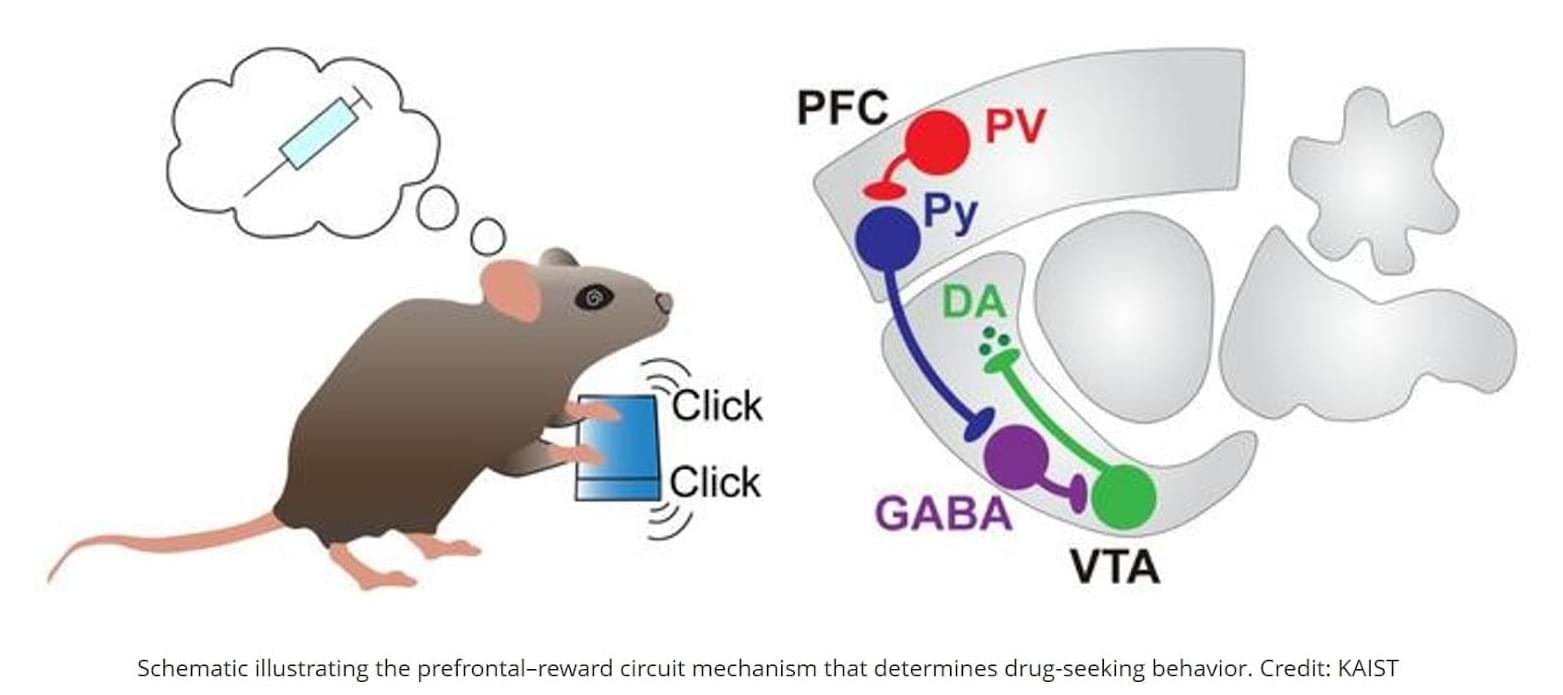
Brain’s addiction circuit identified!
The prefrontal cortex (PFC) of our brain can properly perform its “braking” function to suppress impulses when excitatory and inhibitory signals are in balance. To investigate how chronic drug exposure disrupts this balance, the research team conducted cocaine administration experiments on mice. During this process, they tracked when inhibitory neurons in the PFC were activated and how they sent signals to downstream brain regions.
The experimental results showed that parvalbumin (PV) cells, which account for about 60–70% of the inhibitory neurons in the PFC, were highly active when the mice attempted to seek cocaine. However, when “extinction training”—training to stop seeking the drug—was conducted, the activity of these cells significantly decreased. This demonstrates that the activity patterns of PV cells are not permanently fixed by addiction but can be readjusted through the extinction process.
The research team confirmed that artificially suppressing PV cell activity significantly reduced cocaine-seeking behavior in mice. Conversely, activating these cells caused the drug-seeking behavior to persist even after the extinction process. This effect was specifically observed in drug-addiction behavior and did not appear with general rewards like sugar water. Furthermore, this phenomenon was not observed in somatostatin (SOM) cells—another type of inhibitory neuron—indicating that PV cells selectively regulate drug addiction behavior.
The team also identified the specific brain circuit through which these PV cells operate. Signals originating from the prefrontal cortex are transmitted to the reward circuit of the Ventral Tegmental Area (VTA), a key brain region related to reward. This pathway emerged as the central channel for regulating addiction behavior, determining whether or not to seek the drug again. In this process, PV neurons act as a “regulatory switch,” controlling the flow of signals to influence dopamine signaling and deciding whether to maintain or suppress addictive behavior. ScienceMission sciencenewshighlights.
Drug addiction carries an extremely high risk of relapse, as cravings can be reignited by minor stimuli even long after one has stopped using. Previously, this phenomenon was attributed to a decline in the function of the prefrontal cortex (PFC), which regulates impulses. However, a joint international research team has recently revealed that the cause of addiction relapse is not a simple decline in brain function, but rather an imbalance in specific neural circuits.
The researchers have identified the core principle by which specific inhibitory neurons in the prefrontal cortex regulate cocaine-seeking behavior.
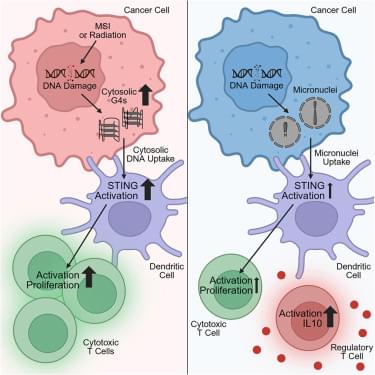
Cytosolic DNA structures produced by mismatch repair deficiency coordinate anti-tumor immunity in colorectal cancer
Mosley et al. investigate the role of cytosolic DNA structure in activation of cGAS/STING by MSI colorectal cancers. They find MSI cytosolic DNA is enriched in G-quadruplexes, leading to more effective cGAS/STING activation. Micronuclei are less effective at activating cytotoxic T cells through cGAS/STING but increase IL-10 and Treg activation.
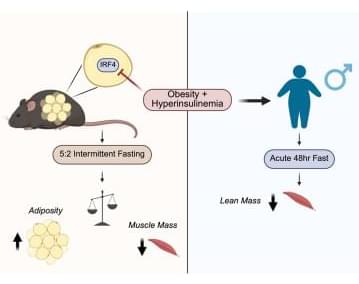
Insulin and adipocyte IRF4 promote fat retention over muscle preservation during intermittent fasting in obesity
Marko et al. show that elevated insulin in obese mice suppresses adipocyte IRF4, which governs fat versus muscle preservation during 5:2 intermittent fasting (IF) with or without caloric restriction. During an acute fast in humans, obesity and elevated insulin promoted lean mass loss in males but not females.
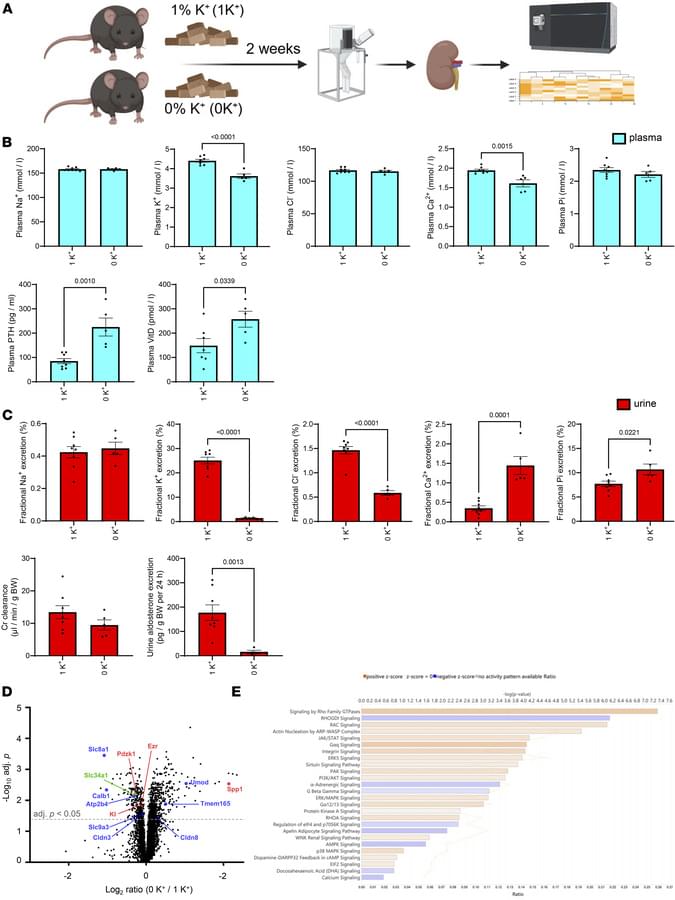
Important for the prevention and management of mineral and bone disorders from chronic electrolyte imbalance👇
https://doi.org/10.1172/jci.insight.
Robert A. Fenton & team show that a diet low in potassium causes bone loss in mice, effects that are attributable to altered calcium absorption by the kidney.
The figure shows deep learning instance segmentation model to identify kidney tubules and indicates low dietary K+ intake alters the abundance of the calcium-sensing receptor.
1Department of Biomedical Sciences, University of Veterinary Medicine, Vienna, Austria.
2Department of Biomedicine, Aarhus University, Aarhus, Denmark.
3Department of Medicine, Division of Nephrology, Johns Hopkins University School of Medicine, Baltimore, Maryland, USA.
The Speculative Evolution of Project Hail Mary
Project Hail Mary, a story by Andy Weir (author of The Martian), features some of the most creative speculative evolution scenarios in modern science fiction. With the release of the film adaptation starring Ryan Gosling, now seemed like a great time to explore the speculative biology of the aliens in this story: the Astrophage and the Eridians (Rocky’s species).
The Artists:
Wyatt Andrews Workshop: / wyatt_andrews_workshop.
Corax. Lara / Corax. Corvid: / corax.lara.
/ corax.corvid.
📰 Subscribe to 7 Days of Science: / @7daysofscience.
👕 Visit our merch store: https://ben-g-thomas-shop.fourthwall.com.
⭐ Become a Channel Member or support us on Patreon for behind-the-scenes, bloopers, extra adventures and more!
Become a Member: / @bengthomas.
Join the 7 Days of Science Patreon: / 7daysofscience.
Join our Discord server: / discord.

Scp: gallionic
Check out the Kickstarter page and help us make this project a reality: https://www.kickstarter.com/projects/glnc/scp-gallionic
Our goal is to make a full 20 minute long animated SCP short film, and have been preparing the groundwork for it for over two years now! Finally, we get to share this with the whole world, in the hopes to make this project a reality!
Based on the SCP wiki, licensed under CC BY-SA 4.
Read more