Toggle light / dark theme

Get the latest international news and world events from around the world.

Log in for authorized contributors

Skin-deep microneedle sensor tracks drug clearance and reveals early kidney and liver dysfunction

Wearable technologies are starting to reshape how people manage health. Continuous glucose monitors that measure blood sugar levels in diabetes patients have already shown the power of tracking an important molecule in real time. The next leap is to track other medically important molecules. However, doing so is far more difficult because most of those molecules are present at much lower concentrations than glucose.

One area such wearable technologies could transform is drug therapy. Many powerful medications are still managed through blood tests that offer only occasional snapshots of how a patient’s body is processing treatment. For drugs that must be dosed precisely to avoid harm, clinicians can miss the point at which dosing becomes ineffective or begins to threaten the organs responsible for processing the drug.

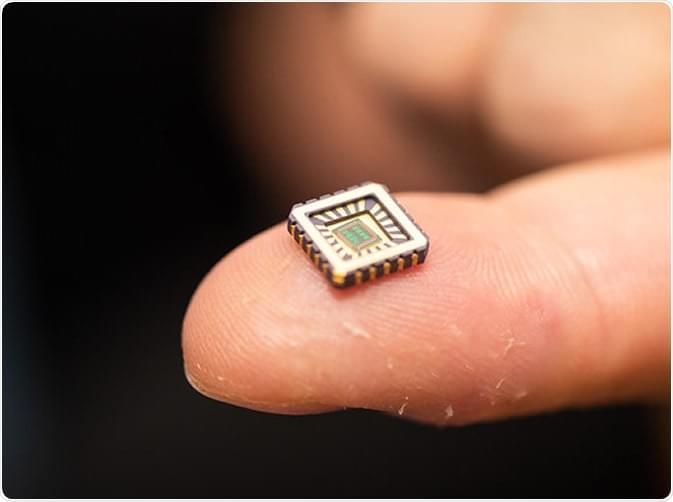
A UCLA-led research team has now developed a microneedle sensor platform designed to address that problem through continuous, minimally invasive monitoring in skin. In a study published in Science Translational Medicine, the researchers showed in rats that the sensors could operate continuously for six days, track drug concentrations over time and provide insight into kidney and liver function by measuring how quickly the body cleared those drugs.

Slime-like artificial muscle reshapes on command, heals after damage and turns one robot into many

Breaking away from conventional robots that perform only predefined functions once fabricated, researchers have developed a next-generation artificial muscle that can change its shape in real time, recover from damage, and even be reused. The study is published in Science Advances.

The researchers developed a new type of dielectric elastomer actuator (DEA) using a phase-transitional ferrofluid (PTF) that behaves as a solid at room temperature but becomes fluid-like and highly flexible when exposed to external stimuli such as heat or magnetic fields.

Dielectric elastomer actuators (DEAs) are soft transducers that convert electrical energy into mechanical motion and are often referred to as artificial muscles because of their ability to move rapidly and precisely like human muscles.

Ocean bottom seismometers could improve earthquake warning times in Pacific Northwest

If there is a magnitude 8 or 9 megathrust earthquake off the coast of the Pacific Northwest, data from ocean bottom seismometers (OBS) could improve earthquake detection times calculated by the ShakeAlert system.

At the 2026 SSA Annual Meeting, Zoe Krauss said ShakeAlert’s earthquake detection time could be improved by 5 to 9 seconds by incorporating data from six cabled OBS deployed offshore Oregon as part of the Ocean Observatories Initiative (OOI) Regional Cabled Network and five cabled OBSs deployed offshore Vancouver Island on Ocean Networks Canada’s (ONC) NEPTUNE cable.

There are currently only two cabled OBSs offshore Oregon, but the Cascadia Offshore Subduction Zone Observatory (COSZO) project will add four new OBS to the OOI network this summer, bringing these potential added detection times closer to reality.

Google Blocks 8.3B Policy-Violating Ads in 2025, Launches Android 17 Privacy Overhaul

Google this week announced a new set of Play policy updates to strengthen user privacy and protect businesses against fraud, even as it revealed it blocked or removed over 8.3 billion ads globally and suspended 24.9 million accounts in 2025.

The new policy updates relate to contact and location permissions in Android, allowing third-party apps to access the contact lists and a user’s location in a more privacy-friendly manner. This includes a new Contact Picker, which offers a standardized, secure, and searchable interface for contact selection.

“This feature allows users to grant apps access only to the specific contacts they choose, aligning with Android’s commitment to data transparency and minimized permission footprints,” Google said.

New Hydrogel Helps Bone Grow Without Transplant or Implants

A new hydrogel may offer a way to regenerate bone—without transplants or implants.

Early research shows the material can support bone growth by creating a scaffold that encourages the body’s own repair processes. It’s designed to integrate with tissue and break down as new bone forms.

While still in early stages, the approach could represent a shift toward less invasive, regenerative options for bone repair.


Researchers have developed a soft laser-printed scaffold made almost entirely of water that bone cells readily colonize.

Human Language Gene Inserted Into Mice Led to Some Bizarre Effects

Get a Wonderful Person Tee: https://teespring.com/stores/whatdamath.
More cool designs are on Amazon: https://amzn.to/3QFIrFX
Alternatively, PayPal donations can be sent here: http://paypal.me/whatdamath.

Hello and welcome! My name is Anton and in this video, we will talk about a strange experiment that inserted human language genes into mice…weird things happened.
Links:
https://www.nature.com/articles/s4146https://www.cell.com/cell-reports/ful… #mice #experiment #language 0:00 Intriguing experiment where mice got a human language gene 0:50 NOVA1 gene in a nutshell 2:50 Human NOVA1 is different 3:45 Previous gene that was believed to be a language gene — Foxp2 5:35 New experiment focusing on a unique human gene 7:05 Weird experimental discoveries 8:40 What this means and what this gene does 9:40 Other things this gene seems to do 10:20 Conclusions Support this channel on Patreon to help me make this a full time job: / whatdamath Bitcoin/Ethereum to spare? Donate them here to help this channel grow! bc1qnkl3nk0zt7w0xzrgur9pnkcduj7a3xxllcn7d4 or ETH: 0x60f088B10b03115405d313f964BeA93eF0Bd3DbF Space Engine is available for free here: http://spaceengine.org Enjoy and please subscribe. Twitter: / whatdamath Facebook: / whatdamath Twitch: / whatdamath The hardware used to record these videos: New Camera: https://amzn.to/34DUUlv CPU: https://amzn.to/2LZFQCJ Video Card: https://amzn.to/2M1W26C Motherboard: https://amzn.to/2JYGiQQ RAM: https://amzn.to/2Mwy2t4 PSU: https://amzn.to/2LZcrIH Case: https://amzn.to/2MwJZz4 Microphone: https://amzn.to/2t5jTv0 Mixer: https://amzn.to/2JOL0oF Recording and Editing: https://amzn.to/2LX6uvU Some of the above are affiliate links, meaning I would get a (very small) percentage of the price paid. Thank you to all Patreon supporters of this channel Special thanks also goes to all the wonderful supporters of the channel through YouTube Memberships Credit: Emw CC BY-SA 3.0 https://en.wikipedia.org/wiki/NOVA1#/.… SWISS-MODEL — https://swissmodel.expasy.org/reposit… CC BY-SA 4.0 Licenses used: https://creativecommons.org/licenses/.https://creativecommons.org/licenses/.https://creativecommons.org/licenses/.https://creativecommons.org/licenses/.https://creativecommons.org/licenses/.https://creativecommons.org/licenses/.https://creativecommons.org/licenses/.https://creativecommons.org/licenses/.
https://academic.oup.com/nar/article/.
https://www.cell.com/cell-reports/ful
#mice #experiment #language.

0:00 Intriguing experiment where mice got a human language gene.
0:50 NOVA1 gene in a nutshell.
2:50 Human NOVA1 is different.
3:45 Previous gene that was believed to be a language gene — Foxp2
5:35 New experiment focusing on a unique human gene.
7:05 Weird experimental discoveries.
8:40 What this means and what this gene does.
9:40 Other things this gene seems to do.
10:20 Conclusions.

Support this channel on Patreon to help me make this a full time job:
/ whatdamath.

Bitcoin/Ethereum to spare? Donate them here to help this channel grow!
bc1qnkl3nk0zt7w0xzrgur9pnkcduj7a3xxllcn7d4
or ETH: 0x60f088B10b03115405d313f964BeA93eF0Bd3DbF

Space Engine is available for free here: http://spaceengine.org.

/* */