Some of the world’s leading physicists believe they have found startling new evidence showing the existence of universes other than our own. See more in Season 3, Episode 2, \.
Get the latest international news and world events from around the world.
Is consciousness an illusion? 5 experts explain
Become a Big Think member to unlock expert classes, premium print issues, exclusive events and more: https://bigthink.com/membership/?utm_… “If science aims to describe everything, how can it not describe the simple fact of our existence?” On this episode of Dispatches, Kmele speaks with the scientists, mathematicians, and spiritual leaders trying to do just that:
This video is an episode from @The-Well, our publication about ideas that inspire a life well-lived, created with the @JohnTempletonFoundation
Watch the full podcast now ► • Dispatches from The Well.
In the newest episode of Dispatches from The Well, we’re diving deep into the “hard problem of consciousness.” Here, Kmele combines the perspectives of five different scientists, philosophers, and spiritual leaders to approach one of humanity’s most pressing questions: what is consciousness?
In the AI age, the question of consciousness is more prevalent than ever. Is every single thing in the universe self-aware? What does it actually mean to be conscious? Are our bodies really just a vessel for our thoughts? Kmele asks these questions, and many more, in the most thought-provoking episode yet. This is Dispatches from The Well.
Featuring: sir roger penrose, christof koch, melanie mitchell, reid hoffman, swami sarvapriyananda.
Aging, Cancer, And Rejuvenation (Featuring Drs. Michael Levin And Leo Pio-Lopez)
Join us on Patreon! / michaellustgartenphd.
Discount Links/Affiliates:
Blood testing (where I get the majority of my labs): https://www.ultalabtests.com/partners… testing with LifeExtension.com: https://www.anrdoezrs.net/click-10161… At-Home Metabolomics: https://www.iollo.com?ref=michael-lus… Use Code: CONQUERAGING At Checkout Clearly Filtered Water Filter: https://get.aspr.app/SHoPY Epigenetic, Telomere Testing: https://trudiagnostic.com/?irclickid=… Use Code: CONQUERAGING NAD+ Quantification: https://www.jinfiniti.com/dose-findin… Oral Microbiome: https://www.bristlehealth.com/?ref=mi… Enter Code: ConquerAging SiphoxHealth Blood Testing (ApoB, GrimAge): https://siphoxhealth.com/mlustgarten Green Tea: https://www.ochaandco.com/?ref=fqbtflod Use Code: ML10OFF Diet Tracking: https://shareasale.com/r.cfm?b=139013… If you’d like to support the channel, you can do that with the website, Buy Me A Coffee: https://www.buymeacoffee.com/mlhnrca Conquer Aging Or Die Trying Merch! https://my-store-d4e7df.creator-sprin… Michael Levin’s YT channel: / @drmichaellevin Michael Levin’s website: https://thoughtforms.life/
Blood Testing Essentials (Biological Age, CVD-Risk, Kidney Health and Function):
PhenoAge (Biological Age): https://www.ultalabtests.com/partners…
Risk-weighted ApoB (a better CVD predictor than LDL, non-HDL cholesterol, and ApoB): https://www.ultalabtests.com/partners…
Kidney health and function: https://www.ultalabtests.com/partners…
Read more
Holistic space observation: the shift from SSA to SDA
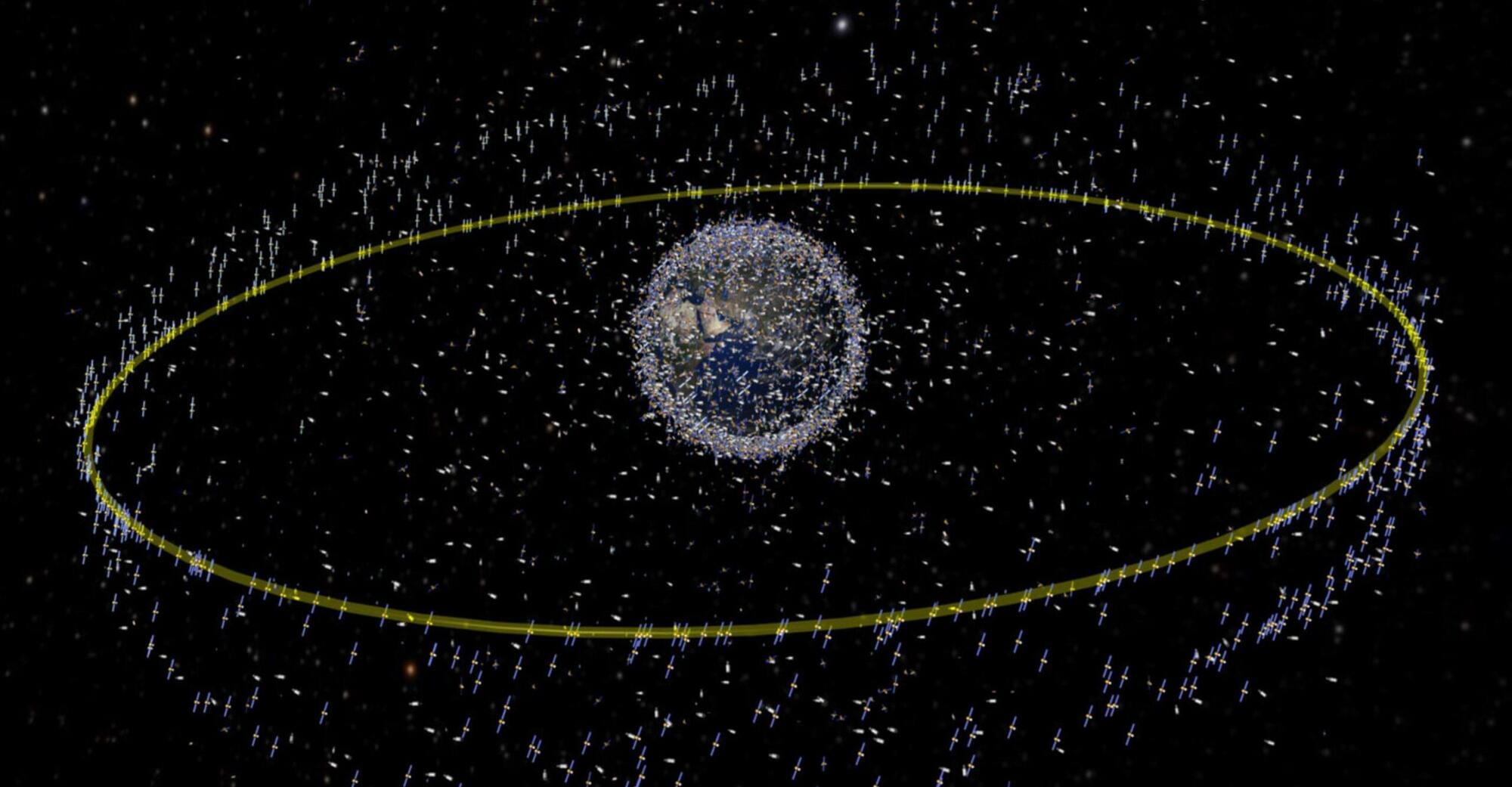
Recent reporting on SpaceX’s proposal to deploy up to one million satellites in low Earth orbit — paired with a vision of AI-enabled, autonomous orbital infrastructure — marks a decisive moment for the space community. Regardless of whether these numbers ultimately materialize, the direction is unmistakable: space is moving toward unprecedented scale, autonomy and strategic importance.
That reality demands a fundamental reassessment of what space awareness really means.
For decades, space situational awareness (SSA) focused on orbital mechanics: where an object is, where it will be and whether it might collide with something else. That model is now insufficient. Satellites are no longer passive nodes governed primarily by physics; they are software-defined, networked systems deeply integrated with terrestrial cyber infrastructure, global supply chains and increasingly AI-driven decision loops.
The Exegesis of Philip K Dick: A Summary
Dive deep into the fascinating mind of Philip K. Dick through The Exegesis of Philip K. Dick, a posthumous collection of the legendary science fiction author’s personal notes, philosophical musings, and reflections on reality, existence, and spirituality. In this video, we explore the core themes of the book, including Dick’s obsession with the nature of reality, his exploration of gnosticism, and his visionary ideas that foreshadowed concepts like simulated realities, later popularized by films such as The Matrix.
We’ll also delve into Dick’s personal struggles with mental illness, paranoia, and addiction, as well as his unrelenting pursuit of truth and spiritual enlightenment. Whether you’re a fan of his groundbreaking novels or curious about the mind behind them, this video offers an insightful look at the profound thoughts and challenges that shaped his work.
Join us as we unravel the complexities of The Exegesis and celebrate the legacy of one of the most influential thinkers and writers in science fiction history.
This video was created as a personal experiment of sorts, made from start to finish in one day using only AI tools, based upon my prompts.
Every image was generated with: https://stablecog.com/
The text-to-speech audio was created using: https://speechify.com/
The text itself was written by: https://chat.openai.com/chat.
FOLLOW:
The Arrow of Time and How to Reverse It
PBS Member Stations rely on viewers like you. To support your local station, go to: http://to.pbs.org/DonateSPACE
↓ More info below ↓
Sign Up on Patreon to get access to the Space Time Discord!
/ pbsspacetime.
Ever wish you could travel backward in time and do things differently? Good news: the laws of physics seem to say traveling backward in time is the same as traveling forwards. So why do we seem to be stuck in this inexorable flow towards the future? It’s time to begin our journey towards really understanding time.
Check out the Space Time Merch Store.
https://pbsspacetime.com/
Sign up for the mailing list to get episode notifications and hear special announcements!
https://mailchi.mp/1a6eb8f2717d/space… by Matt O’Dowd Written by Matt O’Dowd Graphics by Leonardo Scholzer, Yago Ballarini, & Pedro Osinski Directed by: Andrew Kornhaber Assistant Producer: Setare Gholipour Executive Producers: Eric Brown & Andrew Kornhaber End Credits Music by J.R.S. Schattenberg: / @julesschattenberg Special Thanks to Our Patreon Producers Big Bang Supporters Sean Maddox Marty Yudkovitz Brodie Rao Scott Gray Ahmad Jodeh Radu Negulescu Alexander Tamas Morgan Hough Juan Benet Fabrice Eap Mark Rosenthal David Nicklas Quasar Supporters Justin Lloyd Christina Oegren Mark Heising Vinnie Falco Hypernova Supporters William Bryan L. Wayne Ausbrooks Nicholas Newlin Mark Matthew Bosko Justin Jermyn Jason Finn Антон Кочков Alec S-L Julian Tyacke John R. Slavik Mathew Danton Spivey Donal Botkin John Pollock Edmund Fokschaner Joseph Salomone Matthew O’Connor chuck zegar Jordan Young m0nk Hank S John Hofmann Timothy McCulloch Gamma Ray Burst Daniel Jennings Cameron Sampson Pratik Mukherjee Geoffrey Clarion Astronauticist Nate Darren Duncan Lily kawaii Russ Creech Jeremy Reed Max Bernard Bill Blair Eric Webster Steven Sartore DrJYou David Johnston J. King Michael Barton Christopher Barron James Ramsey Mr T Andrew Mann Jeremiah Johnson fieldsa eleanory Peter Mertz Kevin O’Connell Richard Deighton Isaac Suttell Devon Rosenthal Oliver Flanagan Dawn M Fink Bleys Goodson Darryl J Lyle Robert Walter Bruce B Ismael Montecel Andrew Richmond Simon Oliphant Mirik Gogri David Hughes Mark Daniel Cohen Brandon Lattin Yannick Weyns Nickolas Andrew Freeman Brian Blanchard Shane Calimlim Tybie Fitzhugh Robert Ilardi Astaurus Eric Kiebler Craig Stonaha Martin Skans Michael Conroy Graydon Goss Frederic Simon Greg Smith Sean Warniaha Tonyface John Robinson A G Kevin Lee Adrian Hatch Yurii Konovaliuk John Funai Cass Costello Geoffrey Short Bradley Jenkins Kyle Hofer Tim Stephani Luaan AlecZero Malte Ubl Nick Virtue Scott Gossett Martin J Lollar Dan Warren Patrick Sutton John Griffith Daniel Lyons DFaulk Kevin Warne Andreas Nautsch Brandon labonte Lucas Morgan.
Hosted by Matt O’Dowd.
Clarifying the conceptual dimensions of representation in neuroscience
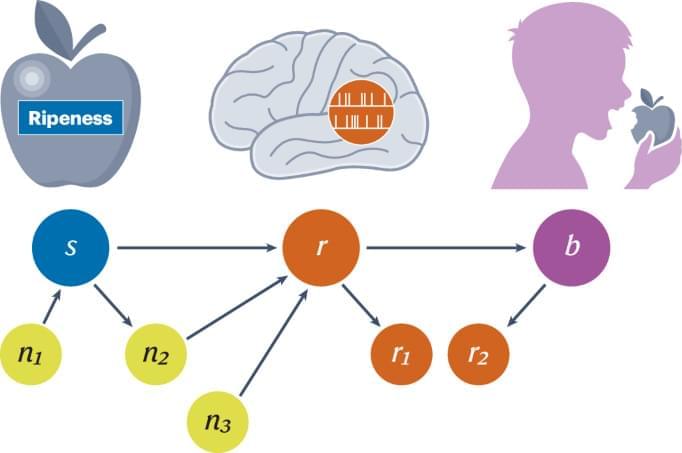
Appeals to representation are widespread, despite neuroscientists’ uncertainty about what kind of findings count as evidence for such claims. In this Perspective, Pohl and colleagues develop a unified framework that distinguishes four conceptual dimensions relevant to representation, illustrating them in information-theoretic terms to explicitly characterize representation in neuroscience.
Director: Rachel Gordon
Video: Tim Malieckal
Script Supervisor: Alex Shipps
Editor: Tim Malieckal.
Ryan Williams’ paper can be found online at this link: https://arxiv.org/abs/2502.
Special Thanks to Avi Wigderson, Ian Mertz and James Cook for their expertise, and Elias Trout @MITMuseumOfficial for providing the vintage floppy disks as critical props for our production!
Read more