Address correspondence to: Rongze Olivia Lu, Helen Diller Comprehensive Cancer Center, University of California, San Francisco, 1,450 3rd St., Helen Diller Cancer Building, San Francisco, California 94,158, USA. Email: [email protected].
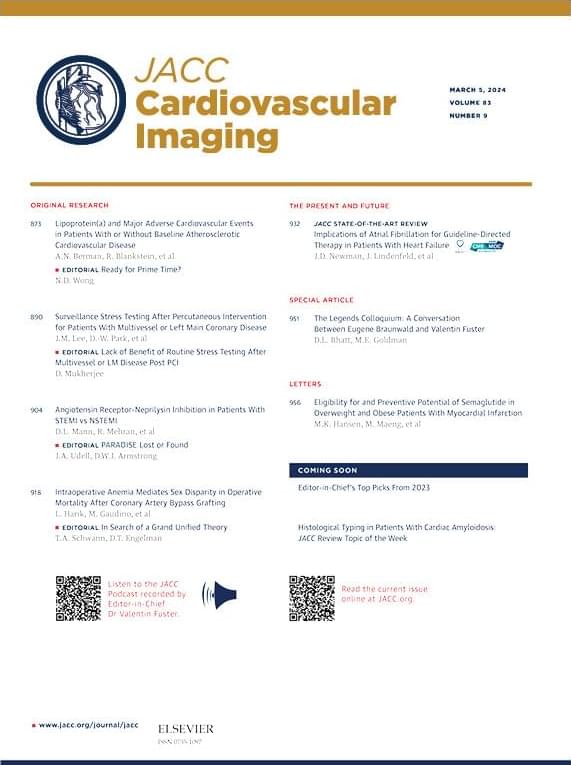
New HCM research: radionuclide-labeled fibroblast activation protein inhibitor (FAPI) imaging detects cardiac fibroblast activation before CMR-identified myocardial remodeling. Early detection may offer new insights into HCM.
Learn more in JACCIMG.
The Journal of the American College of Cardiology (JACC) stands as a leading global resource for impactful cardiovascular research, delivering essential peer-reviewed articles and crucial clinical practice guidelines. Gain access to authoritative medical content and vital CME resources designed to advance cardiovascular medicine and improve heart patient outcomes.
Background and ObjectivesThe link between repetitive head impact (RHI) exposure, later-life cognitive decline, and neurobehavioral dysregulation (NBD) is not well understood. Recent work has implicated inflammation and limbic dysfunction as relevant RHI…
Researchers discovered that <i>R. inulinivorans</i> plays an important role in muscle strength and could act as a probiotic candidate for nutraceutical interventions targeting age-related muscle-wasting diseases.
An unexpected signal in several major dairy studies suggested that people who ate more ice cream sometimes had a lower risk of type 2 diabetes, a result scientists did not expect, and still cannot fully explain.
Humans think they can conquer everything in this world, like they have a solution for every problem, but this is where people get greedy, overambitious and most importantly, desperate. For example, in most of the science fiction and survival thrillers, people dig their own grave by creating deadly viruses in the labs, sometimes for political reasons and sometimes to create a medical miracle. These movies show how these man-made viruses wipe out humanity and make the world a living hell for a few immune survivors. Now, this has been a widely explored trope in every survival thriller, but deep beneath this layer, these films talk about something really ominous about our future.
Cancer often begins when the genetic instructions that guide our cells become scrambled, allowing cells to grow uncontrollably. Now, scientists at EMBL have developed an AI-powered system called MAGIC that can automatically spot and tag cells showing early signs of chromosomal trouble—tiny DNA-filled structures known as micronuclei that are linked to future cancer development.