Toggle light / dark theme

Get the latest international news and world events from around the world.

Log in for authorized contributors

Carbon nanotube fiber sensors achieve record measurement error below 0.1%

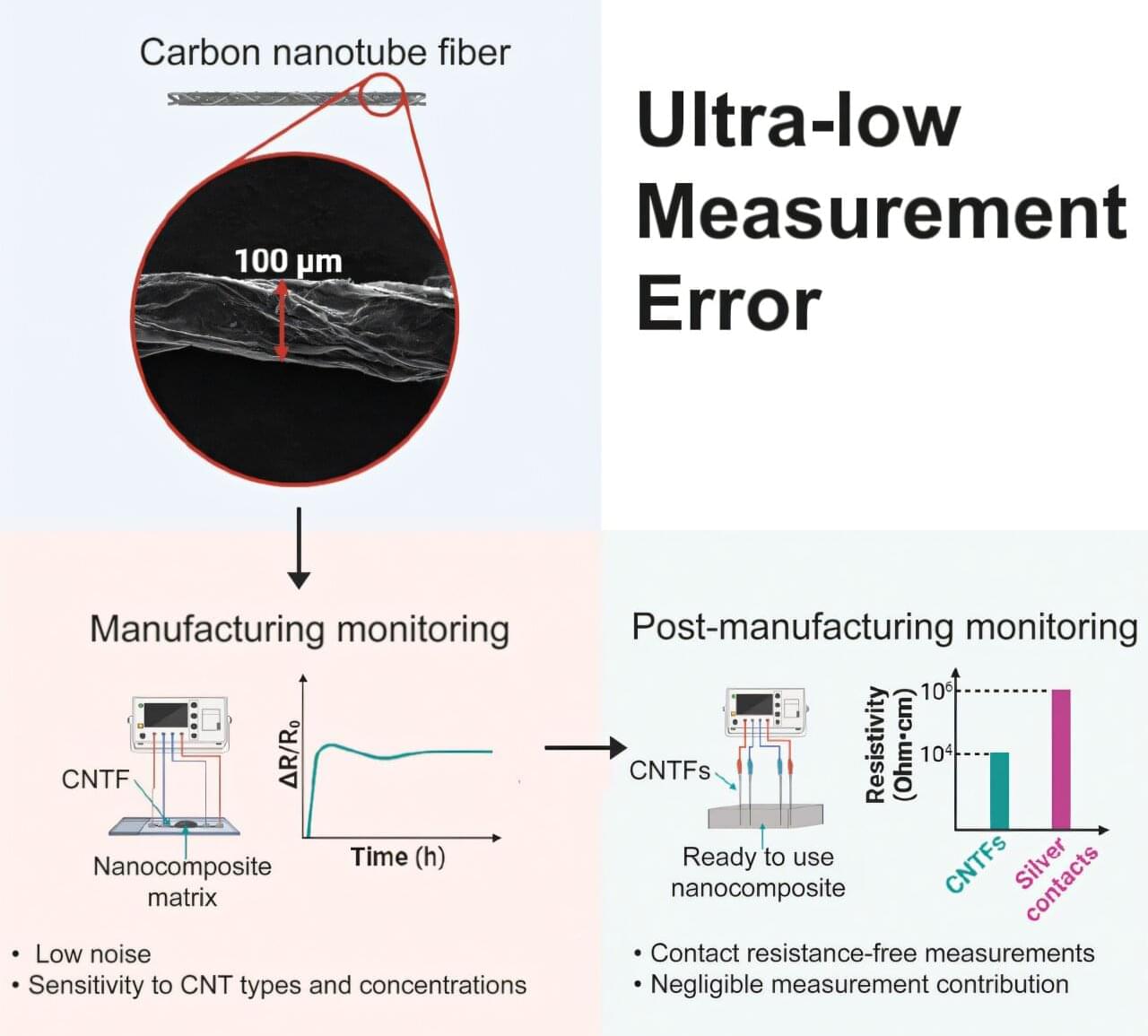
Skoltech scientists, in collaboration with colleagues from China and Iran, have taken a major step toward creating highly precise carbon nanotube fiber (CNTF)-based sensors. In a paper published in the iScience journal, the authors, for the first time, quantitatively assessed the accuracy of CNTF sensors for dual-stage, i.e., manufacturing and post-manufacturing monitoring of epoxy-based polymer nanocomposites with dispersed CNTs.

The researchers emphasize that this development paves the way for creating a cutting-edge carbon-based material for high-precision and real-time sensing applications.

Existing monitoring sensors, such as fiber optics or piezoelectric sensors, are not suitable for the dual-stage monitoring of polymer composite materials. Additionally, embedding them into the composite structure often leads to deterioration in the mechanical properties of ready-made materials, making it more vulnerable to failure.


Compression technique makes AI models leaner and faster while they’re still learning

Training a large artificial intelligence model is expensive, not just in dollars, but in time, energy, and computational resources. Traditionally, obtaining a smaller, faster model either requires training a massive one first and then trimming it down, or training a small one from scratch and accepting weaker performance.

Researchers at MIT’s Computer Science and Artificial Intelligence Laboratory (CSAIL), Max Planck Institute for Intelligent Systems, European Laboratory for Learning and Intelligent Systems, ETH, and Liquid AI have now developed a new method that sidesteps this trade-off entirely, compressing models during training, rather than after.

Electrofluidic fiber muscles could enable silent robotic systems

Muscles are remarkably effective systems for generating controlled force, and engineers developing hardware for robots or prosthetics have long struggled to create analogs that can approach their unique combination of strength, rapid response, scalability, and control. But now, researchers at the MIT Media Lab and Politecnico di Bari in Italy have developed artificial muscle fibers that come closer to matching many of these qualities.

Like the fibers that bundle together to form biological muscles, these fibers can be arranged in different configurations to meet the demands of a given task. Unlike conventional robotic actuation systems, they are compliant enough to interface comfortably with the human body and operate silently without motors, external pumps, or other bulky supporting hardware.

The new electrofluidic fiber muscles—electrically driven actuators built in fiber format—are described in a recent paper published in Science Robotics. The work is led by Media Lab Ph.D. candidate Ozgun Kilic Afsar; Vito Cacucciolo, a professor at the Politecnico di Bari; and four co-authors.

People use the same neurons to see and imagine objects, study shows

Why can images of things we have seen seem so real when we later recall them from memory? A new study led by Cedars-Sinai Health Sciences University investigators sheds light on the answer. The research shows that the same brain neurons are activated when we imagine something and when we perceive something. The research, led by Cedars-Sinai, is the first to provide a detailed understanding of the shared mechanism that underlies visual perception and creation of mental images in the human brain. It was published in the journal Science.

“We generate a mental image of an object that we have seen before by reactivating the brain cells we used to see it in the first place,” said Ueli Rutishauser, Ph.D., director of the Center for Neural Science and Medicine and professor of Neurosurgery, Neurology and Biomedical Sciences at Cedars-Sinai Health Sciences University, and the study’s joint senior author.

“Our study revealed the code that we use to re-create the images.”

AI diffusion models tailor drug molecules to custom-fit protein targets, speeding drug development and evaluation

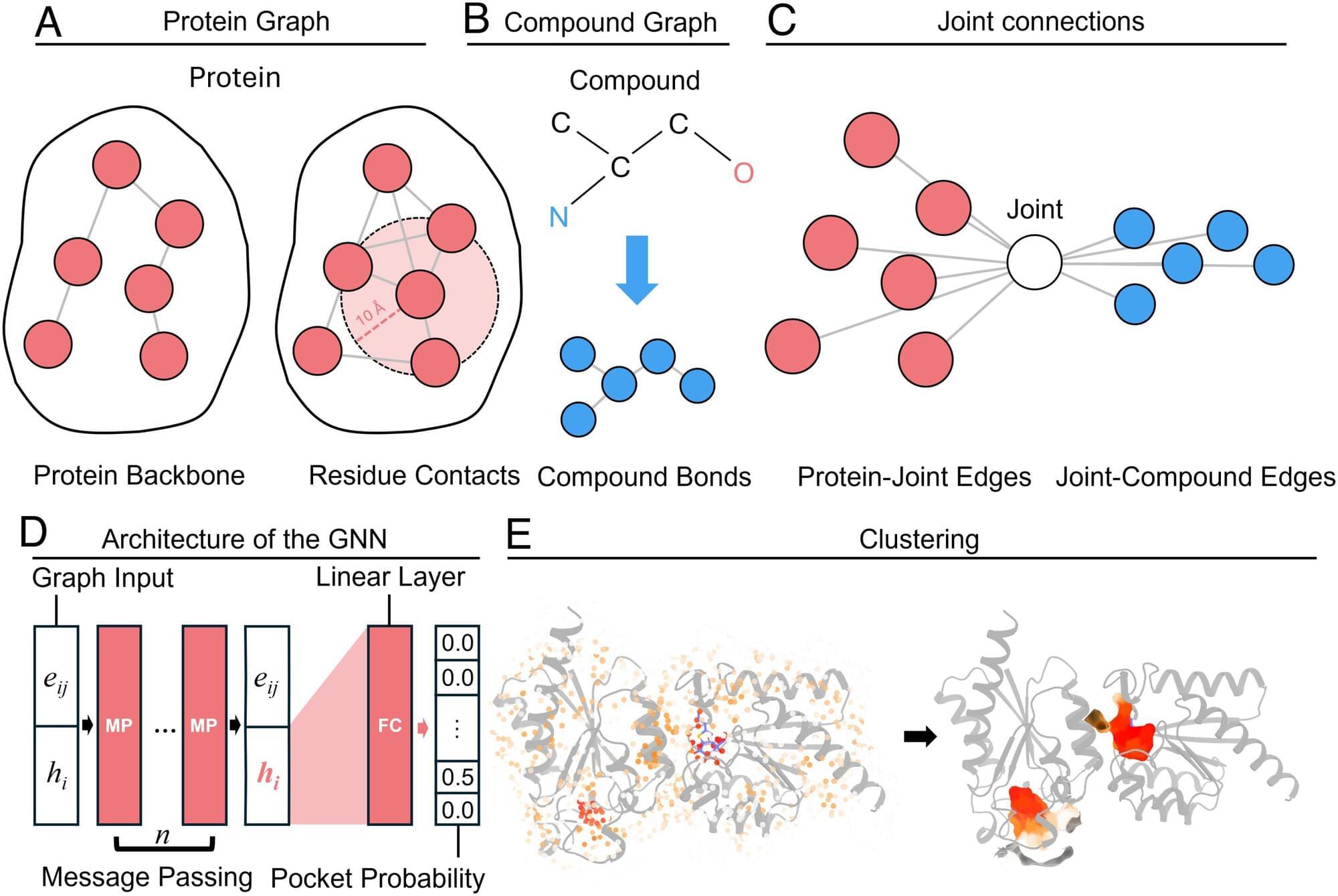
University of Virginia School of Medicine scientists have developed a bold new approach to drug development and discovery that could dramatically accelerate the creation of new medicines. UVA’s Nikolay V. Dokholyan, Ph.D., and colleagues have developed a suite of artificial intelligence-powered tools, called YuelDesign, YuelPocket and YuelBond, that work together to transform how new drugs are created. The centerpiece, YuelDesign, uses a cutting-edge form of AI called diffusion models to design new drug molecules tailored to fit their protein targets exactly, even accounting for the way proteins flex and shift shape during binding.

A companion tool, YuelPocket, identifies exactly where on a protein a drug can attach, while YuelBond ensures the chemical bonds in designed molecules are accurate. Together, the approach is poised to improve both how new drugs are designed and how quickly and efficiently existing drugs can be evaluated for new purposes.

“Think of it this way: Other methods try to design a key for a lock that’s sitting perfectly still, but in your body, that lock is constantly jiggling and changing shape. Our AI designs the key while the lock is moving, so the fit is much more realistic,” said Dokholyan, of UVA’s Department of Neurology. “This could make a real difference for patients with cancer, neurological disorders and many other conditions where we desperately need better drugs targeting these wiggly proteins but keep hitting dead ends.”

How surface chemistry impacts the performance of malaria nets

Insecticide-treated bed nets remain one of the most effective tools in malaria prevention, acting both as a physical barrier and as an insecticidal surface that kills or disables mosquitoes before they can transmit disease. New research by a multidisciplinary research team from the University of Liverpool and the Liverpool School of Tropical Medicine (LSTM) uses surface science to assess how well malaria nets perform.

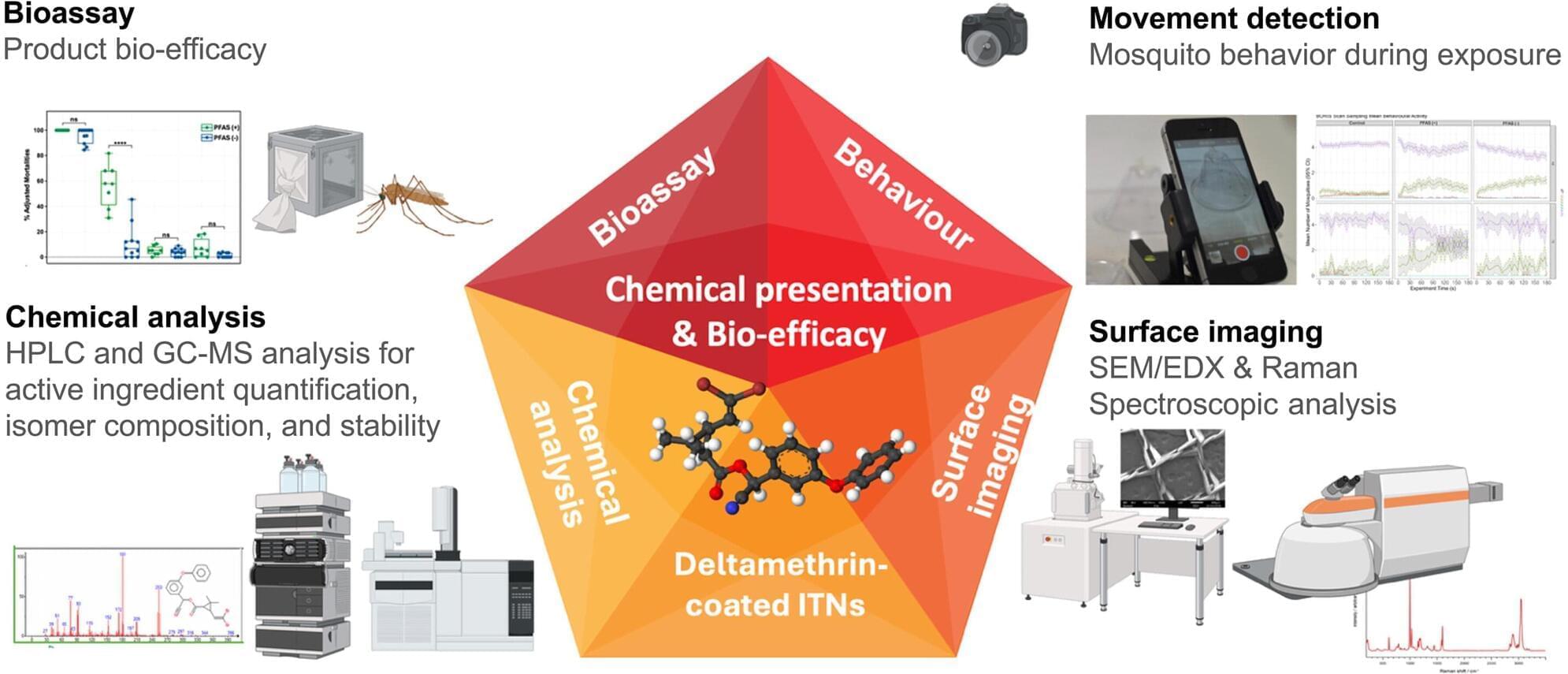
Published in Science Advances, the focus of the study was the phasing out of PFAS coatings, a group of synthetic fluorinated coating chemicals that have been valued for stability and performance. However, their environmental persistence and potential health risks have made their removal an important priority. The paper is titled “Multimodal platform for ITN efficacy: Surface chemistry, bioavailability, and mosquito behavior.”

To understand the impact of removing PFAS, the team developed a novel multimodal evaluation platform combining chemical analysis, advanced surface imaging, and mosquito behavioral tracking.

Megawatt structured light arrives with 3,070 optical vortices in one array

Optical vortices—light beams carrying orbital angular momentum (OAM)—are characterized by helical wavefronts and phase singularities. While they have been widely studied in recent decades, two fundamental limitations have restricted their broader impact: generating large numbers of vortices simultaneously and achieving high peak power in such configurations. Until now, large vortex arrays have been limited to low-power systems, whereas high-power demonstrations have typically involved only single vortices.

In a new paper published in Light: Science & Applications, a research team led by Professor Yoshiki Nakata at The University of Osaka reports the world’s first experimental realization of a megawatt-class large-scale optical vortex array comprising 3,070 phase-coherent vortices at a peak power of 58 megawatts. The result represents more than three orders of magnitude improvement in both vortex number and peak power compared with previous approaches.

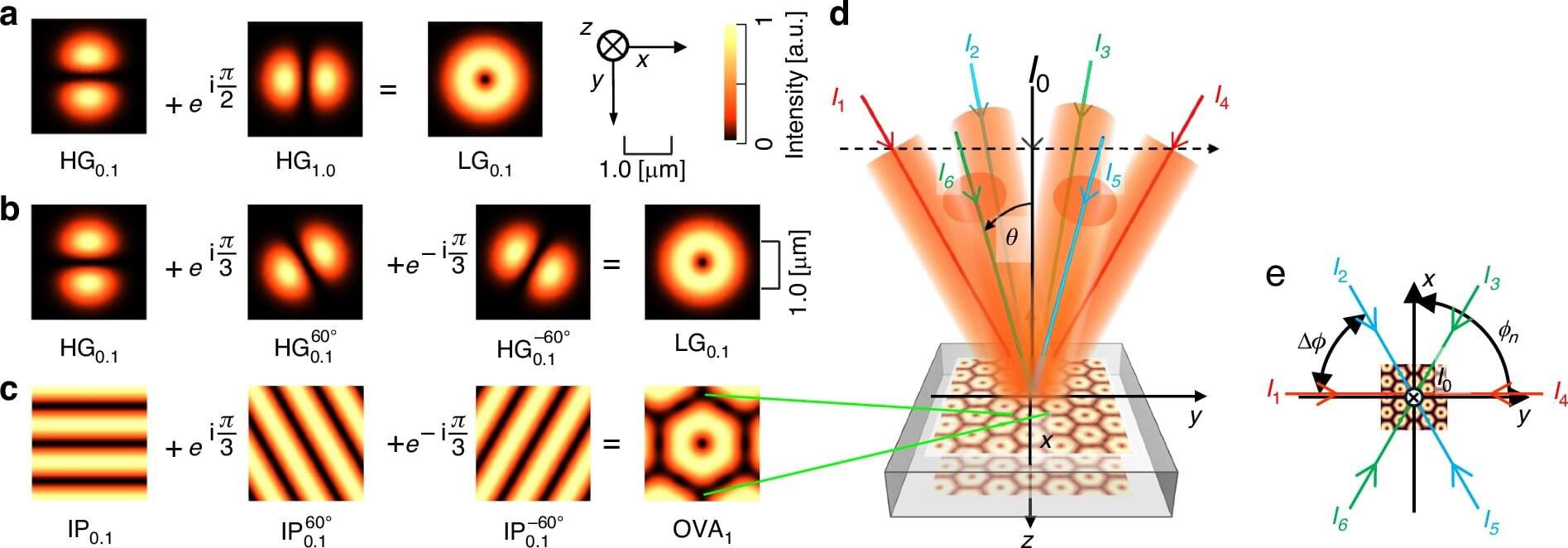
Conventionally, Laguerre–Gaussian (LG) modes are expressed as the superposition of two Hermite–Gaussian (HG) modes with a π/2 phase shift. This constitutes the first revision of the HG–LG mode-conversion framework in three decades. The team reformulated this description into a three-mode representation that naturally integrates with multibeam interference geometry.

/* */