The Neuroscience of Patriotism: From “Them” to “Us”
On the 4th of July, patriotism is often framed as flags, fireworks, and national pride. But neuroscience suggests something deeper: shared national identity can actually reshape how the brain processes other people.
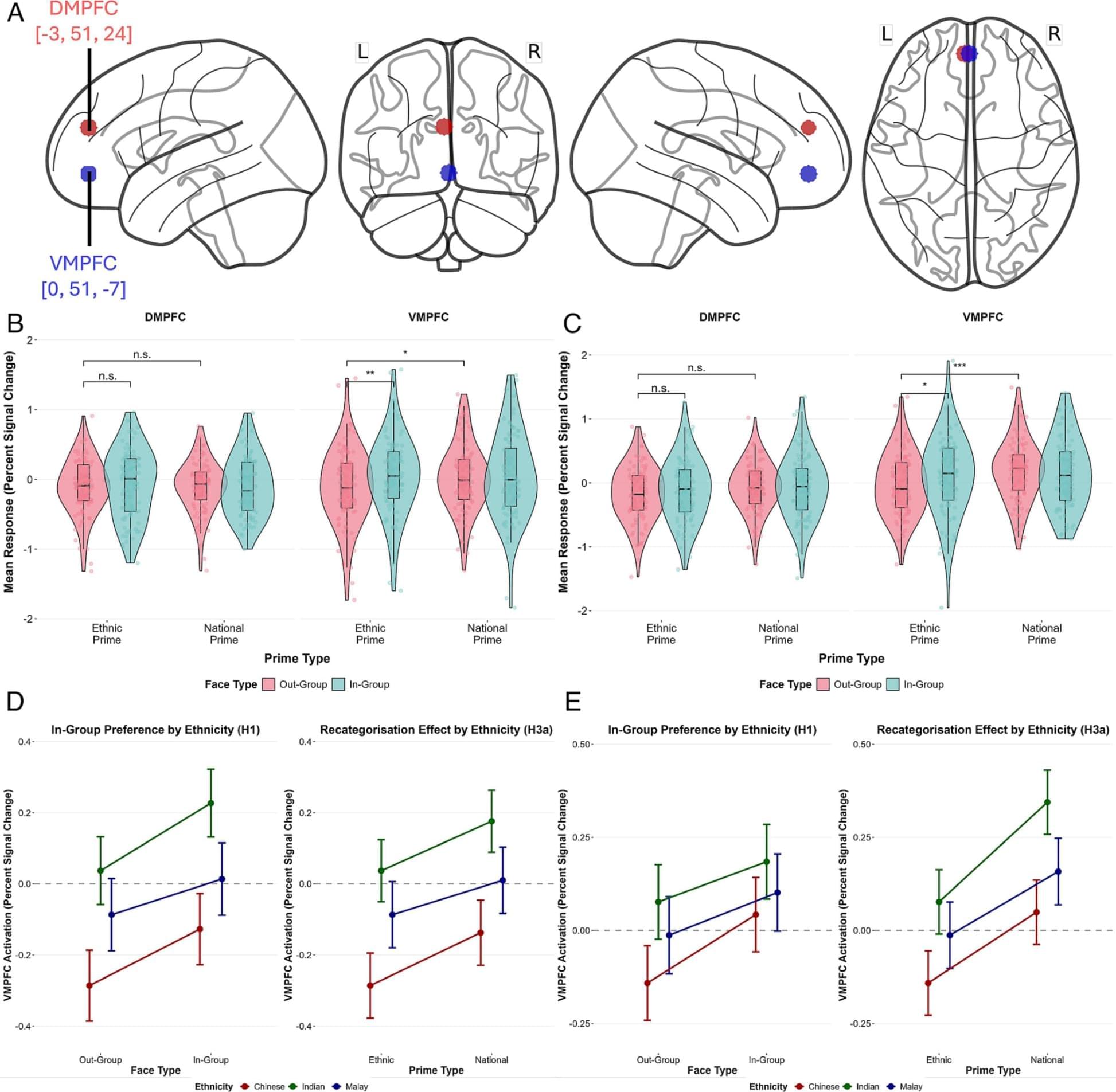
A 2026 fMRI study published in PNAS found that when people were briefly reminded of a shared national identity, their brains began responding more inclusively to faces from ethnic outgroups.
The key region was the ventromedial prefrontal cortex, an area involved in self-referential and social processing. Under ethnic identity cues, this region responded more strongly to ethnic ingroup faces. But under national identity cues, it showed increased engagement toward ethnic outgroup faces too.
In other words, the brain’s sense of “us” is flexible.
The study did not show that ethnic identity disappears. Instead, it suggests that shared identity can partially expand the boundary of belonging while still allowing subgroup identities to remain intact.
That may be one of the healthier forms of patriotism: not “my group above yours,” but “a larger we.”