Six Android malware families discovered targeting banking apps and crypto wallets, exploiting accessibility features to steal funds and data.



Microsoft is rolling out passkey support for Microsoft Entra on Windows devices, adding phishing-resistant passwordless authentication via Windows Hello.
The feature is opt-in and will enter public preview from mid-March through late April 2026 for worldwide tenants. Government cloud environments (GCC, GCC High, and DoD) follow with mid-April through mid-May rollout windows.
Notably, this also extends passwordless sign-in to unmanaged Windows devices, a gap that previously left personal and shared devices relying on password-based authentication.

Google paid over $17 million to 747 security researchers who reported security bugs through its Vulnerability Reward Program (VRP) in 2025.
The company says it has awarded over $81.6 million in bug bounties since the first Vulnerability Reward Program went live in 2010, while the highest reward paid last year was of $250,000.
“Our VRP once again confirmed the ongoing value of engaging with the external security research community to make Google and its products safer,” Google said.

A new malware strain dubbed Slopoly, likely created using generative AI tools, allowed a threat actor to remain on a compromised server for more than a week and steal data in an Interlock ransomware attack.
The breach started with a ClickFix ruse, and in later stages of the attack, the hackers deployed the Slopoly backdoor as a PowerShell script acting as a client for the command-and-control (C2) framework.
IBM X-Force researchers analyzed the script and found strong indicators that it was created using a large language model (LLM), but could not determine which one.
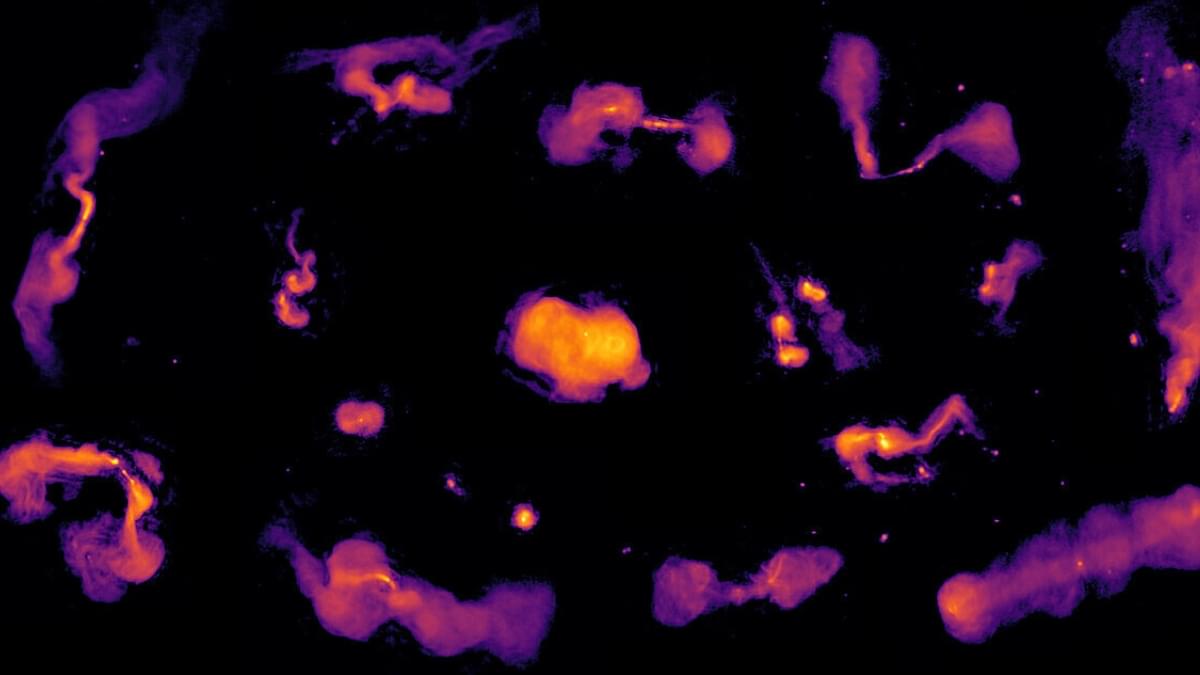
Our view of the cosmos changes completely based on how we observe it.
Now, astronomers have released the data from the largest-ever sky survey at radio wavelengths, revealing nearly 13.7 million celestial objects in light the human eye literally cannot see unaided.
This is the third data release from the LOFAR Two-metre Sky Survey (LoTSS-DR3). It provides an unprecedented collection of cosmic objects that emit radio waves.

At Argonne National Laboratory, researchers are trading in old-school approximations for raw supercomputing power, proving that the secret to a safer carbon-free future lies in mastering the math of chaos.
Researchers are advancing nuclear safety by using high-performance computing to model turbulent flow — the chaotic movement of fluids and gases that governs heat transfer and gas mixing within a reactor.


New in JNeurosci: fMRI study from Kim et al. reveals that babies with congenital heart disease have altered sensorimotor and limbic brain networks that cardiovascular surgery improves.
▶️
Congenital heart disease (CHD) affects approximately 1% of live births in the United States and is the most prevalent congenital disorder. Despite advances in neonatal cardiovascular surgery improving survival, neurodevelopmental impairments remain prevalent, impacting motor skills, social behavior, and executive function. Motor deficits and long-term challenges in emotional regulation and memory are particularly common. Recent research using resting-state functional MRI (rs-fMRI) has revealed disorganized brain networks in newborns with CHD. However, those few prior rs-fMRI studies examining the impact of CHD have relied on predefined brain parcellations to compare group-level connectivity, limiting the ability to capture spatial alterations in neonatal brain networks in CHD. Understanding these network-level changes is critical for elucidating mechanisms of neurodevelopmental impairment and identifying early biomarkers of risk. To address these gaps, our study introduces two conceptual advances: 1) a data-driven approach to investigate atypical brain network development in high-risk CHD and 2) the use of a population-sized, independent dataset of healthy newborns to derive a normative set of neonatal brain networks. By analyzing a large rs-fMRI of human newborns (N=448; 219 females and 229 males), we identify atypical brain activity in the sensorimotor and limbic networks of newborns with complex CHD. Notably, before cardiovascular surgery, these networks are split into left and right hemispheric subnetworks. Postoperatively, these components coalesce into a singular, symmetric pattern resembling networks observed in healthy neonates. Our study highlights the potential of rs-fMRI to detect subtle, early functional disruptions in CHD and may inform future biomarkers of neurodevelopmental risk.
Significant Statement Congenital heart disease, the most common congenital disorder, affects 1% of live births and is associated with persistent neurodevelopmental impairments despite improved surgical survival. These deficits, including motor, socio-emotional, and cognitive challenges, may stem from early brain network disruptions. Prior resting-state fMRI studies in CHD relied on predefined parcellations, limiting detection of subtle spatial alterations. In this study, we used a data-driven approach and leveraged an independent normative dataset to define resting-state networks. Comparing CHD patients and healthy controls against these independently derived networks, we reveal atypical sensorimotor and limbic network organization preoperatively, which normalizes post-surgery. These findings highlight the potential of rs-fMRI to identify early biomarkers of neurodevelopmental risk and guide targeted interventions in this high-risk population.