Toggle light / dark theme

Get the latest international news and world events from around the world.

Log in for authorized contributors

Simulations predict antibody drug viscosity, paving way for easier self-injection

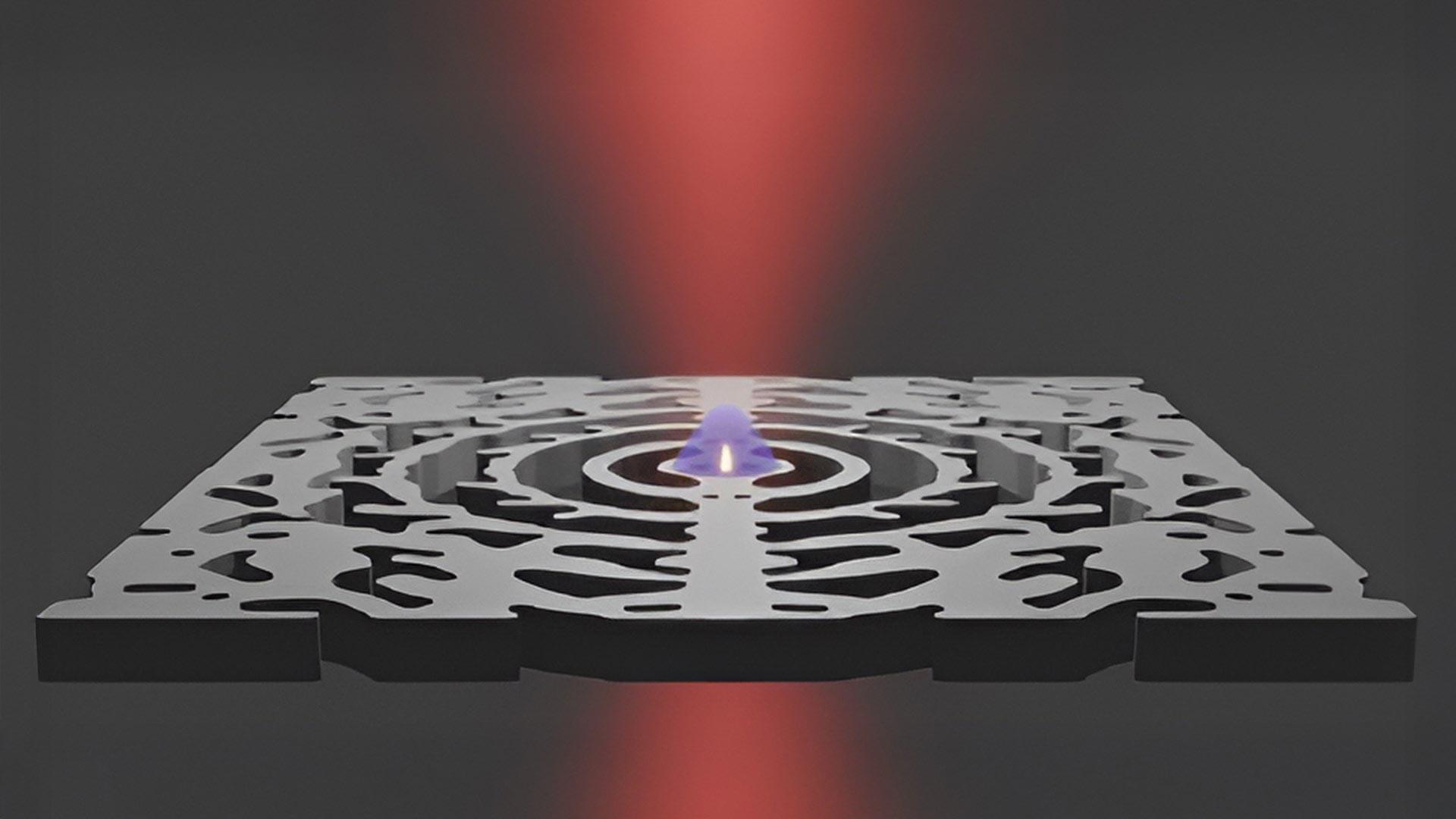
Monoclonal antibodies (mAbs) aid the body against autoimmune diseases and cancer, among other things. Patients have to pick up the medicine every few weeks. It would be easier for them to be able to inject the medicine themselves at home, but this would only be possible if the medications were highly concentrated but not too viscous.

A team at Ruhr University Bochum, Germany, led by Professor Lars Schäfer from the Center for Theoretical Chemistry and the company Boehringer Ingelheim Pharma have developed a quick and realistic simulation method to make this possible. This method can predict how formulations will behave.

The team reports its findings in the Journal of Physical Chemistry.

How Claude Reset the AI Race

Over the holidays, some strange signals started emanating from the pulsating, energetic blob of X users who set the agenda in AI. OpenAI co-founder Andrej Karpathy, who coined the term “vibe coding” but had recently minimized AI programming as helpful but unremarkable “slop,” was suddenly talking about how he’d “never felt this much behind as a programmer” and tweeting in wonder about feeling like he was using a “powerful alien tool.” Others users traded it’s so overs and we’re so backs, wondering aloud if software engineering had just been “solved” or was “done,” as recently anticipated by some industry leaders. An engineer at Google wrote of a competitor’s tool, “I’m not joking and this isn’t funny,” describing how it replicated a year of her team’s work “in an hour.” She was talking about Claude Code. Everyone was.

The broad adoption of AI tools has been strange and unevenly distributed. As general-purpose search, advice, and text-generation tools, they’re in wide use. Across many workplaces, managers and employees alike have struggled a bit more to figure out how to deploy them productively or to align their interests (we can reasonably speculate that in many sectors, employees are getting more productivity out of unsanctioned, gray-area AI use than they are through their workplace’s official tools). The clearest exception to this, however, is programming.

In 2023, it was already clear that LLMs had the potential to dramatically change how software gets made, and coding-assistance tools were some of the first tools companies found reason to pay for. In 2026, the AI-assisted future of programming is rapidly coming into view. The practice of writing code, as Karpathy puts it, has moved up to another “layer of abstraction,” where a great deal of old tasks can be managed in plain English and writing software with the help of AI tools amounts to mastering “agents, subagents, their prompts, contexts, memory, modes, permissions, tools, plugins, skills, hooks, MCP, LSP, slash commands, workflows, [and] IDE integrations” —which is a long way of saying that, soon, it might not involve actually writing much code at all.

First breathing ‘lung-on-chip’ developed using genetically identical cells

Researchers at the Francis Crick Institute and AlveoliX have developed the first human lung-on-chip model using stem cells taken from only one person. These chips simulate breathing motions and lung disease in an individual, holding promise for testing treatments for infections like tuberculosis (TB) and delivering personalized medicine.

The research is published in the journal Science Advances.

Air sacs in the lungs called alveoli are the essential site of gas exchange and also an important barrier against inhaled viruses and bacteria that cause respiratory diseases like flu or TB.

What If the Universe Remembers Everything?

Sometimes crystals behave in surprising ways. A new chemical may resist crystallizing for years, and then, once it happens in one place, it suddenly begins to crystallize easily all over the world.

Sometimes animals, too, show a strange collective learning. Once one group has learned a new behavior, the same species elsewhere seems able to learn it more quickly, even without any direct contact.

In this keynote address, from the Science of Consciousness Conference, Rupert brings these and other examples together to suggest a simple but radical possibility.

All Conference Videos.
/ @thescienceofconsciousness.

To support Rupert’s work click the join button to become a channel member.
… or subscribe on Substack. https://rupertsheldrake.substack.com

John Forbes Nash Jr

(June 13, 1928 – May 23, 2015), known and published as John Nash, was an American mathematician who made fundamental contributions to game theory, real algebraic geometry, differential geometry, and partial differential equations. [ 1 ] [ 2 ] Nash and fellow game theorists John Harsanyi and Reinhard Selten were awarded the 1994 Nobel Prize in Economics. [ 3 ] In 2015, Louis Nirenberg and he were awarded the Abel Prize for their contributions to the field of partial differential equations.

As a graduate student in the Princeton University Department of Mathematics, Nash introduced a number of concepts (including the Nash equilibrium and the Nash bargaining solution), which are now considered central to game theory and its applications in various sciences. In the 1950s, Nash discovered and proved the Nash embedding theorems by solving a system of nonlinear partial differential equations arising in Riemannian geometry. This work, also introducing a preliminary form of the Nash–Moser theorem, was later recognized by the American Mathematical Society with the Leroy P. Steele Prize for Seminal Contribution to Research. Ennio De Giorgi and Nash found, with separate methods, a body of results paving the way for a systematic understanding of elliptic and parabolic partial differential equations.

Archaeology, Anthropology, and Interstellar Communication

Addressing a field that has been dominated by astronomers, physicists, engineers, and computer scientists, the contributors to this collection raise questions that may have been overlooked by physical scientists about the ease of establishing meaningful communication with an extraterrestrial intelligence. These scholars are grappling with some of the enormous challenges that will face humanity if an information-rich signal emanating from another world is detected. By drawing on issues at the core of contemporary archaeology and anthropology, we can be much better prepared for contact with an extraterrestrial civilization, should that day ever come.

NASA SP-2013–4413

Austin Light Rail gets federal ‘blessing’ on environmental analysis, pushing project forward

Austin Transit Partnership Light Rail — “Artist Conceptualizes Visualizations” of rail on the UT campus as of January 2026. Final design is subject to change.

The Austin Light Rail will be built in phases, with Phase 1 to span 9.8 miles, have 15 stations, three park and ride facilities, a new bridge over Lady Bird Lake and an Operations and Maintenance Facility near the airport.

The rail line is supposed to run every five minutes during peak hours and is expected to service 29,000 riders during the work week by 2045, when the regional population is expected to grow toward 4.7 million residents.

Penn engineers turn toxic fungus into anti-cancer compound

face_with_colon_three year 2025.


Penn-led researchers have turned a deadly fungus into a potent cancer-fighting compound. After isolating a new class of molecules from Aspergillus flavus, a toxic crop fungus linked to deaths in the excavations of ancient tombs, the researchers modified the chemicals and tested them against leukemia cells. The result? A promising cancer-killing compound that rivals FDA-approved drugs and opens up new frontiers in the discovery of more fungal medicines.

“Fungi gave us penicillin,” says Sherry Gao, Presidential Penn Compact Associate Professor in Chemical and Biomolecular Engineering (CBE) and in Bioengineering (BE) and senior author of a new paper in Nature Chemical Biology on the findings. “These results show that many more medicines derived from natural products remain to be found.”

/* */