You are invited to presentations by “The Immortality Thief: How Toxins Shorten Life — and How to Fight Back with Glutathione, TPE & Beyond.” Bill Faloon will also give an update on Age Reversal presentation. — March 26, 2026” Our doors open at 6:00 PM with the main event at 7:00 PM Live in Person AND in Zoom and YouTube Livestream Afterwards, enjoy a 5 star banquet and conversations with members on Health and Super Longevity.
Get the latest international news and world events from around the world.
Biohacks & Brain Mods
Biohacks and brain implants are coming fast. From memory upgrades to neural meshes, how will implant culture reshape identity, economics, and civilization itself?
Get Nebula using my link for 50% off an annual subscription: https://go.nebula.tv/isaacarthur.
Watch my exclusive video Lazarus Protocols: https://nebula.tv/videos/isaacarthur–… out Tech Alter: https://nebula.tv/techaltar?ref=isaac… and Day Pass: https://nebula.tv/daypass?ref=isaacar… 🛒 SFIA Merchandise: https://isaac-arthur-shop.fourthwall… 🌐 Visit our Website: http://www.isaacarthur.net ❤️ Support us on Patreon: / isaacarthur ⭐ Support us on Subscribestar: https://www.subscribestar.com/isaac-a… 👥 Facebook Group:
/ 1,583,992,725,237,264 📣 Reddit Community:
/ isaacarthur 🐦 Follow on Twitter / X:
/ isaac_a_arthur 💬 SFIA Discord Server:
/ discord Credits: Biohacks & Brain Mods — The Coming Age of Implant Culture Written, Produced & Narrated by: Isaac Arthur Edited by: Chris Gray & Donagh Broderick Select imagery/video supplied by Getty Images Chapters 0:00 Intro 1:28 The First Layer – The Implants Already Here 3:08 The Early Adoption Phase – Niche Enhancements 5:27 Safety vs Freedom 8:25 Implant Economics 14:31 The Social Shift – The Rise of Implant Culture 20:04 Minds in Motion – Cognitive Architecture as a Design Space 21:50 Implant Maximalism – Full-Stack Upgrades 23:03 Nebula 24:09 Post-Implant Society – Upgrades as Life Stages 25:40 The Far Horizon – When Implants Become Civilization.
Check out Tech Alter: https://nebula.tv/techaltar?ref=isaac…
and Day Pass: https://nebula.tv/daypass?ref=isaacar…
🛒 SFIA Merchandise: https://isaac-arthur-shop.fourthwall…
🌐 Visit our Website: http://www.isaacarthur.net.
❤️ Support us on Patreon: / isaacarthur.
⭐ Support us on Subscribestar: https://www.subscribestar.com/isaac-a…
👥 Facebook Group: / 1583992725237264
📣 Reddit Community: / isaacarthur.
🐦 Follow on Twitter / X: / isaac_a_arthur.
💬 SFIA Discord Server: / discord.
Credits:
Biohacks & Brain Mods — The Coming Age of Implant Culture.
Written, Produced & Narrated by: Isaac Arthur.
Edited by: Chris Gray & Donagh Broderick.
Select imagery/video supplied by Getty Images.
Chapters.
0:00 Intro.
1:28 The First Layer – The Implants Already Here.
3:08 The Early Adoption Phase – Niche Enhancements.
5:27 Safety vs Freedom.
8:25 Implant Economics.
14:31 The Social Shift – The Rise of Implant Culture.
20:04 Minds in Motion – Cognitive Architecture as a Design Space.
21:50 Implant Maximalism – Full-Stack Upgrades.
23:03 Nebula.
24:09 Post-Implant Society – Upgrades as Life Stages.
25:40 The Far Horizon – When Implants Become Civilization.
Read more
How a One-in-a-Billion Mistake Made the Universe Possible
Huge thanks to KiwiCo for sponsoring today’s video! Go to https://www.kiwico.com/spacetime and use code SPACETIME for 50% off your first monthly crate.
Check Out Reactions on the Earth Month Playlist.
• Why Norway’s Osmosis Power Plant Failed.
At one-one-thousandth of a second after the Big Bang, the great annihilation event should have wiped out all matter, leaving a universe of only radiation. Why still don’t know why any matter survived. Well, a new finding from the LHC brings us one step closer to understanding why there’s something rather than nothing.
Dr. Caplan Paper for Review:
https://arxiv.org/abs/2312.
Sign Up on Patreon to get access to the Space Time Discord!
/ pbsspacetime.
Check out the Space Time Merch Store.
Adversarial AI reveals mechanisms and treatments for disorders of consciousness
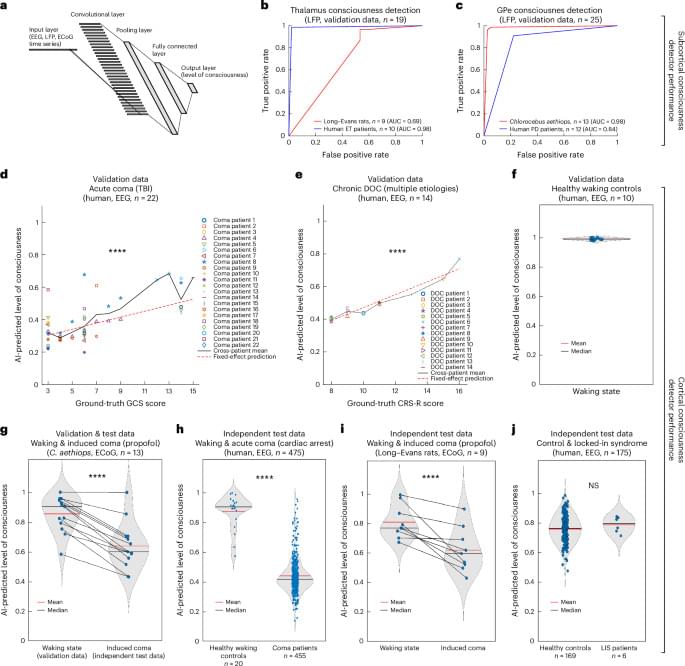
Researchers led by UCLA have developed an adversarial AI framework that may help explain how consciousness breaks down after brain injury — and how it might one day be restored. Published in Nature Neuroscience, the study used deep neural networks trained on more than 680,000 neuroelectrophysiology samples and validated findings across 565 patients, healthy volunteers, and animals. The model identified specific circuit-level disruptions linked to disorders of consciousness, including the basal ganglia indirect pathway and altered inhibitory cortical wiring.
What makes this so important is that it pushes consciousness research closer to mechanism. Instead of only asking what consciousness is, this kind of work asks: what specific brain circuitry fails when consciousness is lost, and can that failure be targeted? The study also identified high-frequency stimulation of the subthalamic nucleus as a promising intervention, supported by human electrophysiological data. This is the kind of neuroscience that makes consciousness feel less like pure philosophy — and more like something we may eventually model, test, and repair.
Abstract: Nature Neuroscience Adversarial AI reveals mechanisms and treatments for disorders of consciousness.
Toker et al. present an AI framework that identifies mechanisms of consciousness. The model predicts new drivers of unconsciousness and identifies subthalamic nucleus stimulation as a potential therapy for disorders of consciousness.
Phagocytosis and neuroinflammation: orchestrating central nervous system homeostasis, repair, and the resolution of inflammation
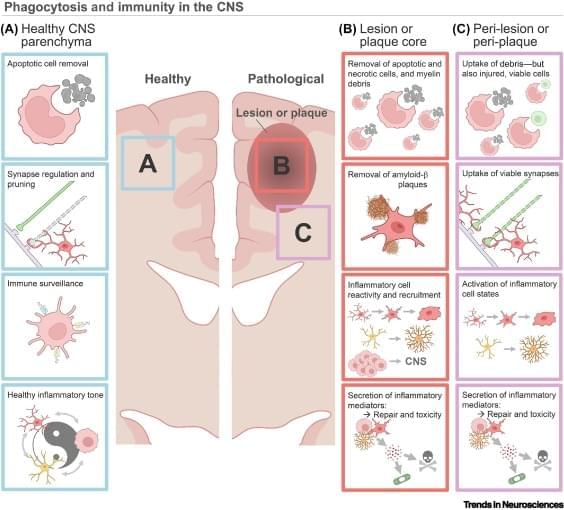
Brain phagocytosis and neuroinflammation.
Phagocytes in the central nervous system (CNS), including astrocytes, microglia, and macrophages, shape development and homeostasis by pruning synapses and removing apoptotic debris.
Phagocytosis is mediated by various ligand–receptor dyads and signaling pathways, enabling CNS phagocytes to respond to neuroimmune shifts across the lifespan and during pathology.
Phagocytosis pathways regulate recovery in various models of CNS pathology, including multiple sclerosis, CNS injury, ischemic stroke, and age-associated neurodegeneration.
Phagocytosis pathways are intimately integrated with the inflammatory cell state and remove viable cells in pathology-adjacent tissue, highlighting the complexity of targeting these systems.
To maximize benefit and minimize off target damage, new phagocytic-based approaches should optimize drug delivery timing and location, tailored to each CNS pathology. sciencenewshighlights ScienceMission https://sciencemission.com/resolution-of-inflammation
Building a National Quantum Strategy
Andrea Damascelli has always been fascinated by light. He uses it to probe materials on an atomic level, and his observations have contributed to the condensed-matter community’s understanding of high-temperature superconductors and quantum materials. His research group at the University of British Columbia (UBC) uses time-, spin-, and angle-resolved photoemission spectroscopy, an intricate technique that maps the energy and velocity of electrons as they propagate through materials.
In 2015, Damascelli spearheaded efforts that brought one of the first Canada First Research Excellence Fund (CFREF) grants to UBC’s Quantum Matter Institute. As the institute’s scientific director, he found himself at the helm of a full-blown research center—hiring faculty, expanding staff, and upgrading facilities. A few months later, he received a special request from Canada’s National Research Council: join leaders from across Canada’s quantum ecosystem to advise on a strategy for growing the country’s quantum community as a whole.
Physics Magazine chatted with Damascelli as he looked back on the beginning of Canada’s first National Quantum Strategy (NQS) and looked forward to developing a self-sustaining quantum research and training powerhouse.
Organocatalytic strategy provides a metal-free route to antiviral candidates
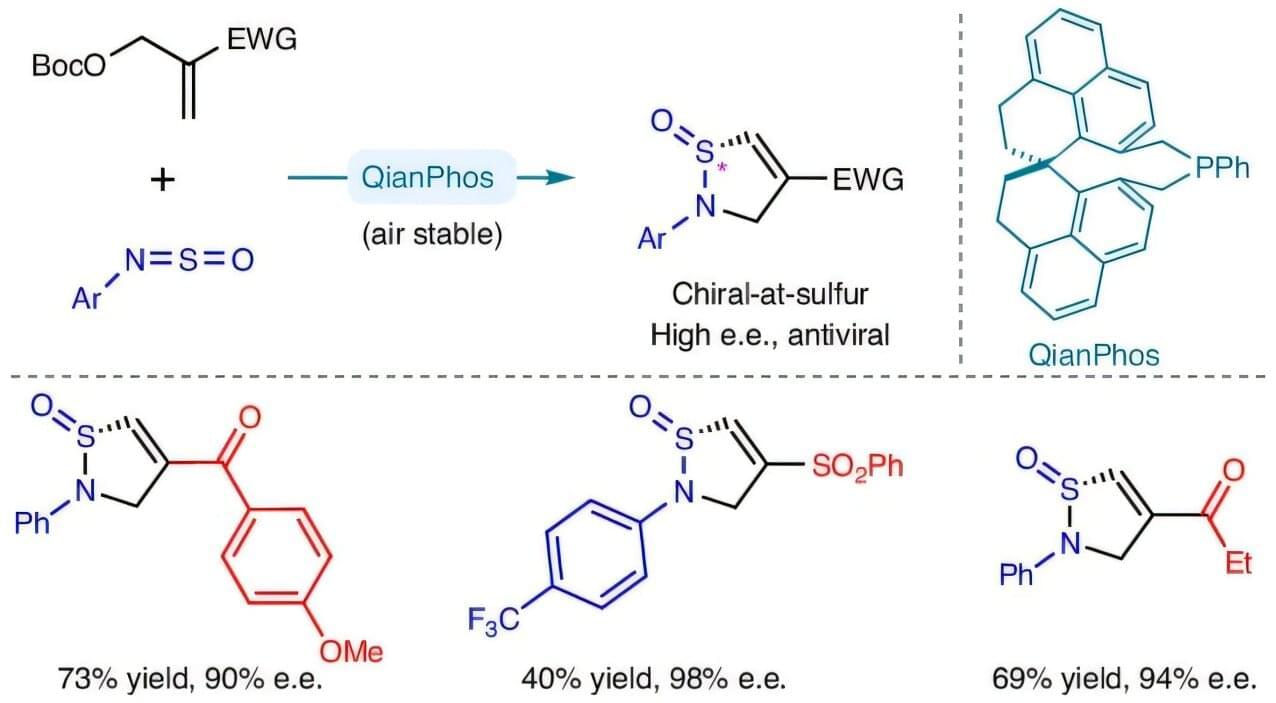
A research team led by Prof. Sun Jianwei has achieved an advancement in organic synthesis and medicinal chemistry by developing an air-stable chiral phosphine-catalyzed enantioselective approach to synthesize enantioenriched S(IV)-stereogenic vinyl sulfinamides—an under-explored class of organosulfur compounds with promising antiviral activity.
The importance of chiral-at-sulfur compounds in drug discovery and organic synthesis is indisputable. More than a quarter of top-selling small molecule pharmaceuticals contain sulfur atoms, and chiral sulfinamides bearing S(IV) chirality are key building blocks for medicinal chemistry, asymmetric synthesis auxiliaries, and catalytic ligands. However, current methods to access enantioenriched sulfinamides rely on transition metal catalysis with organometallic nucleophiles, and efficient organocatalytic strategies have long remained unexplored, creating a critical gap in synthetic chemistry for this valuable chemical space.
To address this challenge, Prof. Sun’s team published a study in Nature Chemistry detailing the design and synthesis of a novel C₂-symmetric chiral phosphine catalyst—QianPhos—derived from the SPHENOL chiral skeleton. This custom catalyst exhibits extraordinary air stability and structural rigidity, which enables highly chemo-, enantio-, and diastereoselective C−S bond formation via a [3+2] annulation between Morita–Baylis–Hillman (MBH) esters and sulfinylamines.
Silicon nanospheres boost WS₂ second-harmonic generation 40-fold while preserving polarization
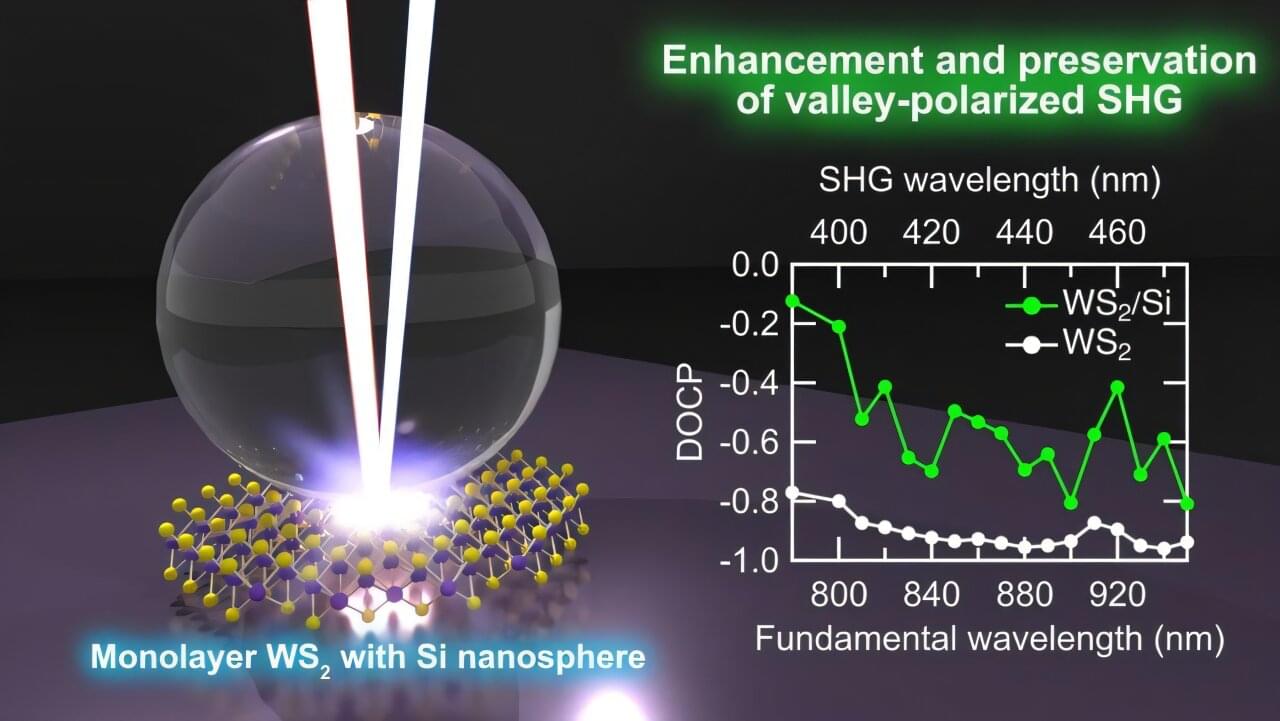
A research team has demonstrated that silicon nanospheres can strongly enhance second-harmonic generation (SHG) from an atomically thin semiconductor while preserving the circular polarization information tied to its valley degree of freedom. The study, published in Nano Letters, provides design guidelines for efficient, polarization-preserving nonlinear light sources at the nanoscale.
SHG is a nonlinear optical process that converts light to twice its original frequency. Monolayer transition-metal dichalcogenides (TMDs) such as tungsten disulfide (WS2) possess valley-dependent optical selection rules that link circular polarization directly to the electronic valley index, making the SHG polarization state a direct readout of valley information.
To harness the valley degree of freedom as an information carrier in valleytronics, it is essential to enhance the SHG signal while preserving its circular polarization. However, the atomic-scale thickness of monolayer TMDs severely limits conversion efficiency, and previous approaches using nanostructures to boost the signal have disrupted the valley-polarization information—a dilemma of “enhance the signal, lose the polarization.”
Hearing research traces evolution of key inner ear protein
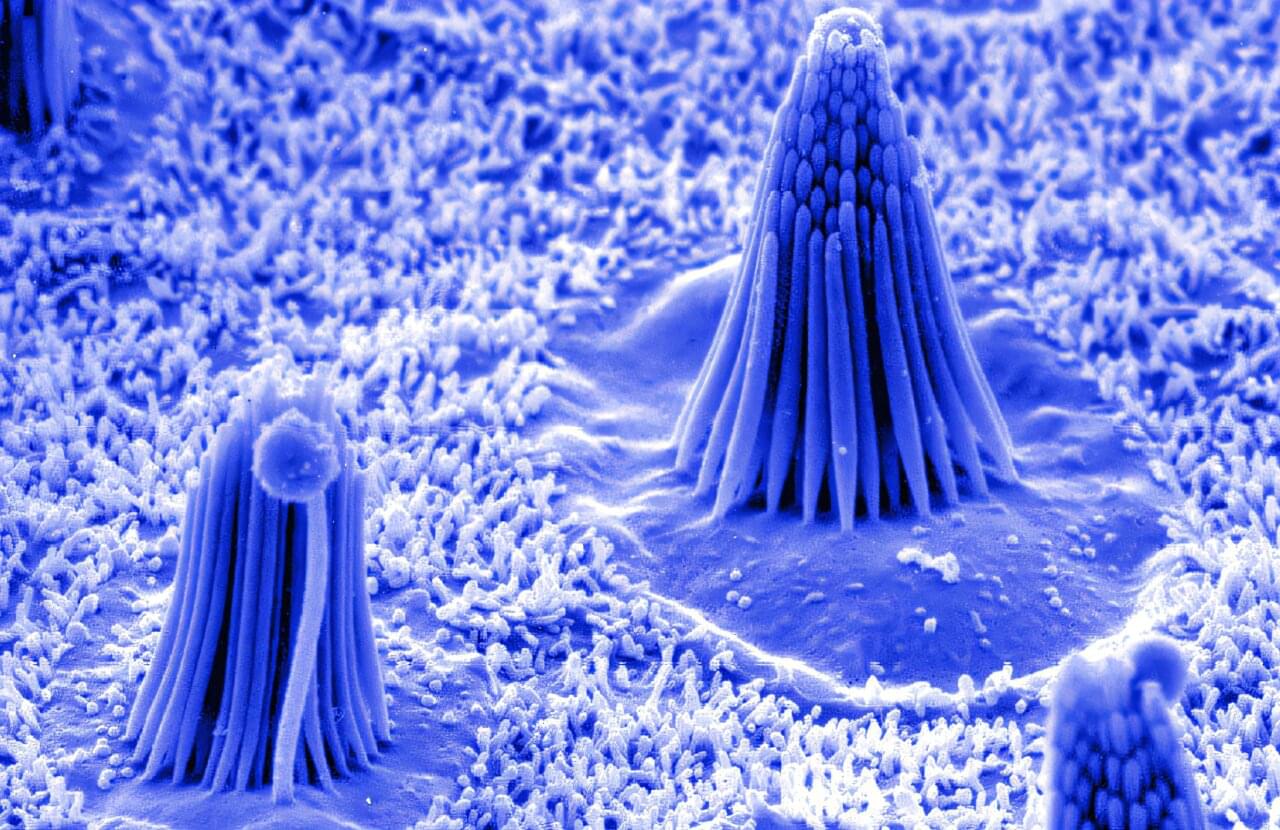
In the intricate machinery of the inner ear, hearing begins with a protein that moves a few billionths of a meter up to 100,000 times per second. That protein, called TMC1, sits at the tips of sensory hair cells deep in the snail-shaped cochlea. When sound waves move these microscopic hairs, TMC1 acts as a channel, opening and allowing charged particles to flow into the cell and trigger an electrical signal to the brain.
Without TMC1, that signal never starts. Mutations in the TMC1 gene are a well-known cause of hereditary hearing loss in humans. Because of this central role, TMC1 is an attractive target for researchers designing gene therapies aimed at restoring hearing. Several groups are testing ways to supply working copies of the gene or fix harmful mutations.
For these efforts to be safe and effective, scientists need to know in detail how TMC1 is built, how it opens, and which parts of the protein are most sensitive to change. However, the hair-cell system that includes TMC1 is so complex, sensitive, and hard to access that it is notoriously difficult to take apart and study directly.