We’re working on this problem. Please try again later.
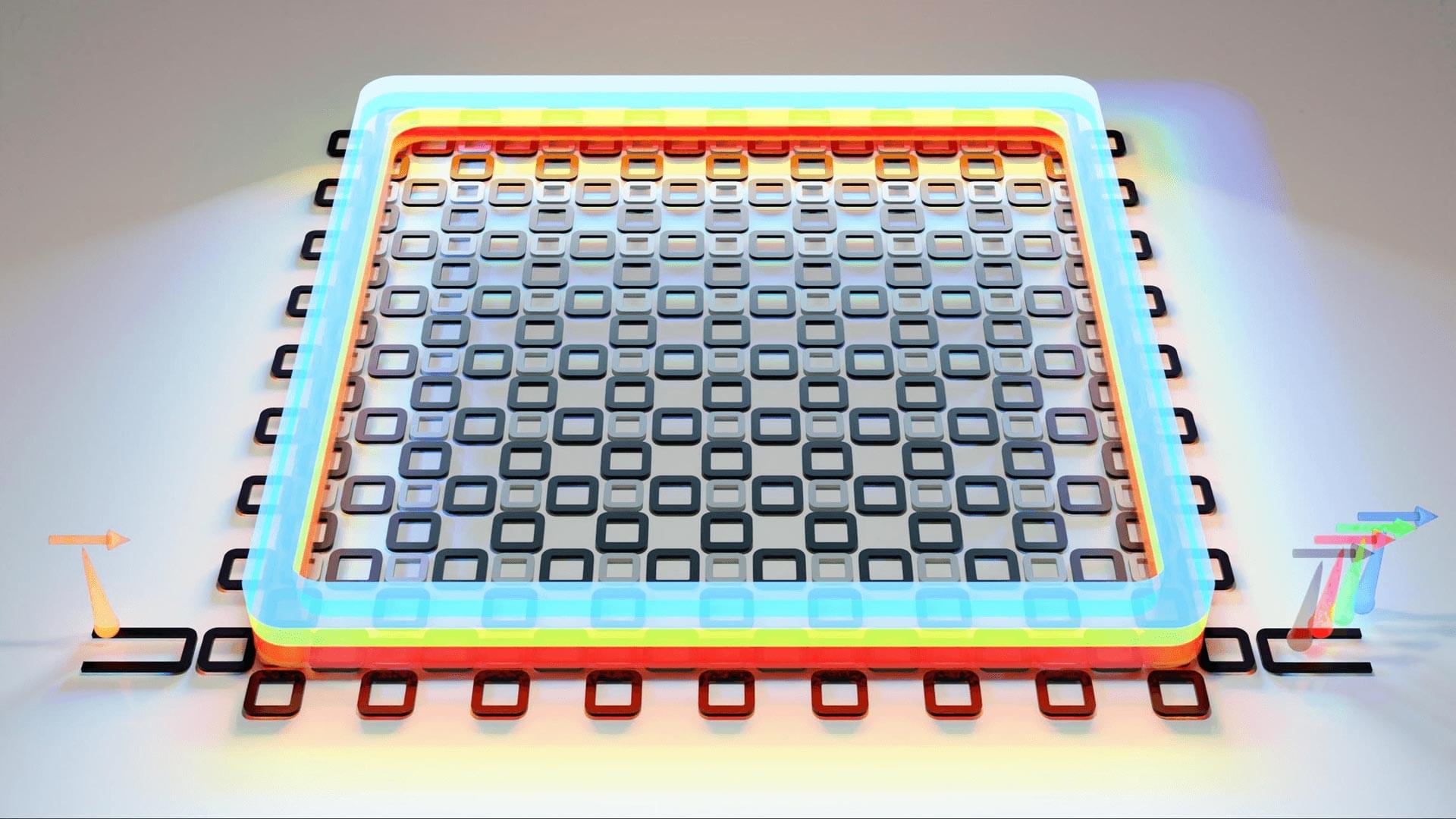
For decades, scientists and engineers have steadily advanced technologies that control and manipulate light. These tools now underpin everything from ultra-precise atomic clocks to the massive data flows moving through modern data centers.
As industries increasingly rely on optical systems, the market for dependable light-based technologies has grown into a sector worth hundreds of billions of dollars worldwide.


Supply chain attacks are now a top cyber threat—SolarWinds and Colonial Pipeline showed how one weak link can cascade across entire sectors.
In my latest article, I examine how AI, 5G, IoT, and quantum computing are expanding both risks and defenses, and share practical steps: zero trust, SBOMs, supplier audits, public-private collaboration, and board-level ownership.
Cyber supply chain security is no longer optional—it’s essential for resilience, innovation, and national security.
Read the full piece: The Cybersecurity Challenges of the Supply Chain https://www.govconwire.com/articles/chuck-brooks-govcon-expe…hain-risks.
#cybersecurity #technology #supplychain
By Chuck Brooks, president of Brooks Consulting International and one of Executive Mosaic’s GovCon Experts

The everyday picture: a world of objects
We ordinarily think of the world as a collection of things or individual objects: tables, trees, planets, particles, people.
This way of thinking is not only intuitive but also tremendously useful. Whether crossing a busy street or hunting prey, we survive by tracking the motions of objects —judging their distances, anticipating their paths, and timing our actions accordingly. Evolutionarily speaking, this is a worldview to which humanity owes its continued existence.
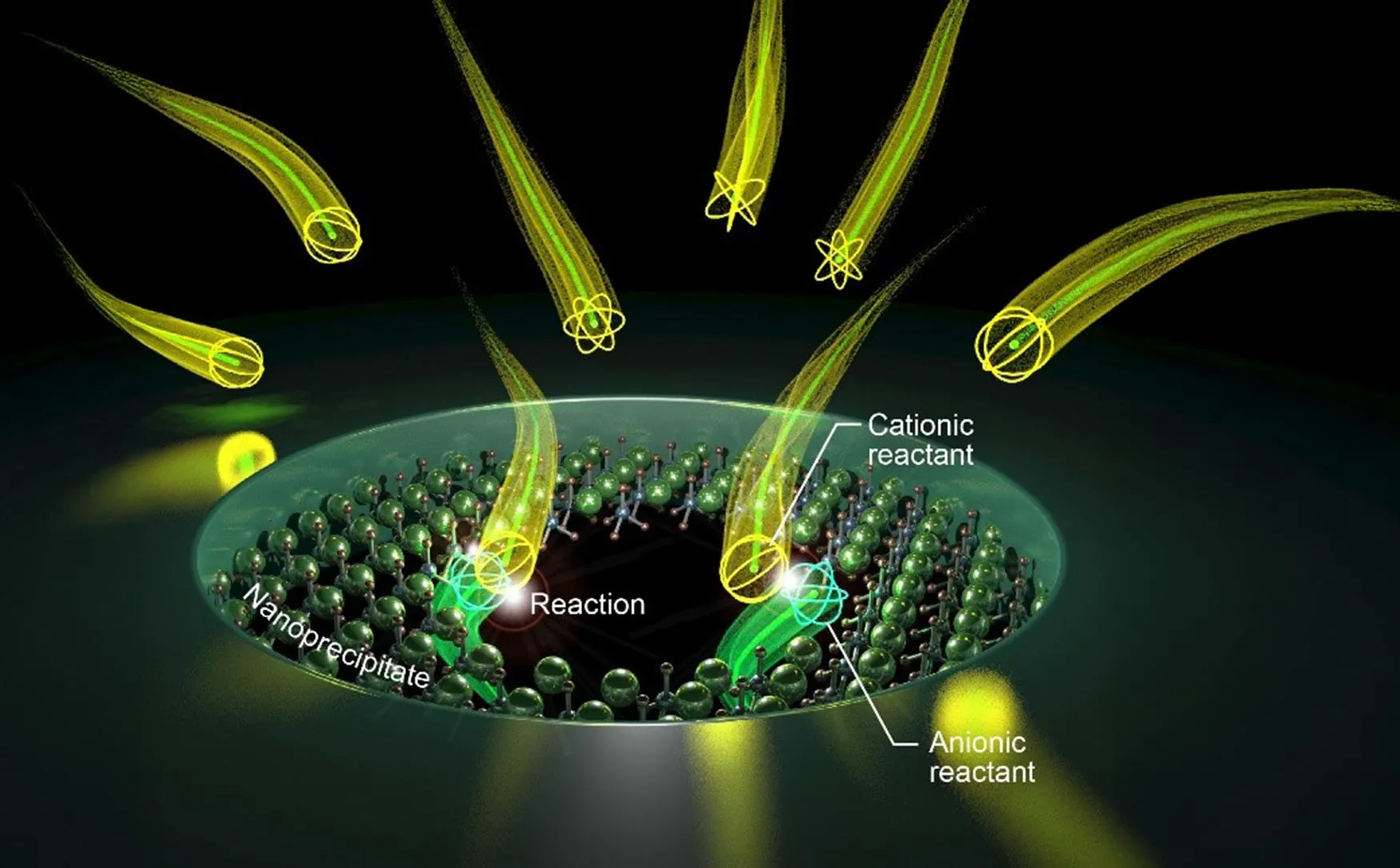
Scientists have taken a major step toward mimicking nature’s tiniest gateways by creating ultra-small pores that rival the dimensions of biological ion channels—just a few atoms wide. The breakthrough opens new possibilities for single-molecule sensing, neuromorphic computing, and studying how matter behaves in spaces barely larger than atoms.

What was I thinking? This is not as easy or straightforward a question as I would have thought. As soon as you try to record and categorise the contents of your consciousness – the sense impressions, feelings, words, images, daydreams, mind-wanderings, ruminations, deliberations, observations, opinions, intuitions and occasional insights – you encounter far more questions than answers, and more than a few surprises. I’d always assumed that my stream of consciousness consisted mainly of an interior monologue, maybe sometimes a dialogue, but was surely composed of words; I’m a writer, after all. But it turns out that a lot of my so-called thoughts – a flattering term for these gossamer traces of mental activity – are preverbal, often showing up as images, sensations, or concepts, with words trailing behind as a kind of afterthought, belated attempts to translate these elusive wisps of meaning into something more substantial and shareable.
I discovered this because I’ve been going around with a beeper wired to an earpiece that sends a sudden sharp note into my left ear at random times of the day. This is my cue to recall and jot down whatever was going on in my head immediately before I registered the beep. The idea is to capture a snapshot of the contents of consciousness at a specific moment in time by dipping a ladle into the onrushing stream.
Sounds simple, but what the ladle scoops up is harder to describe than you might expect. Yes, these are my own thoughts, and who should know more about them than me, their thinker? Yet I’m finding that what we know about our own thinking is considerably less than we think.
The beeper exercise is part of a psychology experiment I volunteered to take part in. Descriptive experience sampling is a research method developed by Russell T Hurlburt, a social psychologist at the University of Nevada, Las Vegas; he has been using it for 50 years – which is to say, his entire career. To give you some perspective, beepers didn’t exist 50 years ago. Hurlburt, trained as an engineer, had to design and build his own unit, on which he holds a patent. It looks like an old-timey pocket radio: grey plastic, with one of those corrugated dials you rotate with your thumb to turn the thing on and boost the volume; the earpiece is flesh-toned, as that term was understood in 1973. For half a century now, Hurlburt has been scrupulously collecting reports of people’s inner experiences at random moments – and just as scrupulously resisting the urge to draw premature conclusions. A die-hard empiricist, he is as devoted to data as he is allergic to theories.
Scientists and philosophers studying the mind have discovered how little we know about our inner experiences.

How can scientists measure viscosity inside a living cell, whose entire volume is just a few picolitres? Using computer simulations, researchers evaluated magnetic rotational spectroscopy, a technique that spins microscopic magnetic wires to probe the cytoplasm. The study shows that the motion generated by the wire is extremely localized, affecting less than one percent of the cell, so the measurement does not harm the cell. The results also confirm that, under standard conditions, magnetic rotational spectroscopy accurately captures the cytoplasmic viscosity. These findings validate magnetic rotational spectroscopy as a precise and minimally invasive technique for quantifying the mechanical properties of living cells.
Read the article in Interface.
Abstract. Recent studies have highlighted intracellular viscosity as a key biomechanical property with potential as a biomarker for cancer cell metastasis.

A research team asked whether rejuvenating these engram neurons could recover memory after decline has already begun? In a study published in Neuron, the team reports that “partial reprogramming” of engram neurons restores memory performance in multiple mouse settings. The approach uses a short, controlled pulse of three genes, Oct4, Sox2 and Klf4 referred together as “OSK”
Previous studies have shown that carefully timed expression of these factors can reset several aging-related features in cells. Here, the team targeted OSK specifically at the engram neurons that are active during learning, rather than broadly across the entire brain.
Working on mice, the researchers used gene therapy vectors (adeno-associated viruses) delivered by precise brain injections. They combined two elements: a system that adds a fluorescent tag to neurons that are activated by learning, and a switch that briefly turns OSK on during a defined time window.
The team used their approach in brain areas known to support different kinds of memory: the dentate gyrus of the hippocampus, which is important for learning and recent recall, and the medial prefrontal cortex, which contributes to remote recall two weeks later.
In aged mice, briefly activating OSK in learning-related hippocampal engram neurons restored memory, essentially bringing performance back to levels seen in young controls. When the same approach was applied to prefrontal cortex engrams, it also recovered remote memories formed weeks earlier.
The reprogrammed engram neurons also showed signs of improved health. They maintained their neuronal identity and displayed molecular features associated with a younger state, including changes in nuclear structure linked to aging.
The team then tested mouse models of Alzheimer’s disease. In a spatial-learning task, the mice showed inefficient navigation and impaired memory strategies. Reprogramming dentate gyrus engrams improved learning strategies during training, while targeting prefrontal engrams restored long-term spatial memory.
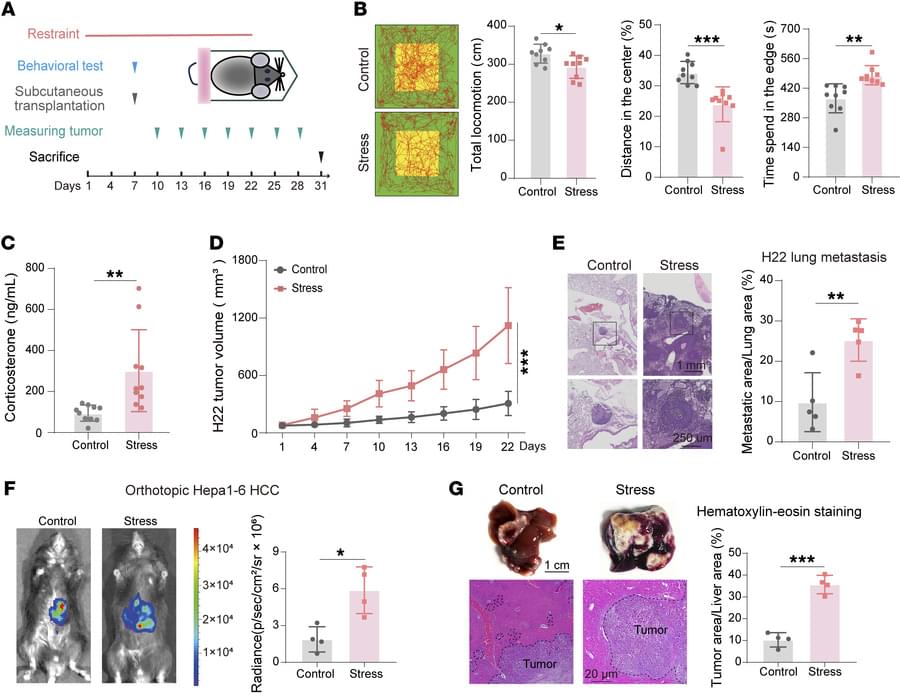
Here, Xuetian Yue discover chronic stress promotes aminopeptidase N expression to increase glutathione synthesis and inhibit ferroptosis in models of liver cancer.
1Department of Cellular Biology, School of Basic Medical Sciences;
2Key Laboratory for Experimental Teratology of Ministry of Education and Department of Immunology, School of Basic Medical Sciences; and.
3Key Laboratory for Experimental Teratology of the Ministry of Education, Department of Histology and Embryology, School of Basic Medical Sciences, Cheeloo Medical College, Shandong University, Jinan, China.