Toggle light / dark theme

Get the latest international news and world events from around the world.

Log in for authorized contributors

Key transistor for next-generation 3D stacked semiconductors operates without current leakage

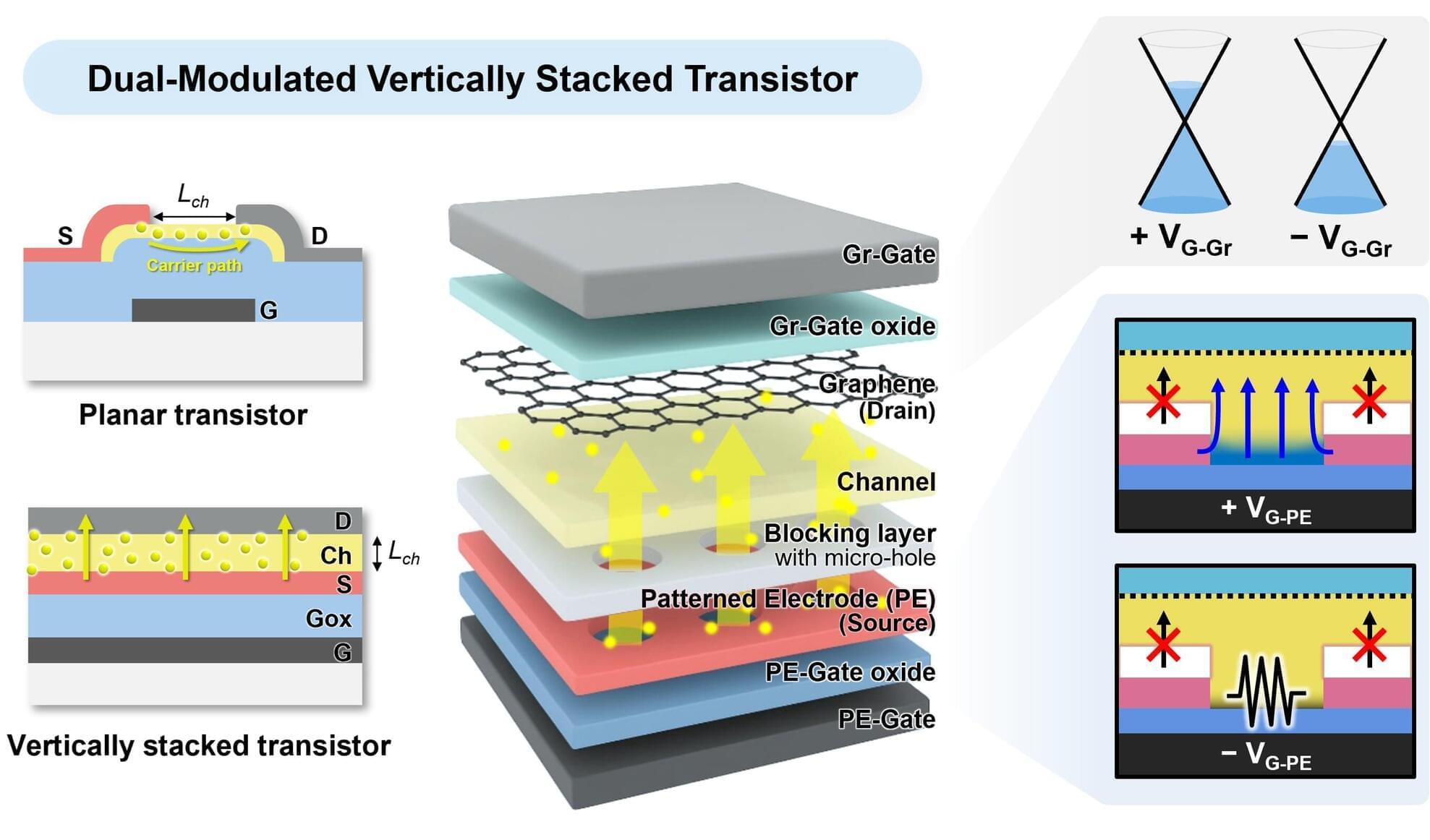
A research team led by Professor Jae Eun Jang and Dr. Goeun Pyo from the Department of Electrical Engineering and Computer Science at DGIST has developed “dual-modulated vertically stacked transistors” that operate stably without current leakage even in two-dimensional nanoscale channel structures. A study on this work is published in the journal Advanced Science.

In recent years, the semiconductor industry has faced physical limitations as the demand to integrate more devices within limited space continues to grow. To overcome these constraints, “vertically stacked transistors,” in which current-carrying channels are vertically layered, have emerged as a promising alternative for next-generation 3D semiconductors. However, conventional vertically stacked transistors suffer from a critical drawback in which gate electric signals are not delivered uniformly into the channel interior due to their electrode structure, consequently leading to current leakage or unstable device operation as the channel length becomes shorter.

To address this issue, the research team proposed a “dual-modulation structure” in which two gates—positioned above and below—control the channel through different mechanisms. This represents an innovative approach in which current flows in a sandwich-like configuration, with the upper and lower electrodes facing each other across the channel.

Frog-cell ‘neurobots’ grow self-organized nervous systems and alter gene activity

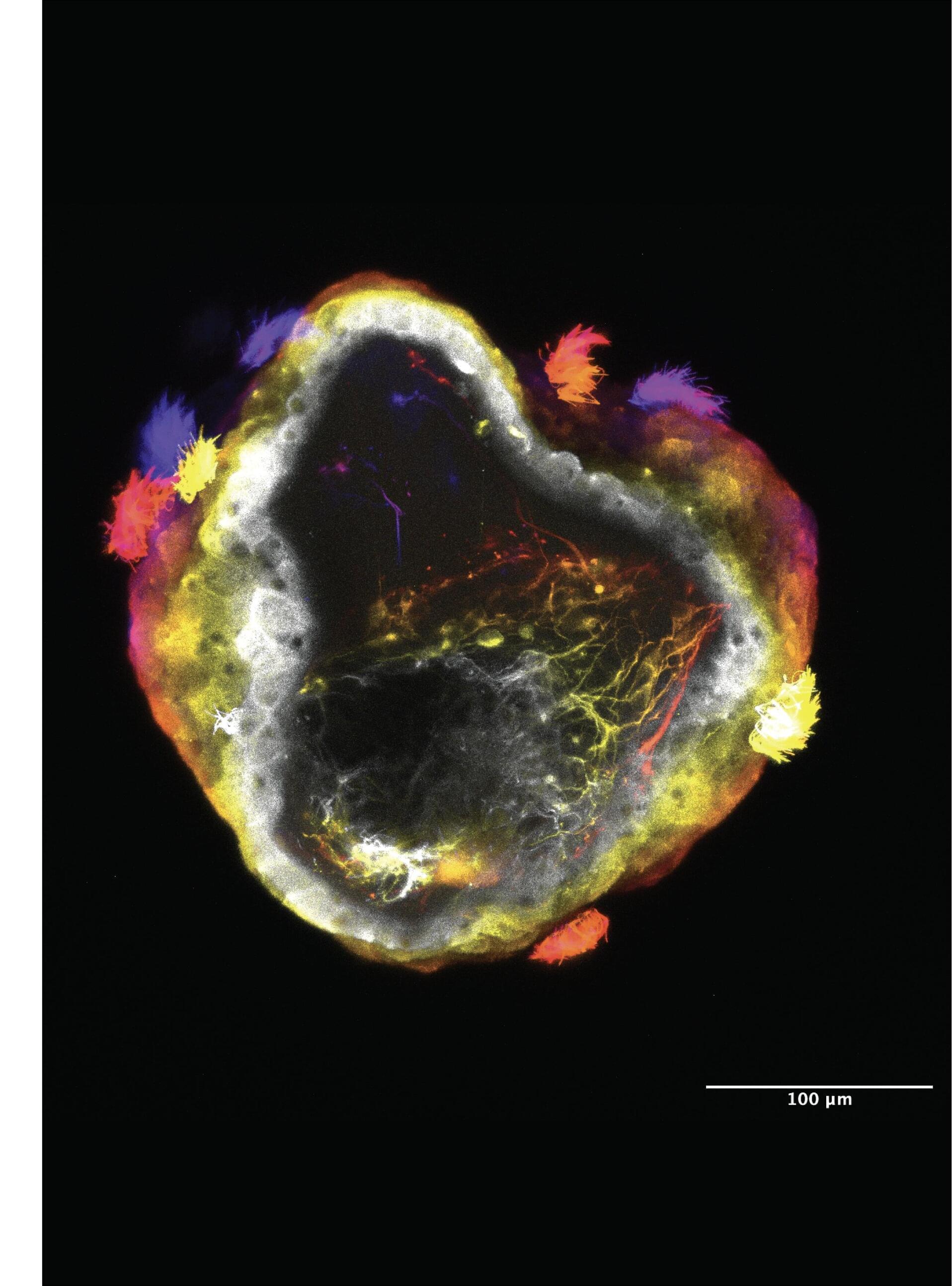
Biobots, whose growing line of variants started with xenobots, are fascinating tiny self-powered living robots built exclusively using frog embryonic cells. Originally developed in the laboratories of Wyss Institute Associate Faculty member and Tufts University Professor Michael Levin, Ph.D. and his collaborators at University of Vermont, biobots are remarkably motile, moving autonomously through aqueous environments.

Since then, the team has shed light on many exciting properties of biobots, including their ability for kinematic self-replication, and responding to sound stimuli.

Biobots can similarly be constructed using human cells in the form of anthrobots, which have the ability to heal neural wounds in vitro. Thus, a vision emerged that biobots, made out of patients’ own cells, could one day be deployed to repair spinal cord or retinal nerve damage, clear plaques from the arteries, locally deliver pro-regenerative drugs, and perform other vital tasks in the human body.

Molecular chains with bite: Customized carbon nanoribbons open a cleaner path to molecular electronics

The longest chains of the conductive polymer poly(p-phenylene; PPP) produced to date are just under one micrometer (thousandth of a millimeter) long—almost an order of magnitude longer than previously possible. A research team from the fields of chemistry and physics led by Prof. Dr. Michael Gottfried from Marburg University, Germany, has demonstrated for the first time that PPP can be synthesized on surfaces via a specific ring-opening polymerization as genuine chain growth.

The statistically most frequently measured length is around 170 nanometers—with one outlier reaching nearly 1,000 nanometers—a record. The new, halogen-free process does not produce any disruptive by-products, thus opening up a particularly clean approach to ultra-long, conjugated polymer chains.

The results have been published by the interdisciplinary team from the Universities of Marburg, Giessen and Leipzig and Chinese researchers in the journal Nature Chemistry.

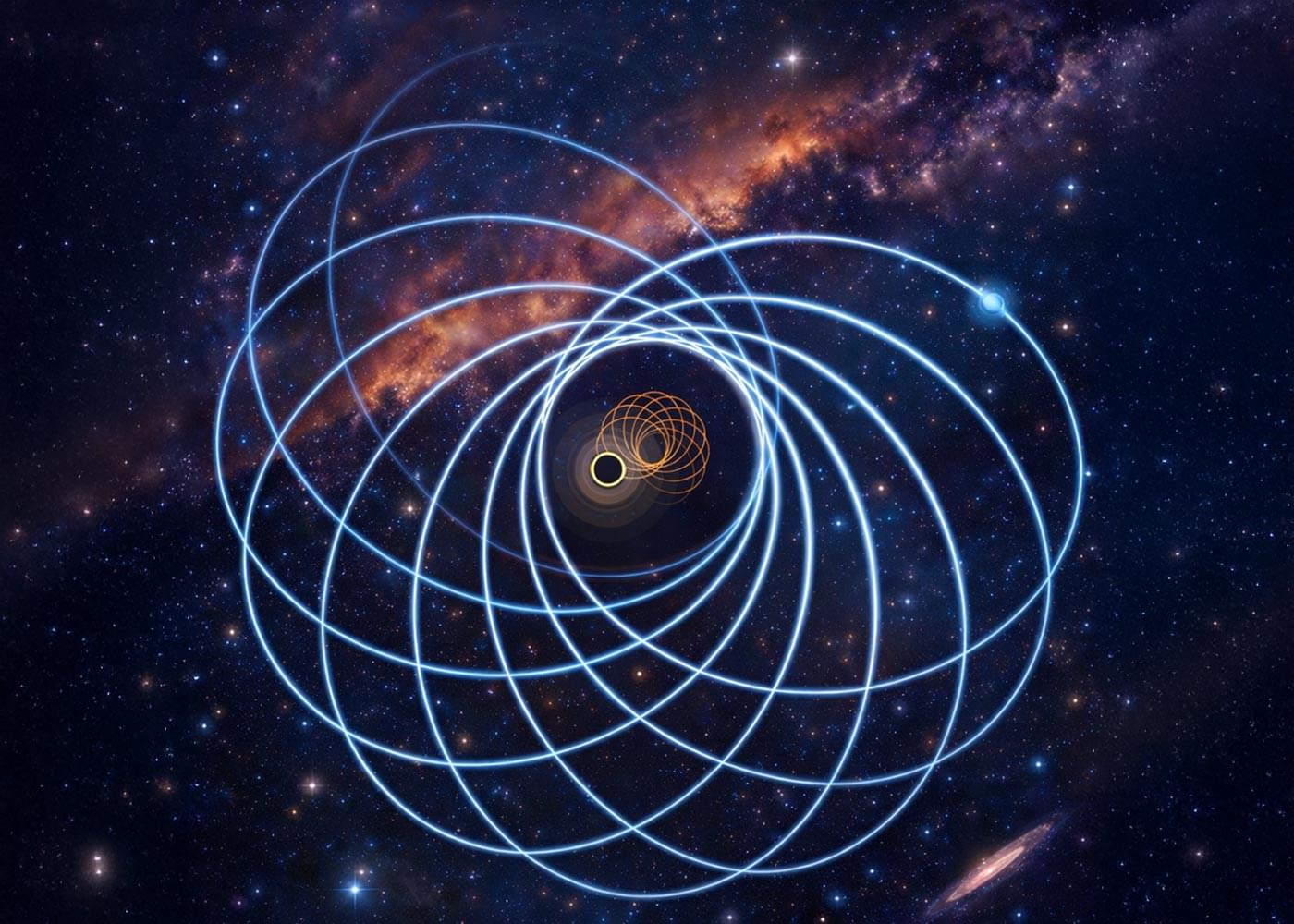
Scientists Spot a Black Hole-Neutron Star Pair Breaking the Rules of Cosmic Orbits

A newly analyzed gravitational-wave event has revealed something unexpected about one of the Universe’s most violent encounters. Scientists have found the first strong evidence that a black hole and a neutron star collided while moving along an oval shaped orbit instead of the nearly perfect circ

GlassWorm Attack Uses Stolen GitHub Tokens to Force-Push Malware Into Python Repos

The GlassWorm malware campaign is being used to fuel an ongoing attack that leverages the stolen GitHub tokens to inject malware into hundreds of Python repositories.

“The attack targets Python projects — including Django apps, ML research code, Streamlit dashboards, and PyPI packages — by appending obfuscated code to files like setup.py, main.py, and app.py,” StepSecurity said. “Anyone who runs pip install from a compromised repo or clones and executes the code will trigger the malware.”

According to the software supply chain security company, the earliest injections date back to March 8, 2026. The attackers, upon gaining access to the developer accounts, rebasing the latest legitimate commits on the default branch of the targeted repositories with malicious code, and then force-pushing the changes, while keeping the original commit’s message, author, and author date intact.

/* */