Toggle light / dark theme

Get the latest international news and world events from around the world.

Log in for authorized contributors

Insufficient Sleep in Adolescents and the Need for System Changes

💬 Editor’s Note by JAMA Editorial Fellow Randi Bates and JAMA Deputy Editor Tracy Lieu: Adolescents face increasing rates of insufficient sleep, driven by early school start times and digital media use, undermining cognitive and mental health.


Insufficient sleep is one of the most common health risks in adolescents and is associated with worse cognitive performance and academic achievement, as well as depression, other mental health conditions, and physical concerns. The American Academy of Sleep Medicine and American Academy of Pediatrics (AAP) recommend adolescents aged 13 to 18 years sleep for 8 to 10 hours each night.1 Yet, studies have found that adequate sleep eludes most adolescents.2

In this issue of JAMA, Bommersbach and colleagues report worsening trends in insufficient sleep duration among US high school students based on an analysis of the national Youth Risk Behavior Survey.3 Insufficient sleep increased from 68.9% in 2007 to 76.8% in 2023, largely from increases in very short sleep durations of less than or equal to 5 hours per night. This trend was observed in all demographic groups and was generally consistent across subgroups characterized by behavioral risk factors.

These sweeping patterns suggest that structural and environmental factors may be driving increases in insufficient sleep at the population level. Although some studies have focused on changing individual behavior to increase sleep, such interventions may have limitations in adolescents whose self-regulatory and decision-making abilities are still maturing. Additionally, adolescents may lack sufficient agency to overcome school or social system barriers that limit sleep.

Why Reality Is Just Information | Leonard Susskind

Have you ever felt like the world around you isn’t exactly
 “real”? Modern physics is starting to suggest something incredible: The universe isn’t made of atoms, energy, or particles. It is made of Information. In this video, we explore the radical “It from Bit” theory and the Holographic Principle. From the mysterious paradoxes of Black Holes and Hawking Radiation to the way quantum entanglement might actually create the fabric of space and time, we dive deep into the mind-bending reality of quantum mechanics. In this video, we cover: Why Stephen Hawking conceded the Black Hole Information Paradox. The Ryu-Takayanagi formula: How entanglement builds geometry. Why 3D space might just be a 2D holographic projection. The “It from Bit” philosophy by John Wheeler. How consciousness relates to Integrated Information Theory (IIT). If reality is just a pattern of qubits in a vast Hilbert space, what does that make us? Join us as we deconstruct the material world and look at the “source code” of the universe. #QuantumPhysics #HolographicUniverse #ItFromBit #TheoreticalPhysics #ScienceDocumentary #SpaceTime #quantuminformation

Structures of hantavirus glycoprotein tetramers

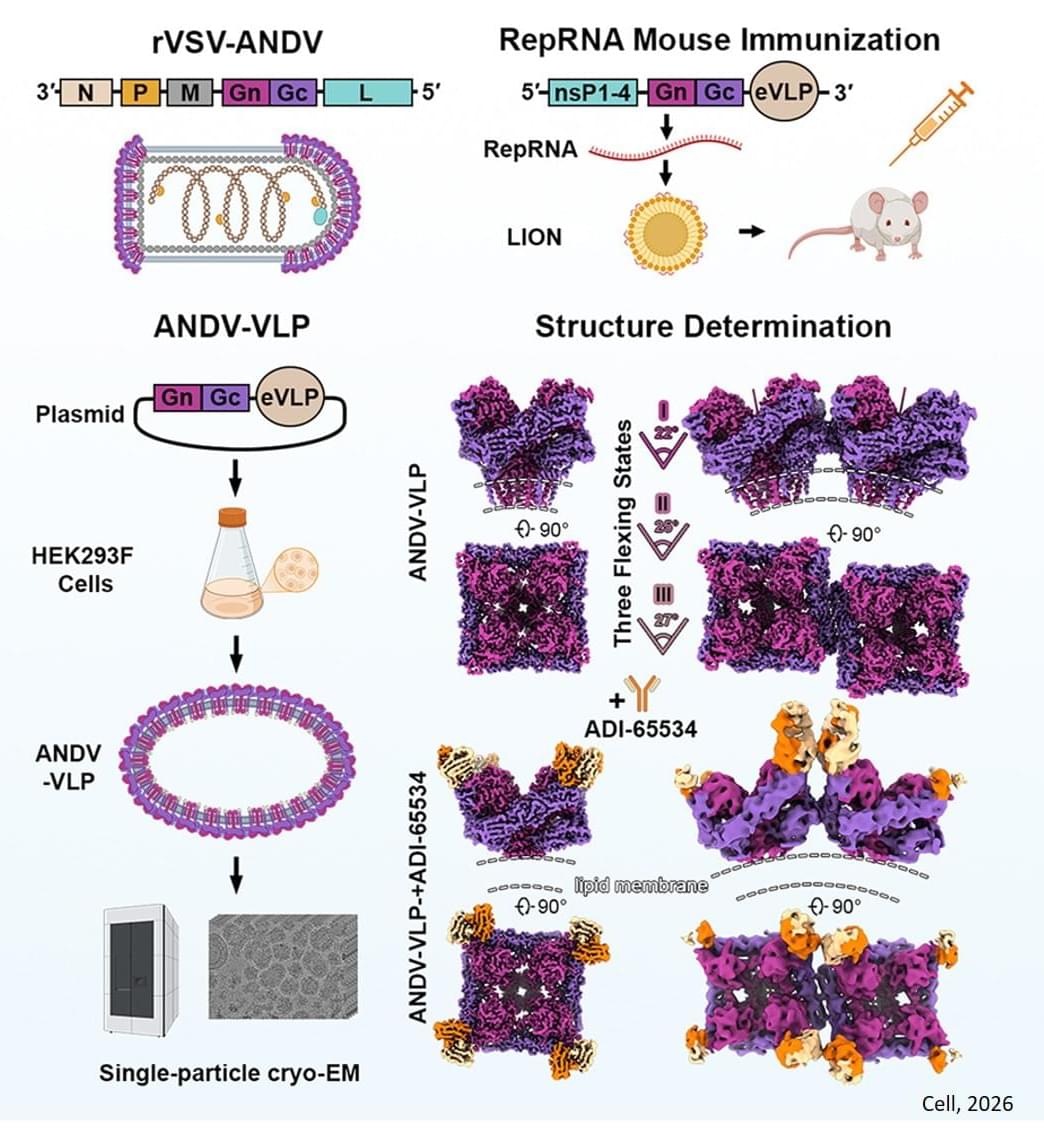
This surface protein complex for the Andes virus is a mushroom-shaped structure called a Gn-Gc tetramer. To map the 3D structures, the team first produced virus-like particles that mimic a real virus, but without the genome that makes a virus infectious. They then used a cryo-electron microscope—which shines an electron beam through a frozen sample and detects the shadows created by molecules—to reconstruct the three-dimensional structures of the Gn-Gc tetramers on the surface of the virus-like particles.

But there was a twist: To obtain extremely high-resolution structures, the researchers painstakingly identified and isolated shadows from only the tetramers that were pointing sidewise relative to the electron beam and ignored those pointing in other directions. This allowed them to borrow a reconstruction method typically used on individual proteins.

The resulting structures have an extremely high resolution of 2.3 angstroms, meaning details the size of just a couple of atoms were effectively captured. That’s enough to represent a transformational improvement over another team’s model of the tetramer from a few years ago, at a resolution of 12 angstroms, still tiny but large enough to produce some key inaccuracies – ones effectively corrected with the newer method and resulting structure.

These latest structures show the Gn-Gc tetramer in a particular state before it has infected a cell. For vaccines or antibody therapies to be most effective against a hantavirus, mimicking surface proteins at this pre-infection stage is essential. ScienceMission sciencenewshighlights.


Hantaviruses, transmitted from rodents to people, have a death rate approaching 40%. They’re found around the world, and because there are no approved vaccines or treatments, they’re among the pathogens of highest concern for future pandemics. They made news in the United States last year when Betsy Arakawa, the wife of actor Gene Hackman, died from a hantavirus infection in New Mexico in March.

New findings published in the journal Cell about the Andes virus, a hantavirus endemic to the southwestern U.S. and other parts of North and South America, represent a crucial first step towards much-needed vaccines and antibody therapies for this and other hantaviruses.

MDSGene Systematic Review of Common Forms of Dominant Hereditary Spastic Paraplegia: Novel Insights

Hereditary spastic paraplegia refers to a group of disorders characterized by progressive spasticity of lower extremities. The Genetic Nomenclature Study Group found differing frequency of variant types across 3 HSP genes: ATL1, SPAST and REEP1.


The PubMed literature search and articles obtained through additional sources yielded a total of 239 articles for HSP–ATL1, of which 70 were eligible, 531 articles for HSP–SPAST, for which 187 were eligible, and 334 articles for HSP–REEP1, of which 31 were eligible (Fig. 1, Supplementary File_HSP Article Screening Log).

By classifying these articles according to study type, we found that the most common were genetic screening studies (36.3%), family studies (30.4%), followed by, case reports/series (23.2%), and other/mixed-type studies (10.0%). While genetic screening studies were the most common study type for HSP–SPAST and HSP–REEP1, family studies were the most common study type for HSP–ATL1 (Table S2).

A new class of Alzheimer’s biomarkers: Why protein shape may beat protein levels

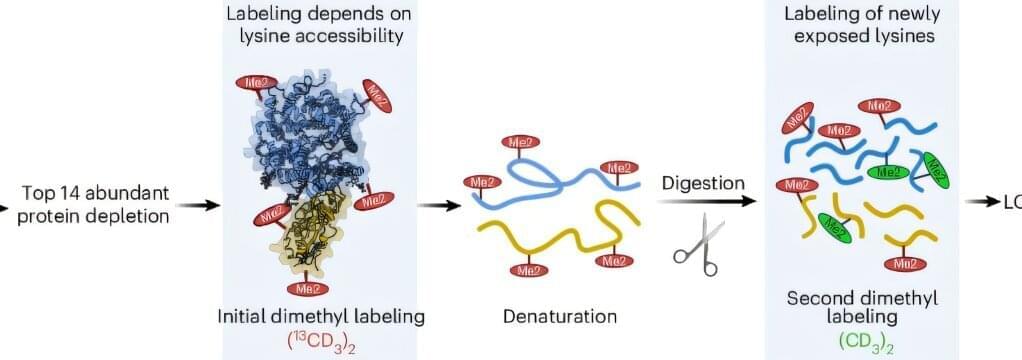
Researchers have identified a new type of blood-based biomarker test for Alzheimer’s disease that measures structural changes in proteins, providing more information on the underlying biology of the disease than standard blood tests. The findings, published in Nature Aging, also provide new insights into how Alzheimer’s disease biology may differ between males and females.

“This work introduces a fundamentally new, blood-based approach to detecting and staging Alzheimer’s disease,” said Dr. Richard Hodes, director of NIH’s National Institute on Aging (NIA). “By revealing protein structural changes associated with genetic risk, symptom severity, and sex differences—features not captured by existing biomarkers—this research could enable earlier diagnosis and more effective clinical trials.”

A biotech company just doubled the lifespan of mice without changing their diet and without editing their genes

Instead, they trained the immune system to hunt down and destroy the cells that make the body age. Then they flooded the body with fresh stem cells to rebuild what was lost.

This isn’t science fiction. It’s longevity science happening right now.

Read more

/* */