China-linked CL-STA-1087 targets Southeast Asian militaries since 2020 using AppleChris and MemFun for espionage and credential theft.





Microsoft is investigating a new issue affecting some Samsung laptops running Windows 11 after installing the February 2026 security updates, in which users lose access to their C:\ drive and are unable to launch applications.
The company says it is working with Samsung to determine whether the problem is related to the Windows updates or Samsung software installed on affected devices.
“Users might encounter the error, ‘C:\ is not accessible – Access denied’, which prevents access to files and blocks the launch of some applications including Outlook, Office apps, web browsers, system utilities and Quick Assist,” explains Microsoft.

The FBI is asking gamers who installed Steam titles containing malware to provide information as part of an ongoing investigation into eight malicious games uploaded to the gaming platform.
In a notice published today by the FBI’s Seattle Division, the agency said it is attempting to identify individuals who were affected after installing one of the malicious games on Steam between May 2024 and January 2026.
“The FBI’s Seattle Division is seeking to identify potential victims installing Steam games embedded with malware. The FBI believes the threat actor primarily targeted users between the timeframe of May 2024 and January 2026,” reads the notice.

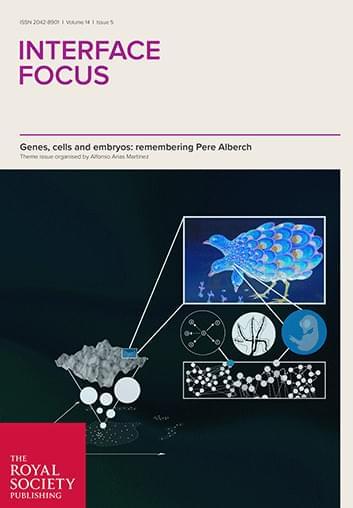
Excellent review in which Solé et al. explore how physical/mathematical constraints may determine what subset of biological systems could theoretically evolve in the universe. Lots of fascinating ideas applying concepts like Turing machines, cellular automata, McCulloch-Pitts networks, energy minimization, and phase transitions to multiscale biological and evolutionary phenomena!
I found the description of how parasites almost inevitably emerge and drive increased biodiversity in computational models of evolution particularly fascinating. Interestingly, I recall this idea was featured in the Hyperion Cantos novels during an explanation of the history of artificial intelligence in their fictional universe!
Abstract. It has been argued that the historical nature of evolution makes it a highly path-dependent process. Under this view, the outcome of evolutionary dynamics could have resulted in organisms with different forms and functions. At the same time, there is ample evidence that convergence and constraints strongly limit the domain of the potential design principles that evolution can achieve. Are these limitations relevant in shaping the fabric of the possible? Here, we argue that fundamental constraints are associated with the logic of living matter. We illustrate this idea by considering the thermodynamic properties of living systems, the linear nature of molecular information, the cellular nature of the building blocks of life, multicellularity and development, the threshold nature of computations in cognitive systems and the discrete nature of the architecture of ecosystems. In all these examples, we present available evidence and suggest potential avenues towards a well-defined theoretical formulation.