Toggle light / dark theme

Get the latest international news and world events from around the world.

Log in for authorized contributors

Using AI to improve standard-of-care cardiac imaging

Heart disease is the leading cause of adult death worldwide, making cardiovascular disease diagnosis and management a global health priority. An echocardiogram, or cardiac ultrasound, is one of the most commonly used imaging tools employed by physicians to diagnose a variety of heart diseases and conditions.

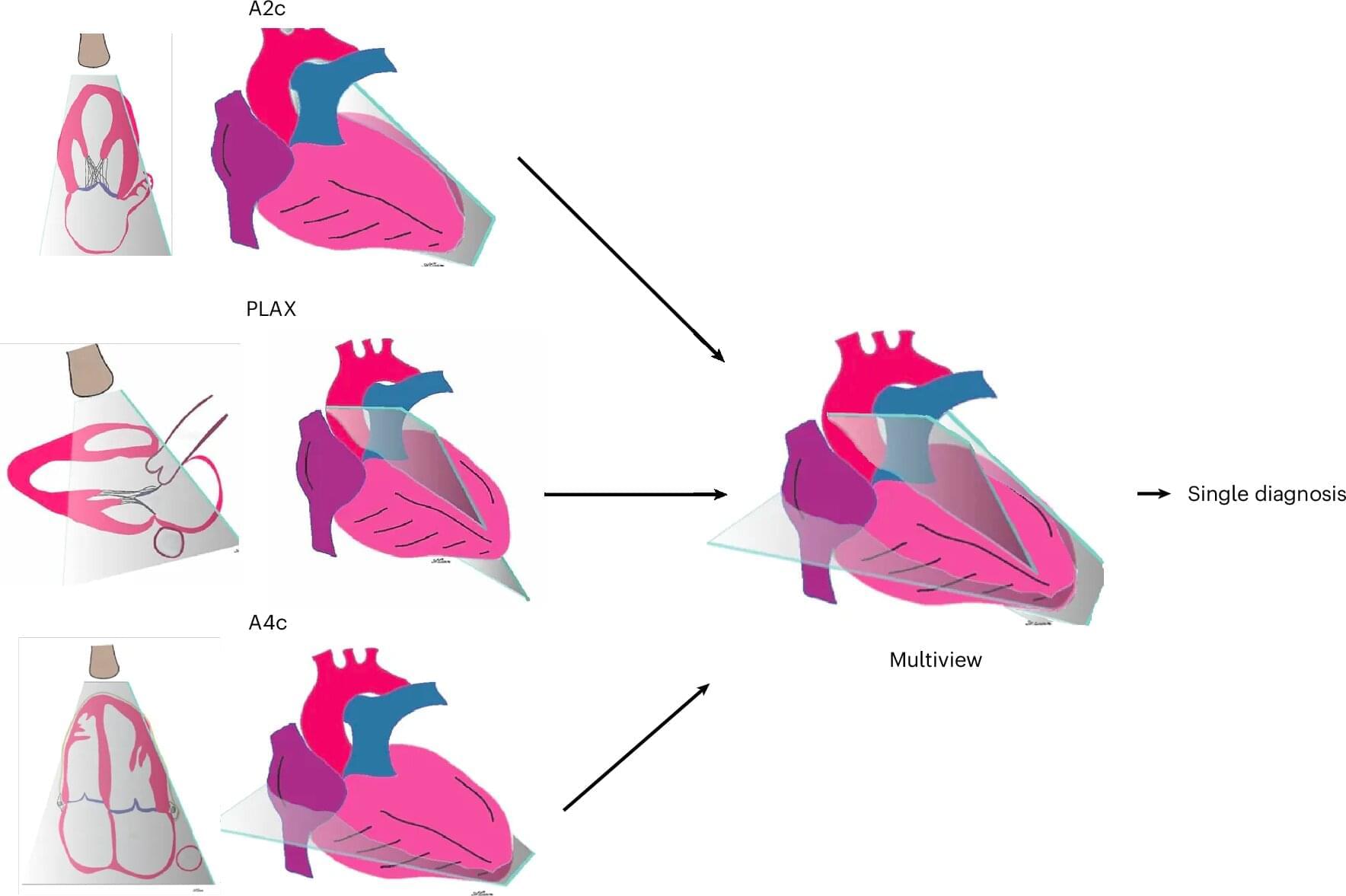
Most standard echocardiograms provide two-dimensional visual images (2D) of the three-dimensional (3D) cardiac anatomy. These echocardiograms often capture hundreds of 2D slices or views of a beating heart that can enable physicians to make clinical assessments about the function and structure of the heart.

To improve diagnostic accuracy of cardiac conditions, researchers from UC San Francisco set out to determine whether deep neural networks (DNNs), a type of AI algorithm, could be re-designed to better capture complex 3D anatomy and physiology from multiple imaging views simultaneously. They developed a new “multiview” DNN structure—or architecture—to enable it to draw information from multiple imaging views at once, rather than the current approach of using only a single view. They then trained demonstration DNNs using this architecture to detect disease states for three cardiovascular conditions: left and right ventricular abnormalities, diastolic dysfunction, and valvular regurgitation.

How Zinc Protects Injured Arteries From Accelerated Aging

Researchers publishing in Aging Cell have discovered that the nuclei of the cells that line injured arteries quickly become misshapen and that this leads to accelerated cellular senescence. Delivering zinc to these cells partially alleviates this dysmorphism.

Two seemingly unrelated concepts

This paper begins with a discussion of two different concepts that, on the surface, appear to be unrelated. First, the researchers discuss vascular damage, particularly in the context of surgeries; even minimally invasive procedures that involve cutting, scraping, or burning arteries must cause some level of damage. This includes such procedures as catheter implantation as a treatment for heart disease [1] and the resection of cancerous tumors [2].

Elon Musk: What’s Outside the Simulation?

Video Credit: @lexfridman.

About this video:
In this video, Elon Musk joins Lex Fridman to discuss one of the most profound questions of our time: Are we living in a simulation?
When asked what single question he would pose to an Artificial General Intelligence (AGI), Musk delivers a mind-bending response that challenges our entire perception of reality.
He dives deep into the Simulation Theory, questioning what exists beyond the “digital” boundaries of our universe and whether we can ever truly know the truth.
If you’ve ever wondered about the Matrix, the future of AI, or the mystery of existence, this conversation is a must-watch!

Hashtags:
#elonmusk #elonmuskinterview #lexfriedman #simulationtheory #simulation #agi #ai #artificialintelligence #matrix #sciencefacts #universesecrets #technews #markuspodcast.

Disclaimer:
All the videos, songs, images, and graphics used in the video belong to their respective owners and I or this channel don’t claim any rights over them.
Copyright Disclaimer Under Section 107 of the Copyright Act 1976, allowance is made for fair use for purposes such as news reporting, teaching, scholarship, and research. Fair use is a use permitted by copyright statutes that might otherwise be infringing. Non-profit, educational, or personal use tips the balance in favor of fair use.

Read more

Infant Heart Surgery Mends Brain Networks Too

Infants born with congenital heart disease (CHD) often have neurodevelopmental impairments that affect them later in life, including their ability to regulate their emotions and movements. As CHD is the most prevalent congenital disorder in the United States, researchers are eager to find new ways to treat it.

To better understand how CHD affects an infant’s developing nervous system, researchers at Children’s National Hospital used resting-state functional magnetic resonance imaging (rs-fMRI) to evaluate how healthy infants and those with CHD differed. They recently reported in the Journal of Neuroscience that babies with CHD had altered brain activity in their sensorimotor and limbic networks, but after neonatal heart surgery, these brain networks looked more like those of healthy children.

“Using fMRI, we can identify brain networks that are vulnerable to altered oxygen and blood flow from congenital heart disease, which could help guide interventions to improve care for children,” said Jung-Hoon Kim, a brain researcher at Children’s National Hospital and a coauthor of the study, in a press release.

In their study, the researchers analyzed rs-fMRI data from 448 neonates. They first analyzed publicly available data from the Developing Human Connectome Project, which contains a large amount infant brain development MRI data.3 They identified 15 different resting state networks, which represented different regions of brain activity, in the healthy neonate brains.

Read More


Babies with congenital heart disease have altered brain activity in regions involved in movement and emotions, but heart surgery restored these brain networks to healthy connectivity.

Scientists discover new heavy proton-like particle at CERN

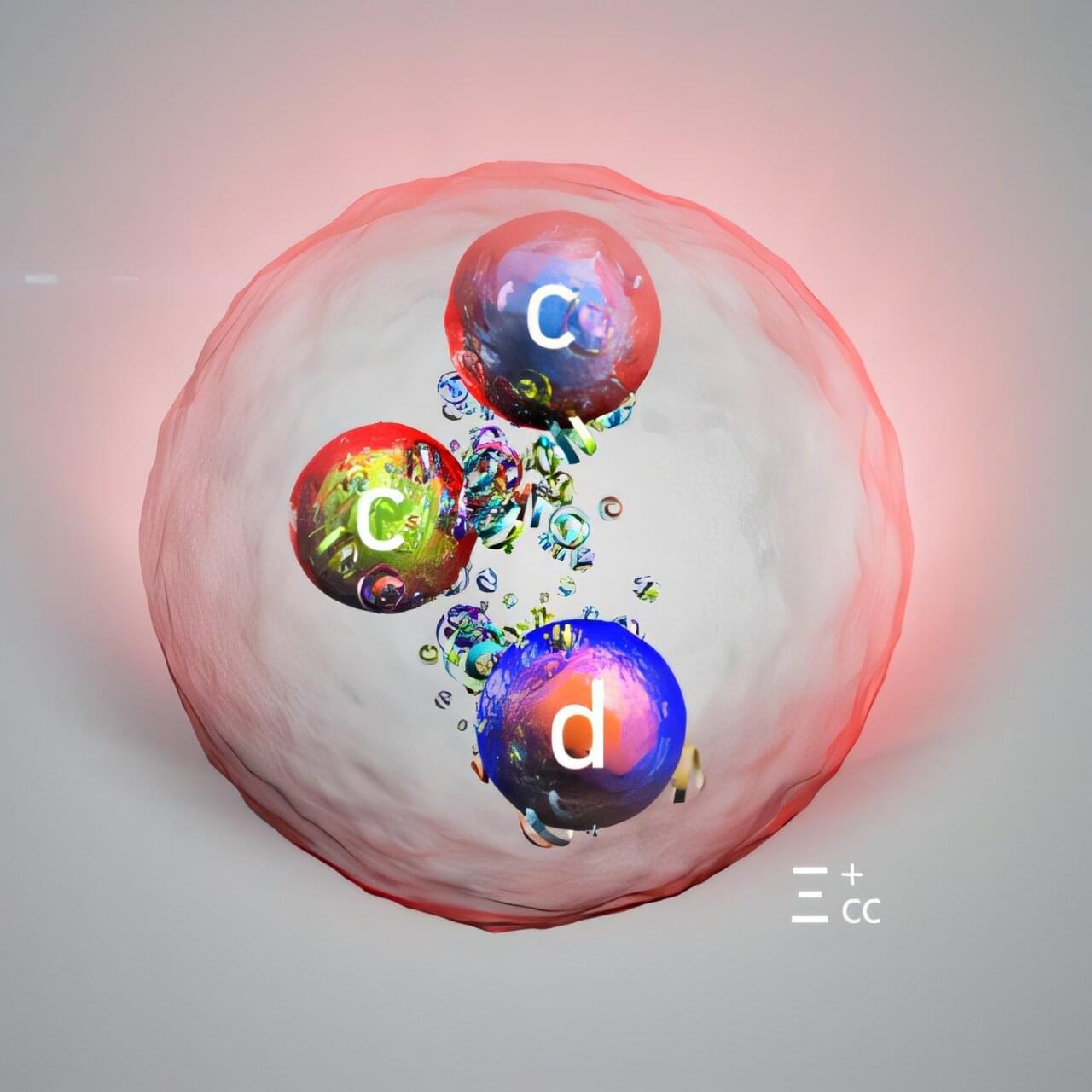
Scientists from the University of Manchester have played a leading role in the discovery of a new subatomic particle at CERN’s Large Hadron Collider (LHC). The particle, known as the Ξcc ⁺ (Xi‑cc‑plus), is a new type of heavy proton-like particle containing two charm quarks and one down quark.

The result is the first particle discovery made using the upgraded LHCb detector, a major international project involving more than 1,000 scientists across 20 countries. The UK made the largest national contribution to the upgrade, with significant leadership from Manchester.

The newly observed Ξcc ⁺ is a heavier relative of the proton, which was famously discovered in Manchester by Ernest Rutherford and colleagues in 1917–1919. The proton contains two up quarks and a down quark. Details of the Ξcc ⁺ discovery were presented at the Rencontres de Moriond Electroweak conference.

AI model predicts chemical effects on gene expression, speeding drug discovery

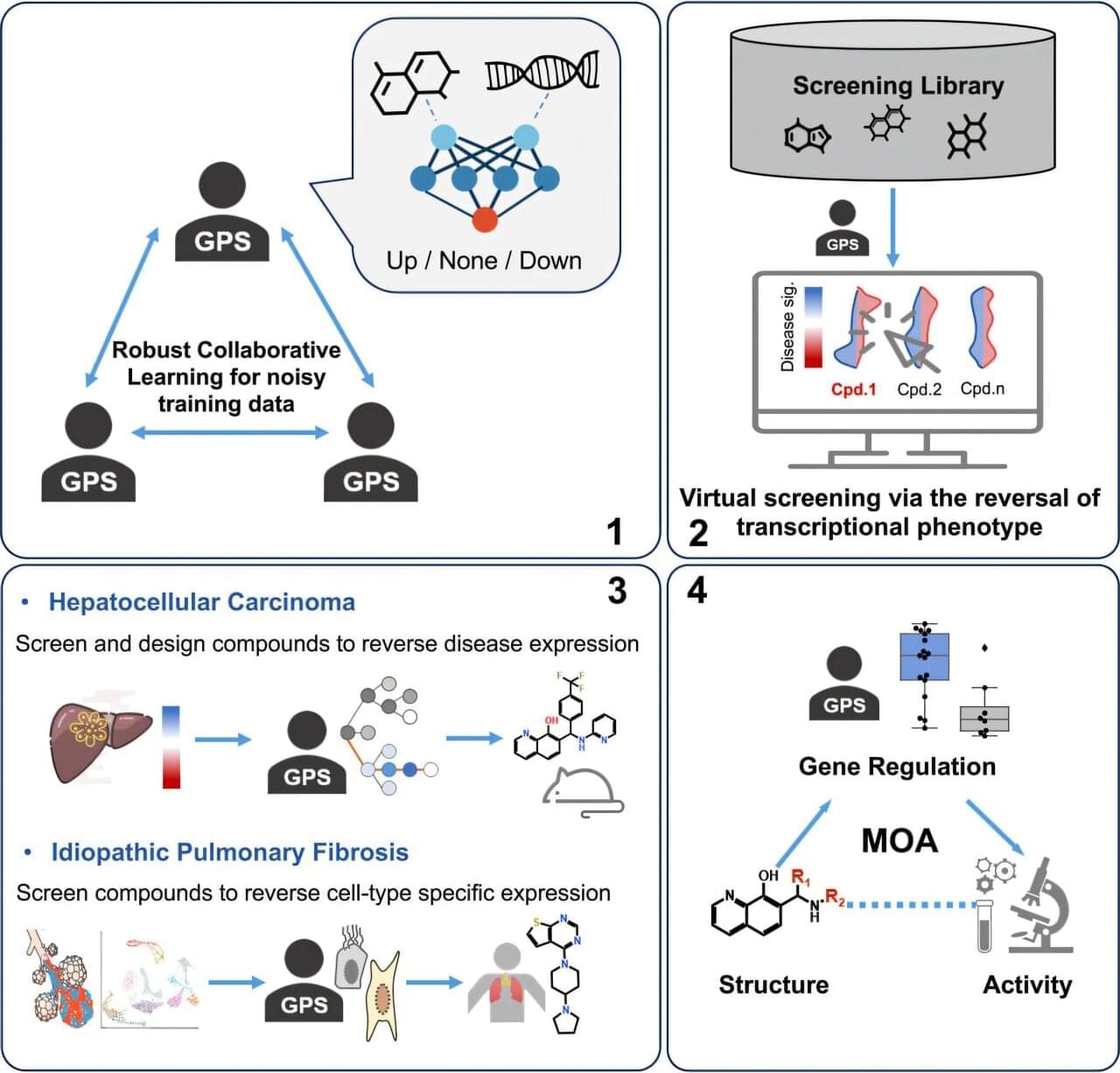
Inside a diseased cell, the genes are in chaos. Some are receiving signals to overproduce a protein. Others are reducing activity to abnormal levels. Up is down and down is up. The right molecule could restore order, reversing dysregulation in specific genes. But finding the ideal compound could require examining millions of chemicals for their influence on hundreds or thousands of genes.

An MSU-led team of researchers has demonstrated a better way. Using machine learning trained on enormous amounts of published data, they were able to predict how chemicals will influence gene expression, based solely on the structure of the chemical.

Their study, recently published in the journal Cell, has discovered compounds that are promising for treatment of two difficult diseases: the most aggressive form of liver cancer and a chronic lung disease with no curative options.

Bell-bottoms today, miniskirts tomorrow: Math reveals fashion’s 20-year cycle

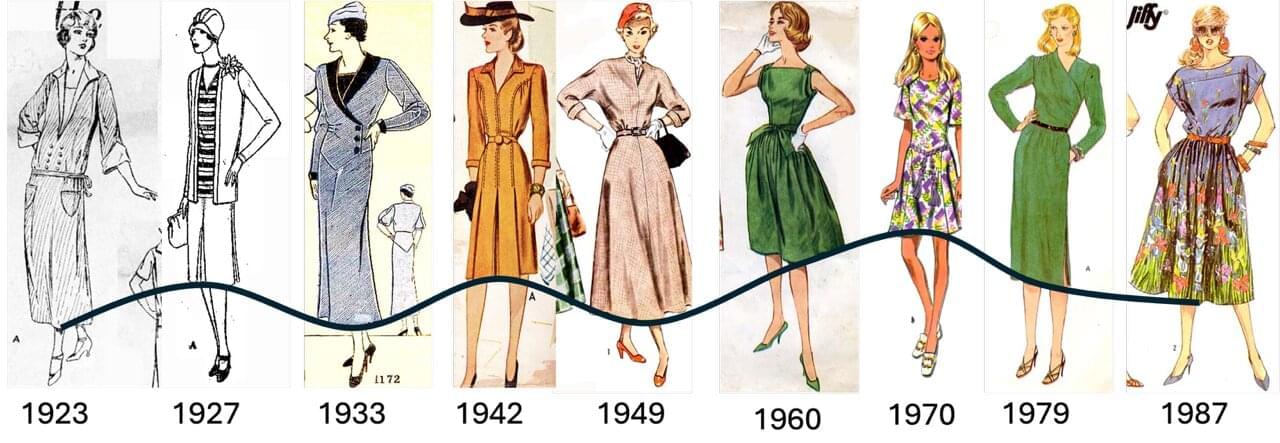
Fashion insiders and beauty magazines have long cited the “20-year-rule”—the idea that clothing trends often resurface every two decades. According to Northwestern University scientists, that observation isn’t just anecdotal. It’s a mathematical reality.

In a new study, the Northwestern team developed a new mathematical model showing that fashion trends tend to cycle roughly every 20 years. By analyzing roughly 37,000 images of women’s clothing spanning from 1869 to today, the team found that styles rise in popularity, fall out of favor and then eventually experience renewal. Along with supporting common perceptions about the life cycles of fads, the researchers say these results could help explain how new ideas spread in society.

The study’s lead author, Emma Zajdela, will present these findings on Tuesday, March 17, at the American Physical Society (APS) Global Physics Summit in Denver. Her talk, “Back in Fashion: Modeling the Cyclical Dynamics of Trends,” is part of the session “Statistical Physics of Networks and Complex Society Systems.”

Experiment challenges hypothesis of cell-like membranes on Titan

New experimental results have cast doubt on earlier proposals suggesting that spherical, cell-like membranes could form in the methane lakes of Saturn’s largest moon. Through results published in Science Advances, Tuan Vu and Robert Hodyss at NASA’s Jet Propulsion Laboratory suggest that exobiologists will likely need to explore alternative routes when considering the possibility of life on Titan.

Despite frigid surface temperatures of around −180 °C during the day, Titan is widely considered to be one of the most Earth-like bodies in the solar system. With a dense atmosphere composed mostly of nitrogen, its surface hosts lakes and seas of liquid methane and ethane, which flow, evaporate, and fall as rain in much the same way as water does on Earth.

For decades, this striking similarity to our own water cycle has inspired exobiologists to consider whether exotic forms of life could have evolved under these conditions. In 2015, researchers at Cornell University took this idea a step further through molecular-dynamics simulations designed to recreate Titan’s environment.

Discrete time crystal acts as a usable sensor for weak magnetic oscillations

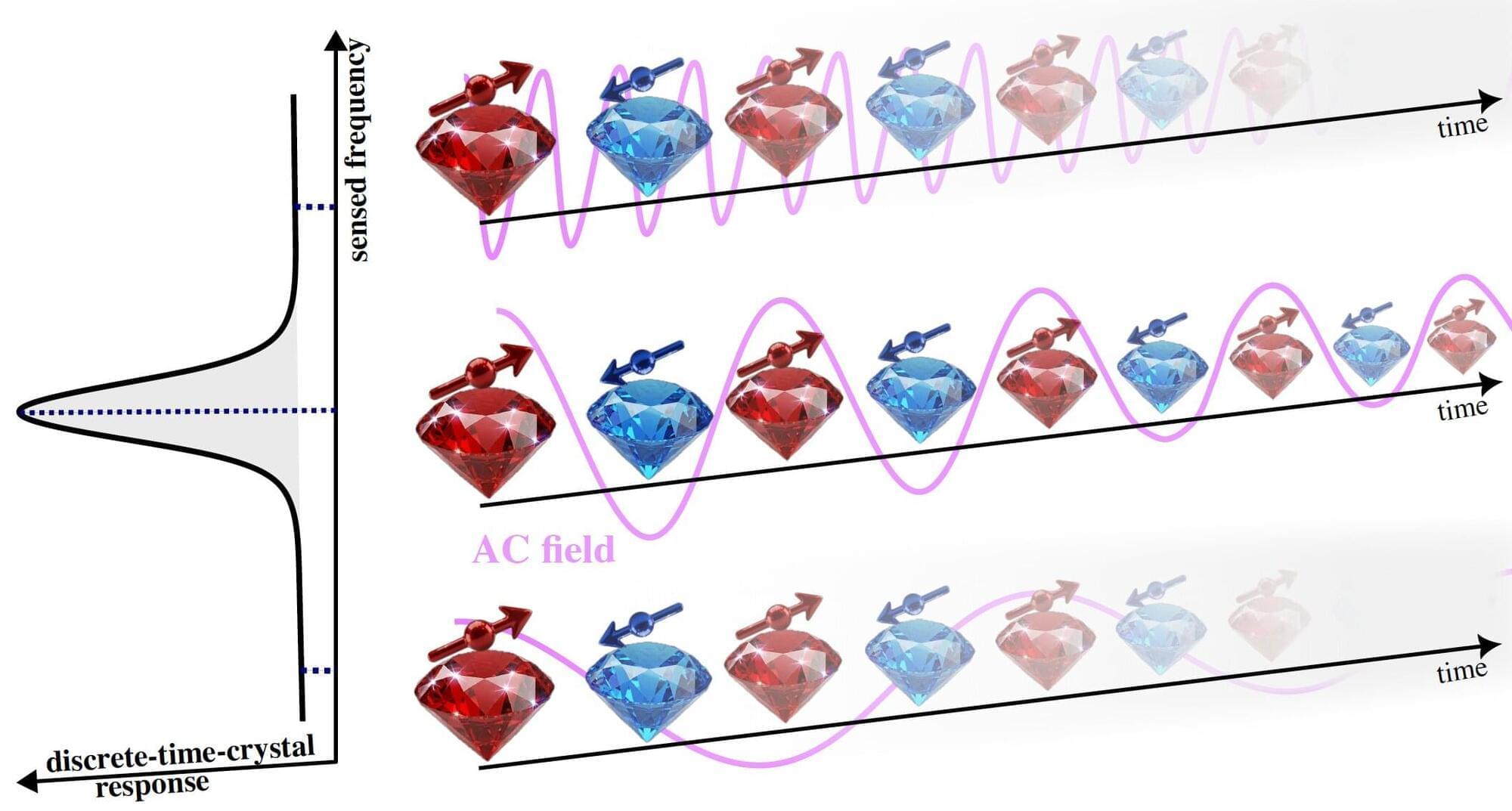
The bizarre properties of discrete time crystals could be harnessed to detect extremely subtle oscillations of magnetic fields, physicists in the US and Germany have revealed. Publishing their results in Nature Physics, a team led by Ashok Ajoy at the University of California, Berkeley, show for the first time that these exotic materials could have practical uses far beyond their current status as an impractical curiosity.

Discrete time crystals (DTCs) are an exotic phase of matter which break entirely from the rules which apply to classical materials. Whereas an ordinary crystal is made up of atomic or molecular patterns that repeat at regular intervals in space, DTCs have structures that constantly oscillate in repeating cycles when driven by an external protocol, without ever reaching thermal equilibrium.

“Since their initial experimental demonstrations in 2017, there has been enormous excitement surrounding these states,” explains co-author Paul Schindler at the Max Planck Institute of Complex Systems. “Yet a persistent question has remained unanswered: can this exotic order be harnessed for practical applications?”

/* */