Heart disease is the leading cause of adult death worldwide, making cardiovascular disease diagnosis and management a global health priority. An echocardiogram, or cardiac ultrasound, is one of the most commonly used imaging tools employed by physicians to diagnose a variety of heart diseases and conditions.
Most standard echocardiograms provide two-dimensional visual images (2D) of the three-dimensional (3D) cardiac anatomy. These echocardiograms often capture hundreds of 2D slices or views of a beating heart that can enable physicians to make clinical assessments about the function and structure of the heart.
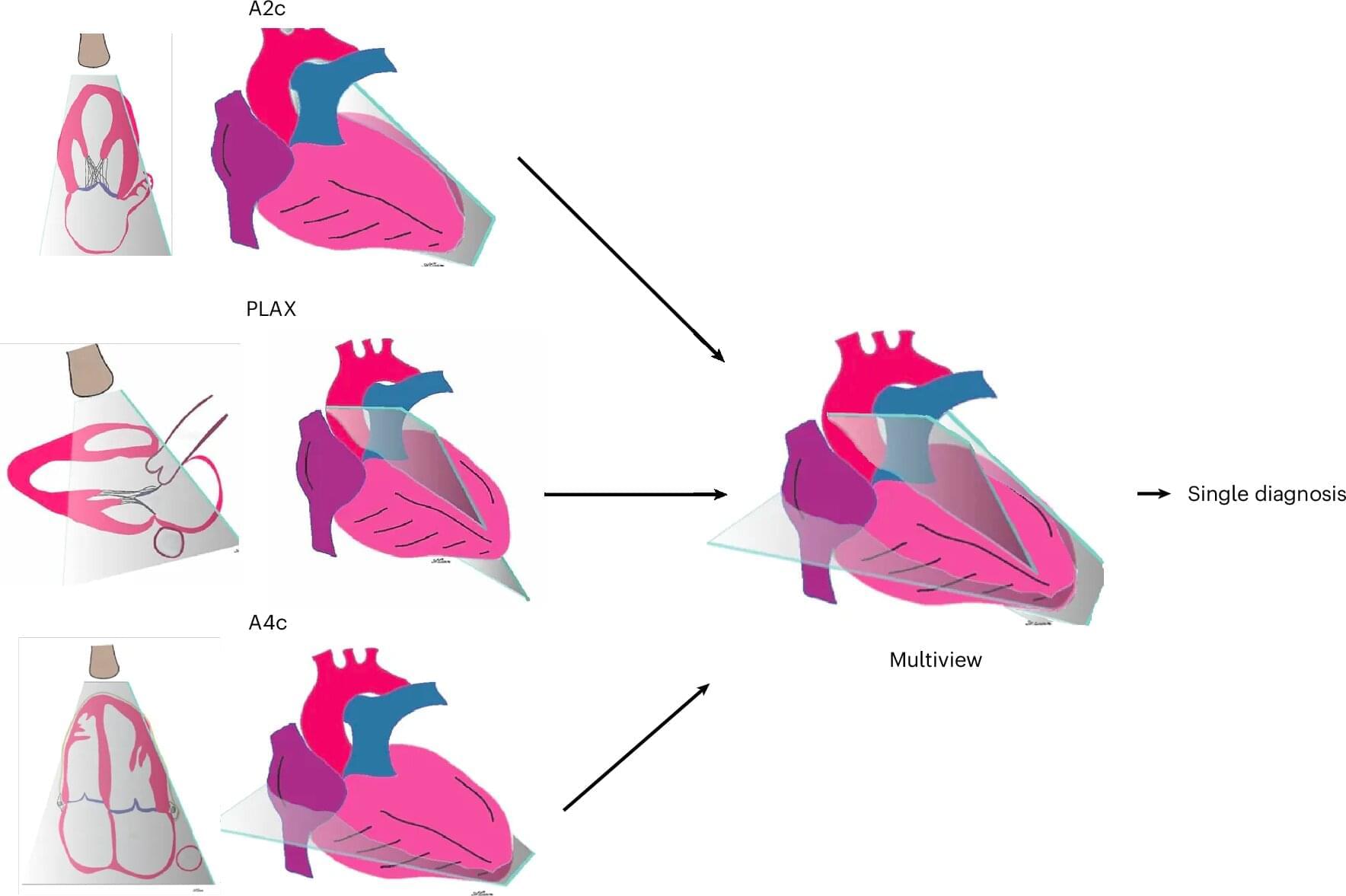
To improve diagnostic accuracy of cardiac conditions, researchers from UC San Francisco set out to determine whether deep neural networks (DNNs), a type of AI algorithm, could be re-designed to better capture complex 3D anatomy and physiology from multiple imaging views simultaneously. They developed a new “multiview” DNN structure—or architecture—to enable it to draw information from multiple imaging views at once, rather than the current approach of using only a single view. They then trained demonstration DNNs using this architecture to detect disease states for three cardiovascular conditions: left and right ventricular abnormalities, diastolic dysfunction, and valvular regurgitation.