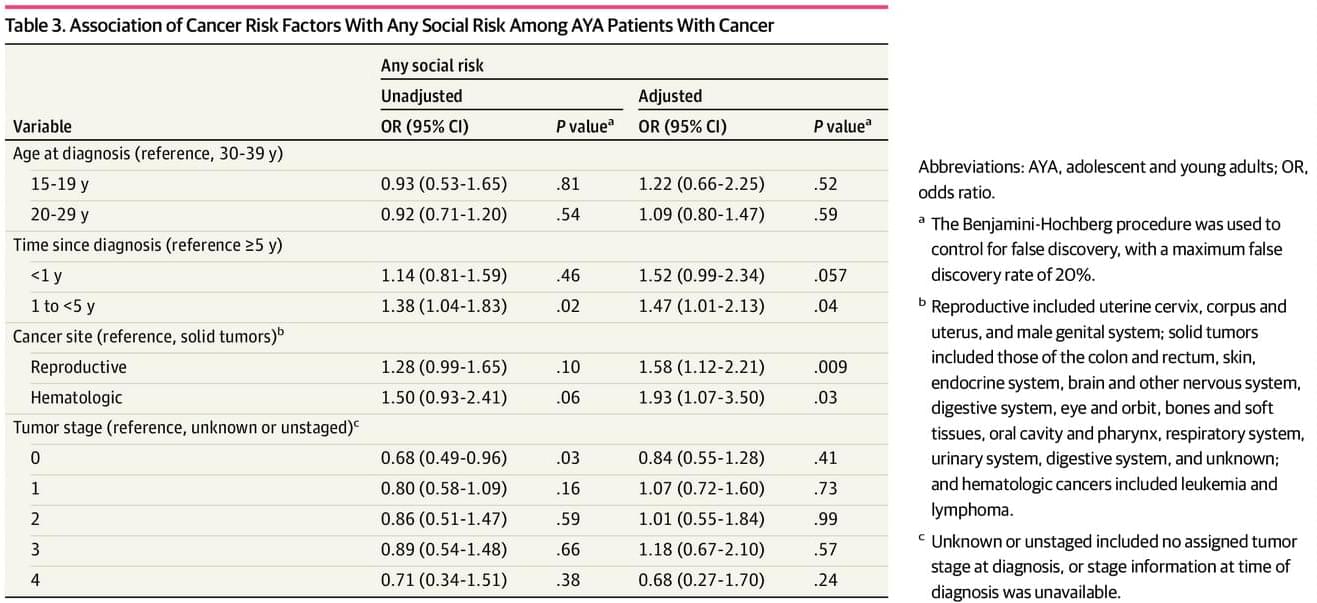
About one-third of adolescents and young adults, with or without Cancer, reported at least one social risk such as financial hardship or food insecurity, highlighting the need for routine screening.
This cross-sectional study used data from KPNW, an integrated health care system serving more than 620 000 members in northwest Oregon and southwest Washington, representing approximately 16% of the region’s population. The KPNW Institutional Review Board deemed the study exempt from review and informed consent under category 4 of the Common Rule, meaning that this research was determined to be low risk as it involves the use of secondary data. The study followed the Strengthening the Reporting of Observational Studies in Epidemiology (STROBE) reporting guideline for cross-sectional studies.
Members of KPNW are demographically similar to the surrounding community, with a broad age distribution (approximately 23% aged 18–35 years and 40% aged 36–64 years), a nearly equal sex distribution (52% female), and a racial and ethnic composition comparable to that of the regional population. Approximately 18% of members live below 200% of the federal poverty level, and approximately 80% receive coverage through employer-sponsored plans, contributing to high annual retention rates (approximately 88%). In early 2020, KPNW implemented a social risk screening tool via the EPIC-based (Epic Systems Corp) HealthConnect system. Full details of the screening process have been previously described.22,23
We included KPNW members aged 15 to 40 years who received care at KPNW; completed the social determinants of health screener between January 1, 2022, and December 31, 2024 (the first screening was defined as the index date); and had at least 6 months of follow-up data (eFigure 1 in Supplement 1).