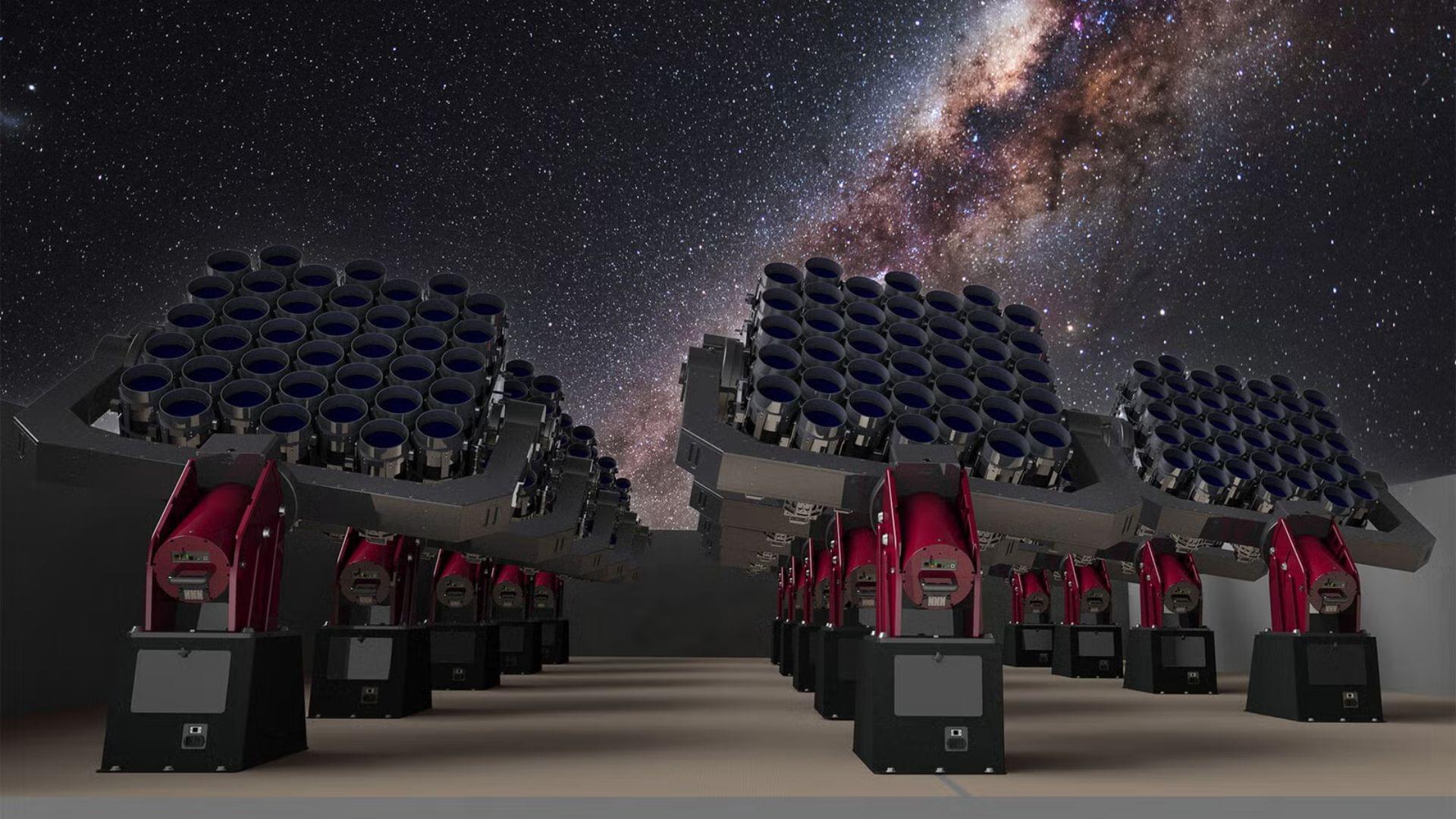
The MOTHRA telescope will use over a thousand lenses and narrowband filters to detect faint hydrogen gas linking galaxies.
(CMB, CMBR), or relic radiation, is microwave radiation that fills all space in the observable universe. With a standard optical telescope, the background space between stars and galaxies is almost completely dark. However, a sufficiently sensitive radio telescope detects a faint background glow that is almost uniform and is not associated with any star, galaxy, or other object. This glow is strongest in the microwave region of the electromagnetic spectrum. Its energy density exceeds that of all the photons emitted by all the stars in the history of the universe. The accidental discovery of the CMB in 1964 by American radio astronomers Arno Allan Penzias and Robert Woodrow Wilson was the culmination of work initiated in the 1940s.
The CMB is the key experimental evidence of the Big Bang theory for the origin of the universe. In the Big Bang cosmological models, during the earliest periods, the universe was filled with an opaque fog of dense, hot plasma of sub-atomic particles. As the universe expanded, this plasma cooled to the point where protons and electrons combined to form neutral atoms of mostly hydrogen. Unlike the plasma, these atoms could not scatter thermal radiation by Thomson scattering, and so the universe became transparent. Known as the recombination epoch, this decoupling event released photons to travel freely through space. However, the photons have grown less energetic due to the cosmological redshift associated with the expansion of the universe. The surface of last scattering refers to a shell at the right distance in space so photons are now received that were originally emitted at the time of decoupling.
The CMB is very smooth and uniform, but maps by sensitive detectors detect small but important temperature variations. Ground and space-based experiments such as COBE, WMAP and Planck have been used to measure these temperature inhomogeneities. The anisotropy structure is influenced by various interactions of matter and photons up to the point of decoupling, which results in a characteristic pattern of tiny ripples that varies with angular scale. The distribution of the anisotropy across the sky has frequency components that can be represented by a power spectrum displaying a sequence of peaks and valleys. The peak values of this spectrum hold important information about the physical properties of the early universe: the first peak determines the overall curvature of the universe, while the second and third peak detail the density of normal matter and so-called dark matter, respectively.
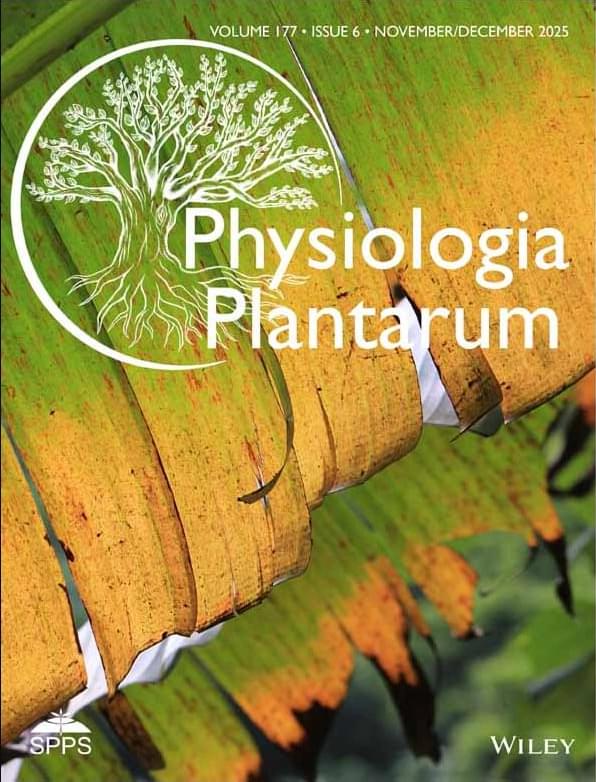
🚱Plants face various environmental stresses, to which they respond in different ways. Due to climate change, it is expected that plants will encounter increased phases of drought and changes in herbivory.
🐛This study thus aimed to evaluate the intra-individual variation in responses, that is phenotypic plasticity, to single and combined stresses, including drought and insect herbivory. Authors used plants of the aromatic species Tanacetum vulgare, which are characterized by distinct terpenoid chemotypes and metabolic fingerprints shaped by maternal origin. Clones were exposed to no stress, drought, herbivory, or a combination of both.
⚗️The impacts of these treatments were determined in terms of aboveground biomass as well as emission rates or concentrations, richness, and functional Hill diversity (FHD) of volatile organic compounds (VOCs), stored leaf and root terpenoids, and leaf metabolic fingerprints.
📊Drought resulted in lower plant aboveground biomass, VOC richness, and VOC FHD. Herbivory had no effect on biomass, but increased the VOC emission rates and richness, also in combination with drought. The treatment significantly affected the phenotypic plasticity of the aboveground biomass and VOC emission.
👉These findings highlight the importance of studying intra-individual variation in plant responses to different stresses and their combinations to fully comprehend the finely tuned chemodiversity.
Read more.
This website uses a security service to protect against malicious bots. This page is displayed while the website verifies you are not a bot.
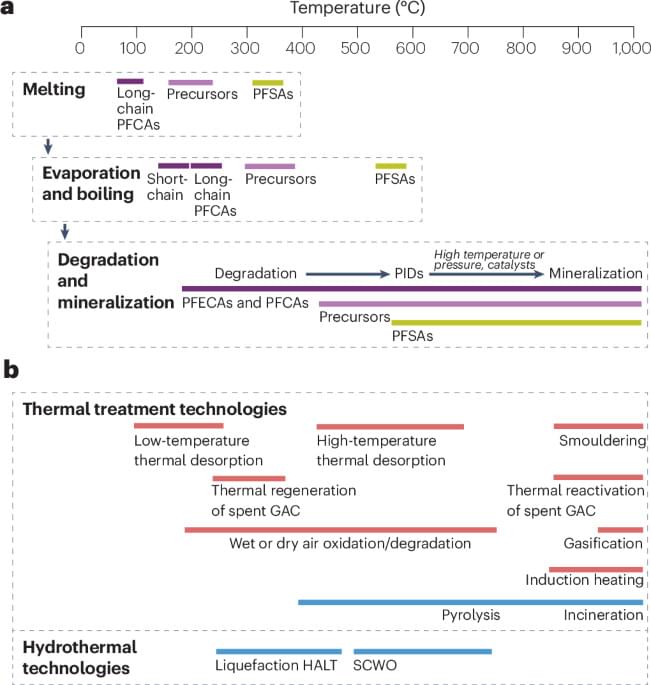
Thermal treatment approaches can remediate solids contaminated by per- and polyfluoroalkyl substances (PFAS), but are energy-intensive and create products of incomplete destruction. This Review discusses these approaches and the use of additives to lower reaction temperatures and drive complete destruction of PFAS.
Intestinal homeostasis and regeneration rely on intestinal stem cells (ISCs). Li et al. identified neuronal vasoactive intestinal peptide (VIP) as a brake on ISCs through VIPR1 to limit regeneration. In Nature Immunology, Jakob et al. and Pirzgalska et al. further showed that VIP-VIPR1 signaling restrains secretory lineage expansion and balances immune responses.
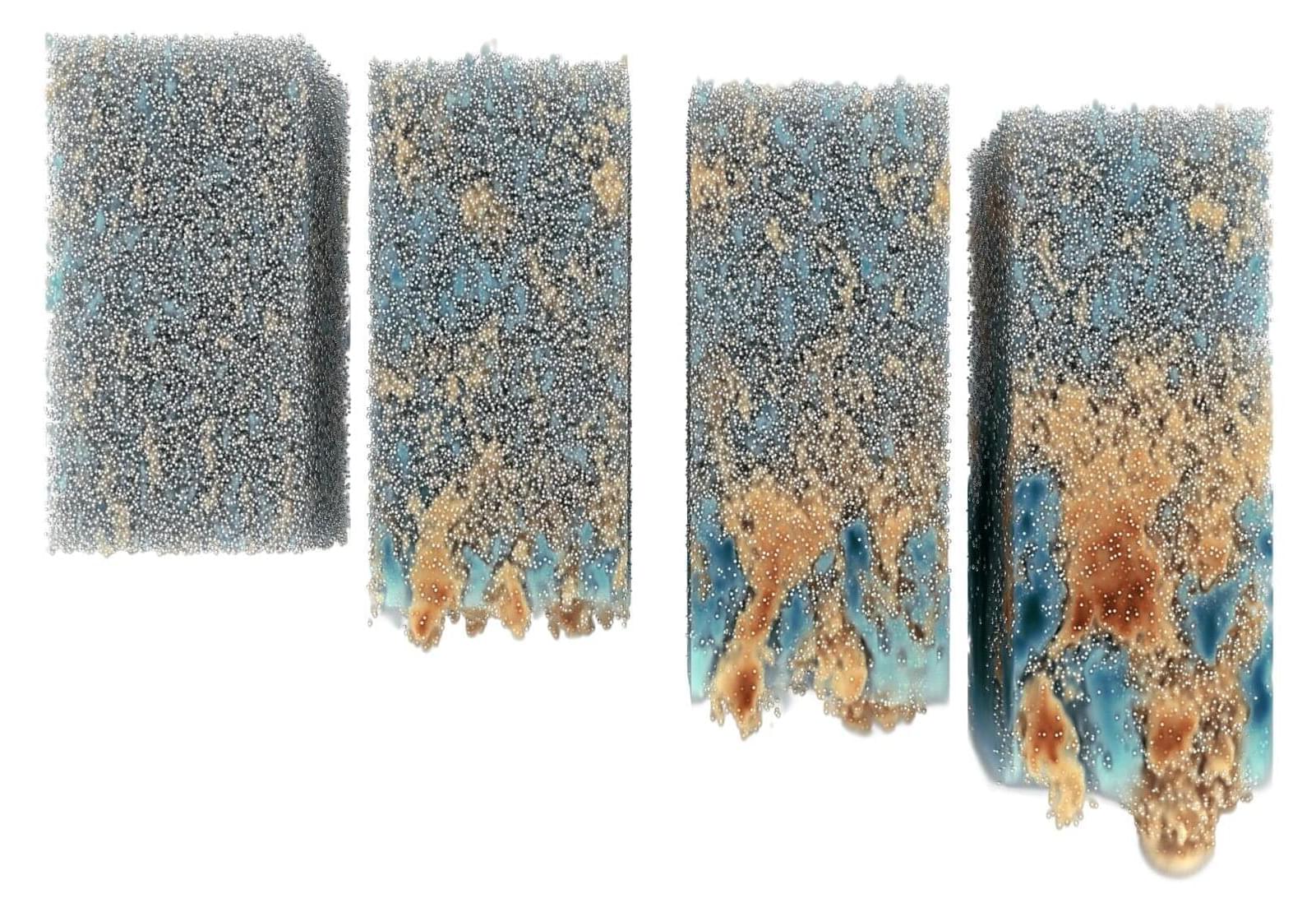
What governs the speed at which raindrops fall, sediment settles in river estuaries, and matter is ejected during a supernova? These questions circle around one, deceitfully simple factor: the rate at which a fluid filled with particles mixes with a particle-free one. Raindrops travel from one layer of air to another; sediment falls from river to seawater, and ejecta travels from the exploding star through the surrounding dust cloud. The same principle dictates sediment mixing in rising smoke, dust storms, nuclear explosions, hydrocarbon refining, metal smelting, wastewater treatment, and more.
New simulations have now provided researchers and engineers with unprecedented access to these fundamental fluid mechanics. While plainly visible in everyday life, the phenomenon has eluded scientific scrutiny due to their complexity. For the first time, researchers have derived a general formulation of how layers of heavy particles mix and described the common characteristics of the phenomena.
Simone Tandurella, study first author and Ph.D. student in the Complex Fluids and Flows Unit at OIST, explains, “Both the simulations and the model we obtain enable exciting research into a wide range of fundamental physics phenomena, as well as applied research in fluid engineering. They provide the basic puzzle pieces that can help us understand fluid-particle instabilities at large scales.”
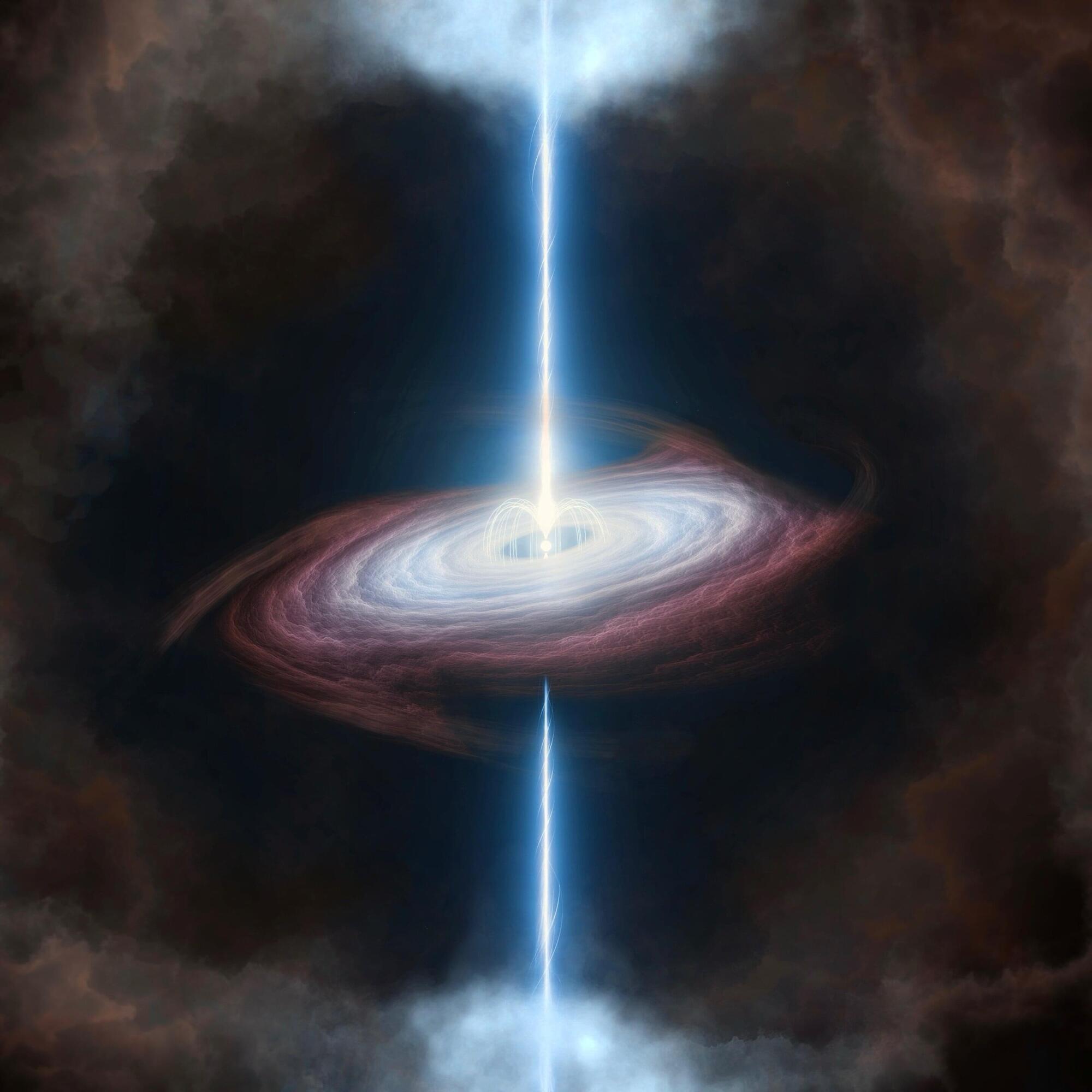
Astronomers have for the first time seen the birth of a magnetar—a highly magnetized, spinning neutron star—and confirmed that it’s the power source behind some of the brightest exploding stars in the cosmos. The finding corroborates a theory proposed by a UC Berkeley physicist 16 years ago and establishes a new phenomenon in exploding stars: supernovae with a “chirp” in their light curve that is caused by general relativity. A paper describing the phenomenon was published in the journal Nature.
Superluminous supernovae—which can be 10 or more times brighter than run-of-the-mill supernovae—have puzzled astronomers since their discovery in the early 2000s. They were thought to result from the explosion of very massive stars, perhaps 25 times the mass of our sun, but they stayed bright much longer than would be expected when a star’s iron core collapses and its outer layers are subsequently blown off.
In 2010, Dan Kasen, now a UC Berkeley theoretical astrophysicist and professor of physics, was the first to propose that a magnetar was powering the long-lasting glow.
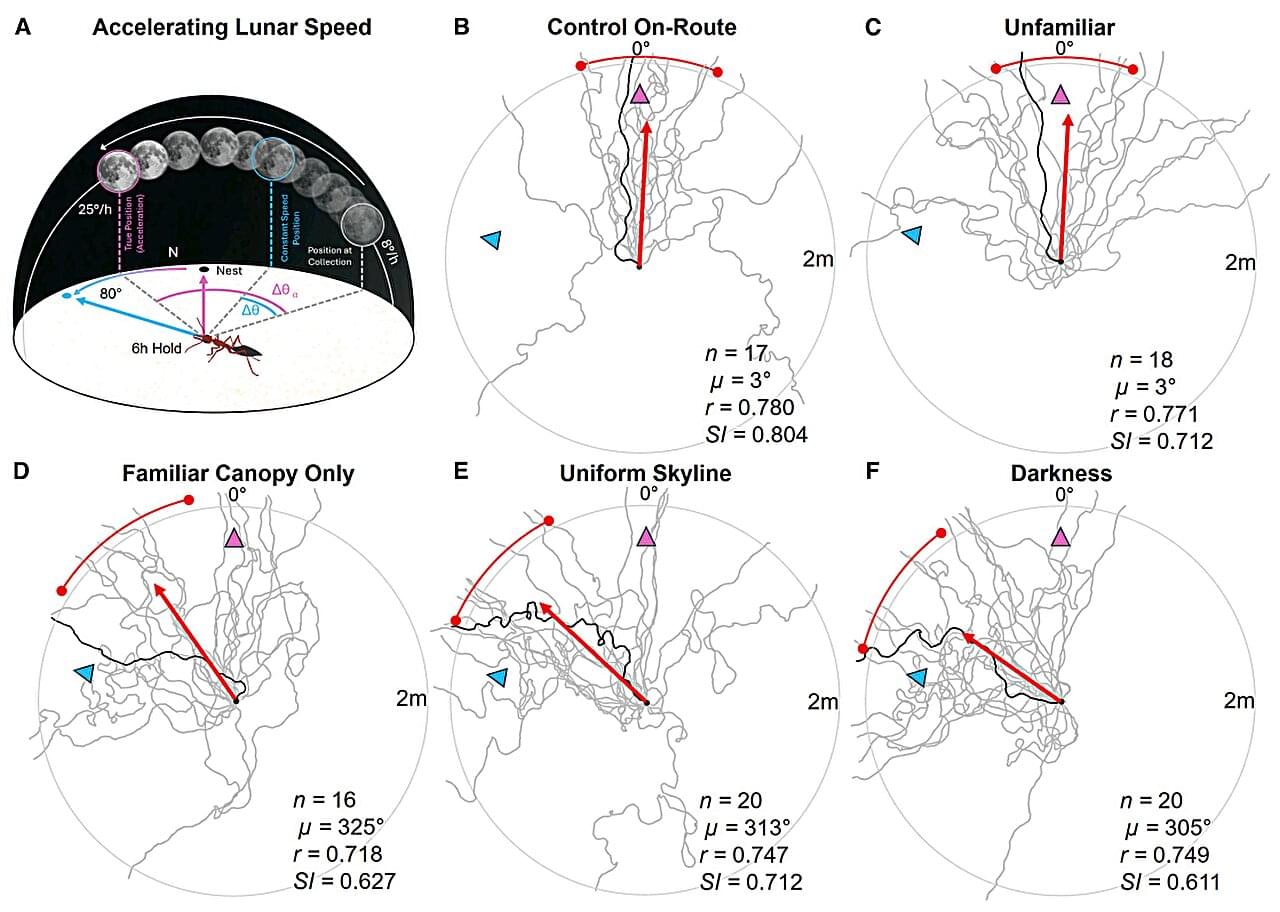
It’s well known that many animals, including migratory birds, butterflies, and even fish, use the sun for navigational purposes. Nocturnal animals are dealt a more difficult hand, however, as the moon’s path is far more variable. But a new study, published in Current Biology, has shown that nocturnal bull ants (Myrmecia midas) not only use the moon as a compass, but are also capable of accounting for speed variations in its movement.
Although there is a slight change every day, the sun’s path in the sky is much more stable than the moon’s. As most people know, the moon goes through monthly phases, varying dramatically in its placement in the sky throughout the month and being entirely absent from the night sky for a portion of time. Additional speed variations further complicate things. Because of this, it was unclear whether nocturnal animals could accurately predict the moon’s complex movement for navigation.
Some diurnal insects, like certain ants and bees, use time-compensated sun compasses that adjust for the sun’s daily movement. Past studies have shown that some nocturnal insects use lunar or polarized light cues, but did not show whether these were used for time-compensated lunar navigation.