Atheist philosopher Graham Oppy is asked what it would take for him to believe in God. Watch his debate with Christian convert Guillaume Bignon here: https://www.thebigconversation.show/v…
Get the latest international news and world events from around the world.
Philosophy’s Newest Argument for God Fails | Graham Oppy
Dr. Graham Oppy, perhaps academia’s leading atheist philosopher of religion, joins me to analyze a newly proposed argument for God’s existence: the argument from psychophysical harmony.
Cutter and Crummett’s article, \.

How Beavers Save a Drying Rainforest
Print / Web Copy:
What does it take to keep water in a landscape that’s slowly forgetting how to hold it? Heliox investigates the drought that stunned a Canadian rainforest — and the ancient, low-tech, furry solution that gray infrastructure couldn’t match. A deep dive into watershed science, ecological restoration, and the surprising return of North America’s original hydraulic engineers.
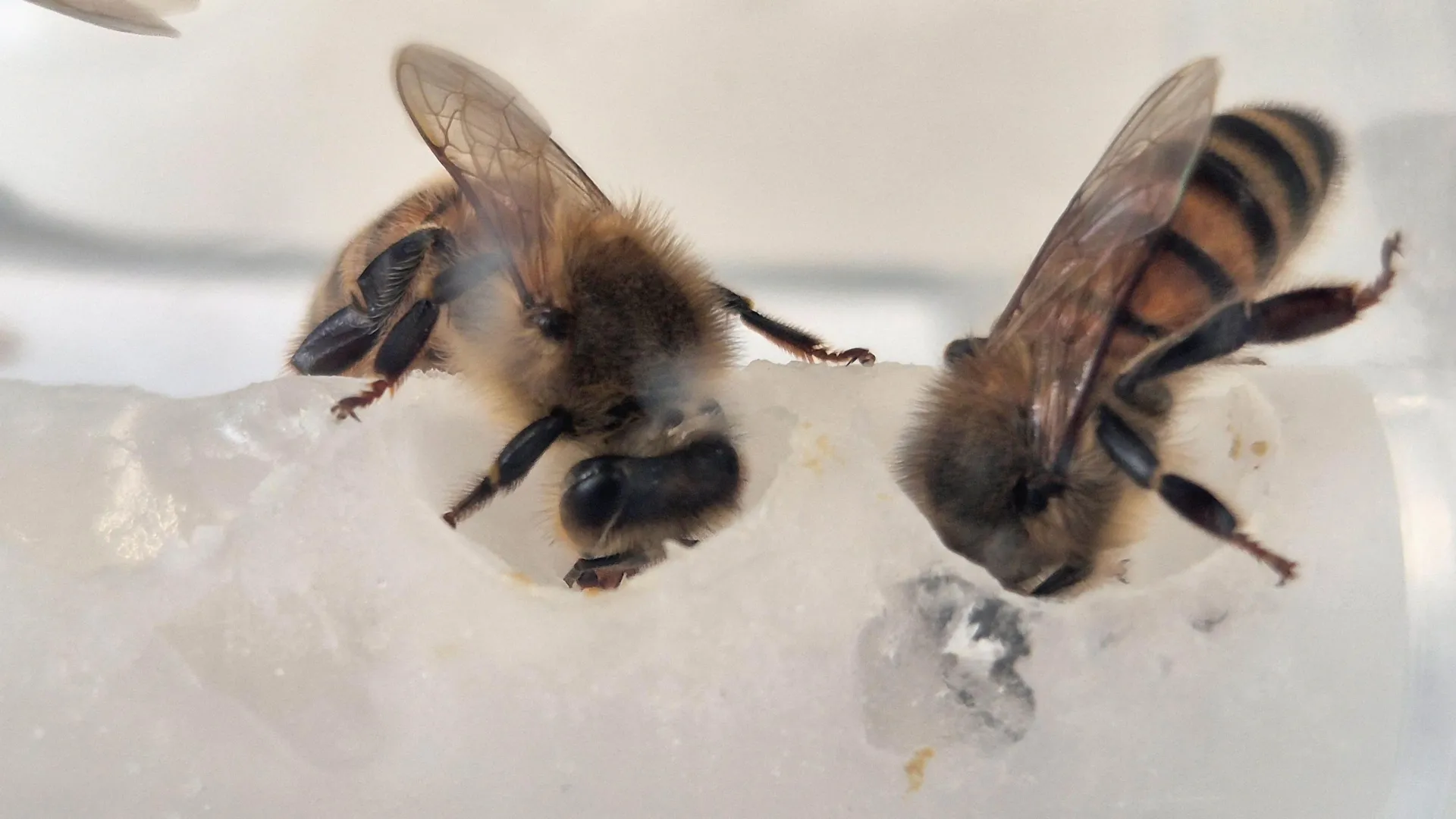
Scientists uncovered the nutrients bees were missing — Colonies surged 15-fold
Scientists have developed a breakthrough “superfood” for honeybees by engineering yeast to produce the essential nutrients normally found in pollen. In controlled trials, colonies fed this specially designed diet produced up to 15 times more young, showing a dramatic boost in reproduction and overall health. As climate change and modern agriculture reduce the availability of natural pollen, this innovation could offer a practical way to support struggling bee populations.
How Intelligence Survives the Death of the Universe
Civilizations at the end of time—how intelligence could survive heat death, cosmic isolation, entropy, and the universe’s longest future eras.
Take back your personal data with Incogni! Use code isaacarthur at the link below and get 60% off annual plans: https://incogni.com/isaacarthur.
🛒 SFIA Merchandise: https://isaac-arthur-shop.fourthwall… Visit our Website: http://www.isaacarthur.net ❤️ Support us on Patreon: / isaacarthur ⭐ Support us on Subscribestar: https://www.subscribestar.com/isaac-a… 👥 Facebook Group:
/ 1,583,992,725,237,264 📣 Reddit Community:
/ isaacarthur 🐦 Follow on Twitter / X:
/ isaac_a_arthur 💬 SFIA Discord Server:
/ discord Credits: Civilizations at the End of Time — How Intelligence Survives the Death of the Universe Written, Produced & Narrated by: Isaac Arthur Script Editors: Andy Popescu, Briana Brownell, Connor Hogan, Darius Said, David McFarlane, Edward Nardella, Eustratius Graham, Gregory Leal, Jefferson Eagley, Keith Blockus, Konstantin Sokerin, Luca de Rosa, Ludwig Luska, Lukas Konecny, Michael Gusevsky, Mitch Armstrong, MolbOrg, Naomi Kern, Philip Baldock, Sigmund Kopperud, Steve Cardon, Tiffany Penner, Yamagishi Graphics Courtesy of: Edward Nardella, Jakub Grygier, Jarred Eagley, Jeremy Jozwik, Justin Dixon, Katie Byrne, Ken York of YD Visual, LegionTech Studios, Mafic Studios, Misho Yordanov, Murat Mamkegh, Pierre Demet, Sergio Botero, Stefan Blandin, Udo Schroeter, and Select imagery/video supplied by Getty Images Music Courtesy of: AJ Prasad, Chris Zabriskie, Dan McLeod, NeptuneUK, Lombus, Markus Junnikkala, Miguel Johnson, Phase Shift, Stellardrone, Taras Harkavyi, and Epidemic Sound: http://nebula.tv/epidemic & Stellardrone Chapters 0:00 Intro 7:11 Eternal Intelligence 49:09 Incogni 50:30 Choosing the Long Night 55:24 The Last Planet 1:27:35 When Survival Stops Being Local 1:32:38 The Omega Point 2:05:18 Big Crunch Revisited — Uncertainty Returns 2:11:09 Iron Stars 2:51:05 The Big Slurp & Vacuum Decay 2:58:23 The Big Rip 3:32:13 After the End of Time — Quantum Resurrection & Poincare Recurrence 3:34:25 Galileo.
🌐 Visit our Website: http://www.isaacarthur.net.
❤️ Support us on Patreon: / isaacarthur.
⭐ Support us on Subscribestar: https://www.subscribestar.com/isaac-a…
👥 Facebook Group: / 1583992725237264
📣 Reddit Community: / isaacarthur.
🐦 Follow on Twitter / X: / isaac_a_arthur.
💬 SFIA Discord Server: / discord.
Credits: Civilizations at the End of Time — How Intelligence Survives the Death of the Universe.
Written, Produced & Narrated by: Isaac Arthur.
Script Editors:
Andy Popescu, Briana Brownell, Connor Hogan, Darius Said, David McFarlane, Edward Nardella, Eustratius Graham, Gregory Leal, Jefferson Eagley, Keith Blockus, Konstantin Sokerin, Luca de Rosa, Ludwig Luska, Lukas Konecny, Michael Gusevsky, Mitch Armstrong, MolbOrg, Naomi Kern, Philip Baldock, Sigmund Kopperud, Steve Cardon, Tiffany Penner, Yamagishi.
Graphics Courtesy of:
Edward Nardella, Jakub Grygier, Jarred Eagley, Jeremy Jozwik, Justin Dixon, Katie Byrne, Ken York of YD Visual, LegionTech Studios, Mafic Studios, Misho Yordanov, Murat Mamkegh, Pierre Demet, Sergio Botero, Stefan Blandin, Udo Schroeter, and Select imagery/video supplied by Getty Images.
Music Courtesy of:
AJ Prasad, Chris Zabriskie, Dan McLeod, NeptuneUK, Lombus, Markus Junnikkala, Miguel Johnson, Phase Shift, Stellardrone, Taras Harkavyi, and Epidemic Sound: http://nebula.tv/epidemic & Stellardrone.
Chapters.
0:00 Intro.
7:11 Eternal Intelligence.
49:09 Incogni.
50:30 Choosing the Long Night.
55:24 The Last Planet.
1:27:35 When Survival Stops Being Local.
1:32:38 The Omega Point.
2:05:18 Big Crunch Revisited — Uncertainty Returns.
2:11:09 Iron Stars.
2:51:05 The Big Slurp & Vacuum Decay.
2:58:23 The Big Rip.
3:32:13 After the End of Time — Quantum Resurrection & Poincare Recurrence.
3:34:25 Galileo
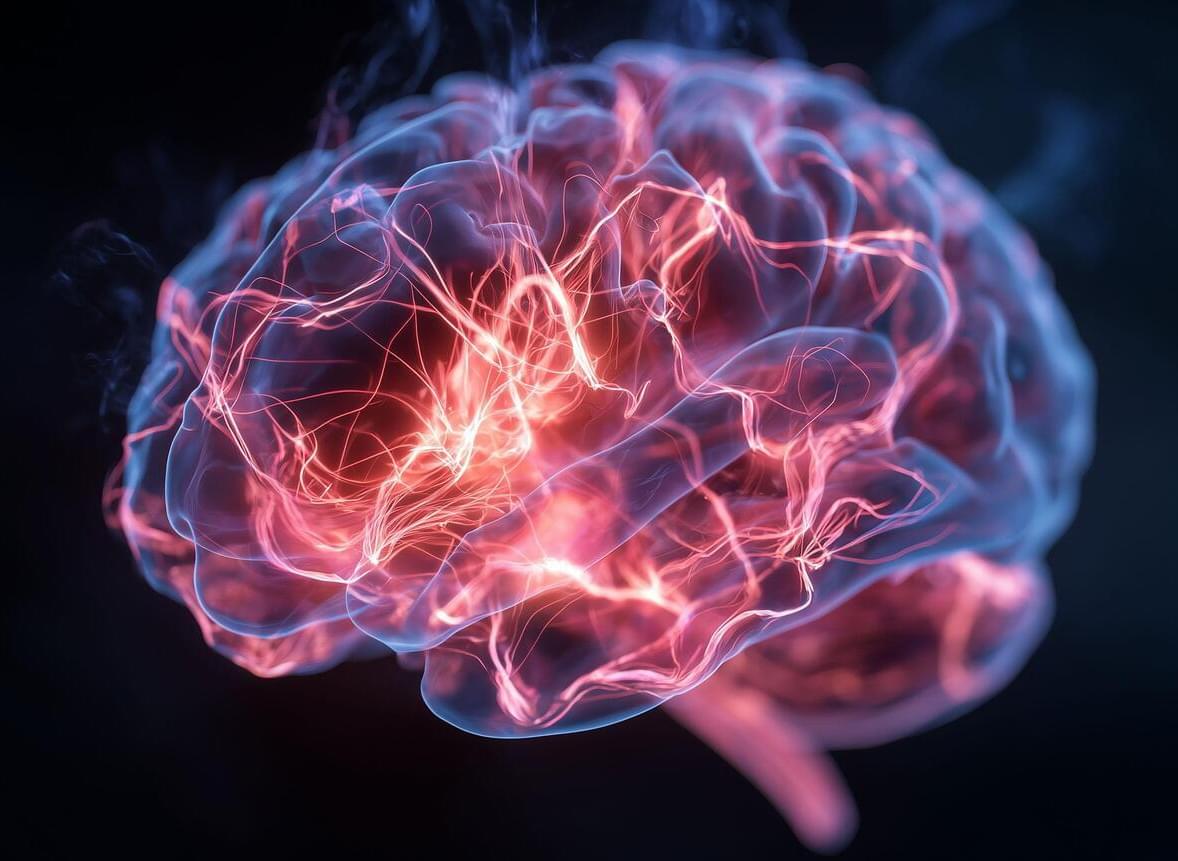
A poorly “cleaned” brain increases the risk of psychosis
A new study from the University of Geneva points to the brain’s waste-clearance system — the glymphatic system — as a possible piece of the psychosis puzzle. In people with 22q11.2 deletion syndrome, a high-risk genetic condition, researchers found developmental differences in an MRI-derived marker linked to glymphatic function, along with associations to hippocampal excitation/inhibition balance and psychosis vulnerability.
A team from UNIGE shows that early alterations in the brain’s clearance system could contribute to vulnerability to psychosis.
How can we explain the onset of psychotic symptoms characteristic of schizophrenia? Despite their major and often irreversible impact on intellectual abilities and autonomy, the biological mechanisms that precede their emergence remain poorly understood. A team from the Department of Psychiatry at the Faculty of Medicine and the Synapsy Center for Neuroscience Research in Mental Health at the University of Geneva (UNIGE) provides new insight into this question. Early dysfunction of the glymphatic system, the network responsible for removing waste from the brain, could be a key vulnerability factor. This research has been published in Biological Psychiatry: Global Open Science.
Hallucinations and delusions are among the characteristic psychotic symptoms of schizophrenia spectrum disorders, which may also be accompanied by social withdrawal and cognitive decline. These disorders, considered neurodevelopmental conditions, most often emerge during adolescence or early adulthood and have an estimated prevalence of 0.5–3% in the general population.

Dual-rail superconducting qubits generate high-fidelity logical entanglement, study finds
Quantum computers, systems that process information leveraging quantum mechanical effects, could outperform classical computers on some advanced tasks. These systems rely on qubits, the fundamental units of quantum information, that become linked via an effect known as quantum entanglement and share a unified quantum state.
Qubits are known to be highly sensitive to slight changes or disturbances in their surrounding environment, also referred to as noise. Noise can prompt them to lose quantum information via a process called decoherence, which in turn leads to errors.
In recent years, quantum scientists and engineers have introduced various approaches aimed at mitigating or correcting quantum errors, with the goal of realizing fault-tolerant quantum computing. Some of these approaches rely on so-called erasure qubits, qubits whose errors are easier to detect and locate in real time.
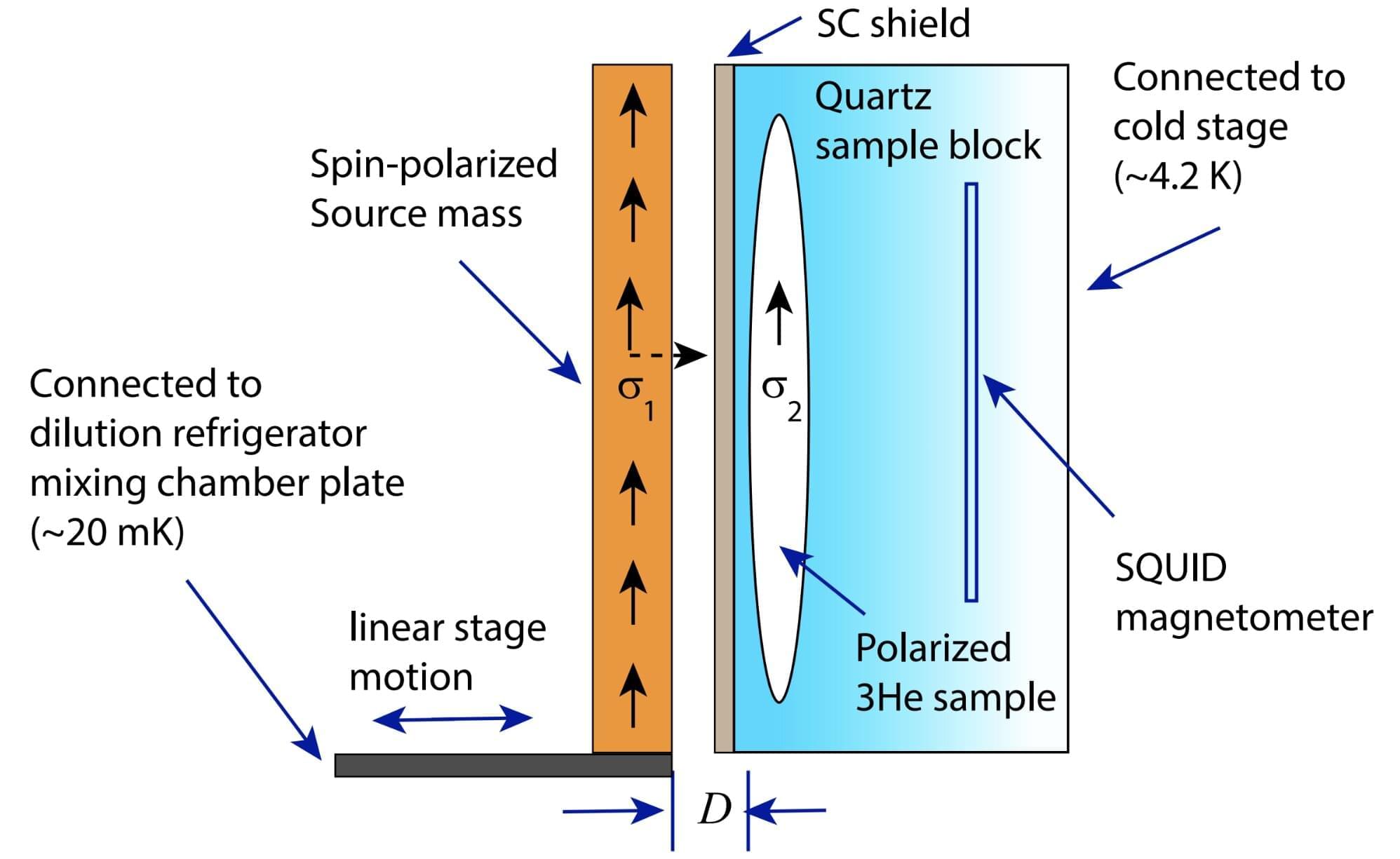
Piezoelectric materials enable a new approach to searching for axions
Dark matter, a type of matter that does not emit, reflect or absorb light, is predicted to account for most of the matter in the universe. As it eludes common experimental techniques for studying ordinary matter, understanding the nature and composition of dark matter has so far proved very challenging. One hypothesis is that it is made up of hypothetical particles known as quantum chromodynamics (QCD) axions. These are theoretical elementary particles that would interact very weakly with ordinary matter and are predicted to be extremely light, highly stable and electrically neutral.
While several large-scale studies have searched for small signals or effects that would indicate the presence of these particles or their interaction with ordinary matter, their existence has not yet been confirmed experimentally. In a paper recently published in Physical Review Letters, researchers at Perimeter Institute, University of North Carolina, Kavli Institute and New York University have introduced a new approach to search for QCD axions using a class of materials that generate electric fields when deformed, called piezoelectric materials.
“The axion was proposed in the late 1970s by Weinberg and Wilczek, as a solution to the strong CP (Charge-Parity) problem, a long-standing puzzle in the theory of the strong nuclear force,” Amalia Madden, co-senior author of the paper, told Phys.org.

Breaking recalcitrant lignin bonds with electricity for conversion into value-added chemicals: An e-biorefinery
A research team led by Professor Jaehoon Kim at Sungkyunkwan University and Dr. Dong Ki Lee at the Korea Institute of Science and Technology (KIST) has developed a highly efficient catalytic process that electrochemically converts lignin, a key component of woody biomass, into value-added aromatic compounds and cyclohexene-based compounds.
The study demonstrates that the recalcitrant ether bonds in lignin can be selectively cleaved under relatively mild conditions without the use of external hydrogen gas, while simultaneously upgrading lignin into useful chemical precursors.
The research results were published in Applied Catalysis B: Environment and Energy.
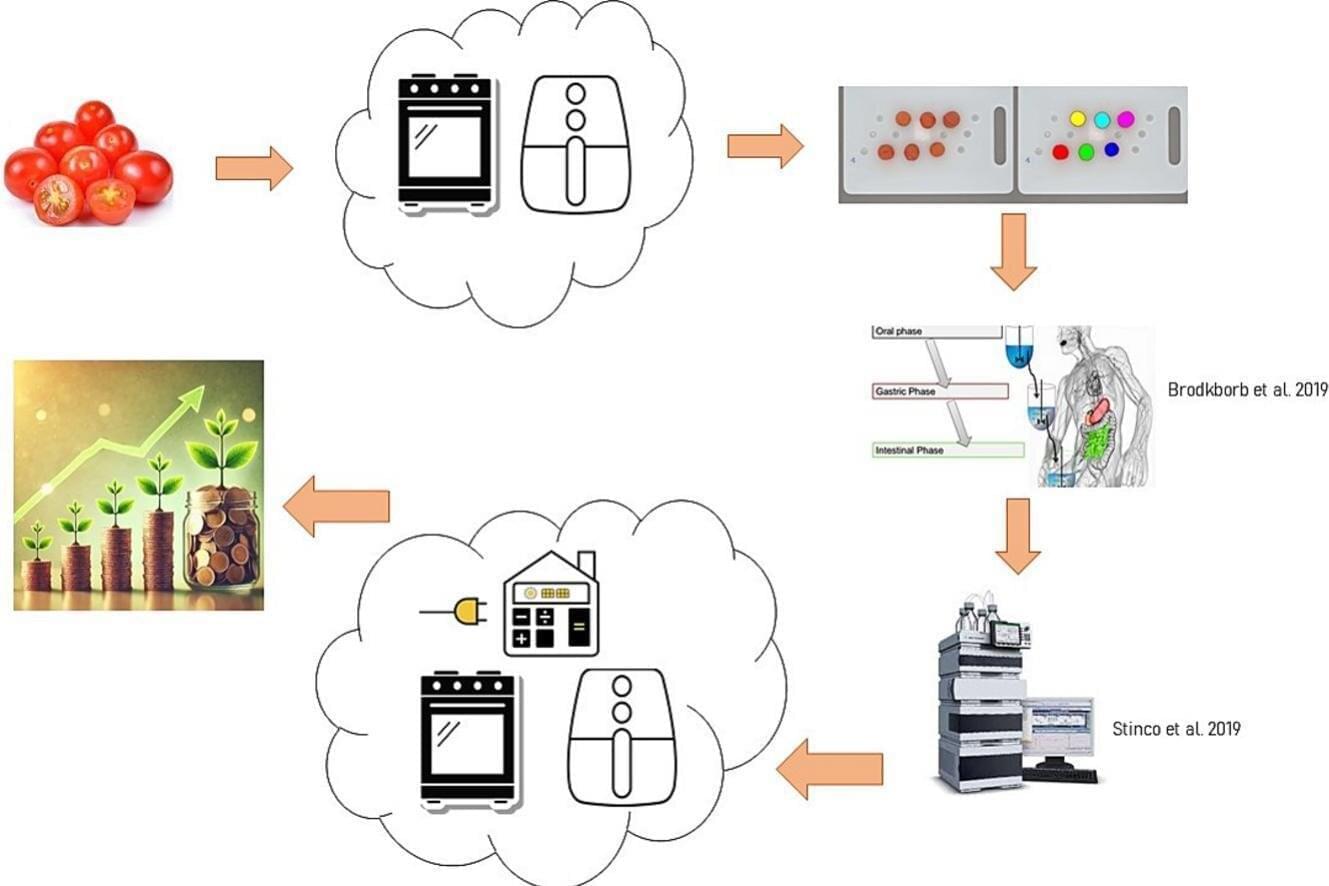
Microwave carrots, air-fry tomatoes: Researchers identify sustainable cooking methods for better nutrition
Researchers at the University of Seville’s Food Color and Quality Laboratory have studied the effects of different cooking methods used for tomatoes and carrots (in the oven, microwave or air fryer, among others) on the amount of carotenoids that are potentially available for absorption by the body following the digestion of these foods. According to the study, the bioavailability index varies significantly depending on how these foods are cooked. Carotenoids are compounds of great importance due to their positive health effects.
In the case of carrots, the bioavailability of total carotenoids increased ninefold when cooked in the oven. For tomatoes, the highest bioavailability values were obtained by cooking them in either an air fryer (190 °C for 10 minutes) or a conventional oven (180 °C for 20 minutes). There were no significant differences between the two methods. Although the increase in bioavailability was more modest (a 1.5-fold increase), it was also significant compared to raw tomatoes.
The researchers also highlight that the increases in the bioavailability of the vitamin A precursor carotenoids in tomatoes (α-carotene and β-carotene) ranged from 26 to 38 times and 46 to 71 times, respectively, compared with those in raw carrots. Cooking is, therefore, a sometimes-overlooked strategy for combating vitamin A deficiency, one of the world’s most serious nutritional problems.