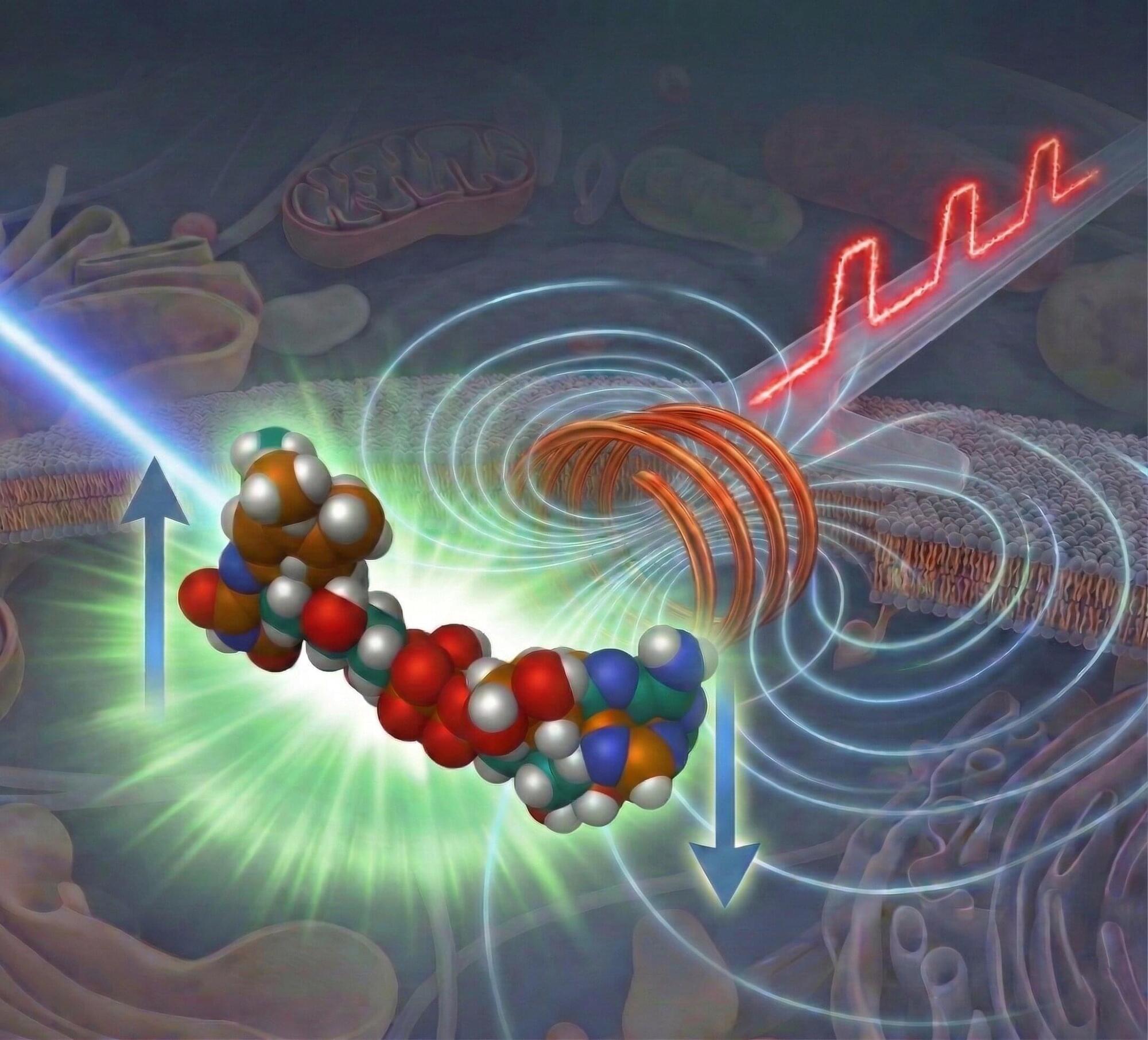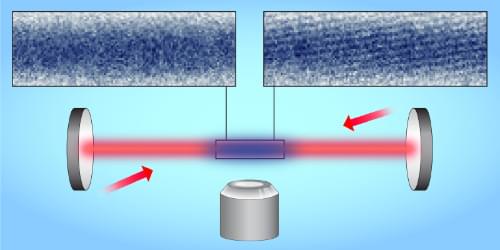
A new microscope captures how atoms rearrange themselves when they are illuminated inside an optical cavity.
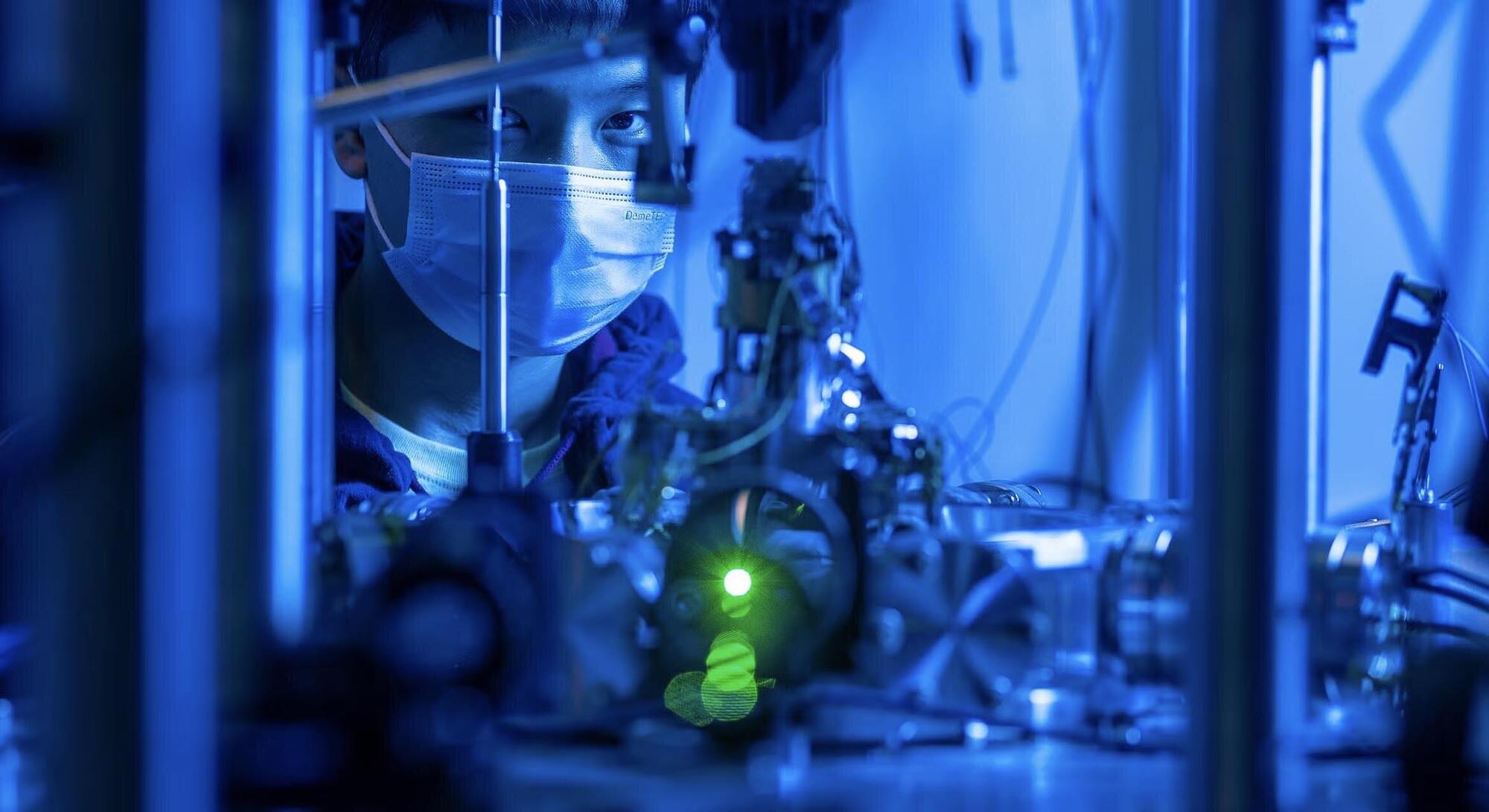
When light hits an atom, it exerts a force on the atom. As weak as these light-induced forces may be, understanding them allows scientists to levitate particles, create the coldest atomic gases in the Universe, operate solar sails, and observe gravitational waves. More exotic phenomena occur when light is confined between a pair of mirrors known as an optical cavity. When a gas of atoms is placed inside such a cavity, light emitted by one atom can be absorbed by another atom. Through the exchange of photons, each atom simultaneously tugs on all the other atoms, causing the ensemble to autonomously rearrange itself into a periodic pattern called a density wave. Now Jean-Philippe Brantut and his colleagues at the Swiss Federal Institute of Technology in Lausanne (EPFL) have built a microscope to, for the first time, image this light-induced density wave in an ultracold atomic gas [1].