Founder of XTX Markets and science enthusiast is spending tens of millions of dollars on project in Chile


People have long given up on the search for the Fountain of Youth, a mythical spring that could reverse aging. But for some scientists, the hunt has not ended—it’s just moved to a different place. These modern-day Ponce de Leóns are investigating whether gut microbes hold the secret to aging well.
The gut microbiome refers to the vast collection of microscopic organisms—bacteria, fungi, and viruses—that largely inhabit the colon. These microbes aid in digestion and produce molecules that affect your physiology and psychology. The composition of the microbiome is influenced by a combination of factors, including genetics, diet, the environment, medications, and age.
I’m a microbiology professor and author of “Pleased to Meet Me: Genes, Germs and the Curious Forces That Make Us Who We Are,” which describes how the gut microbiome contributes to physical and mental health. The discovery that the gut microbiome changes with age has ignited studies to determine whether the Fountain of Youth might be right under your nose, down inside your gut.

AI Era Data Centers: Power & Security Challenges By Chuck Brooks
As AI adoption accelerates across the government, challenges like higher power demand and cyber risks are expected to emerge.
#datacenters #cybersecurity #artificialintelligence
By Chuck Brooks, president of Brooks Consulting International and one of Executive Mosaic’s GovCon Experts
Artificial intelligence, or AI, is not merely a tool in our age of rapid technological advancement; rather, it is the fundamental force behind innovation in all spheres of society. Our world is changing due to AI’s capabilities, which range from real-time decision-making in national security to predictive analytics in healthcare.
The contemporary data center, the digital stronghold that stores, processes and drives the enormous computing demands of AI models, is at the center of this change. However, as AI adoption picks up speed, these vital
infrastructures are confronted with two existential challenges: an unparalleled increase in power usage and a changing environment of increasingly complex security risks. For operational continuity, economic stability and national resilience, addressing both is now essential and no longer discretionary.
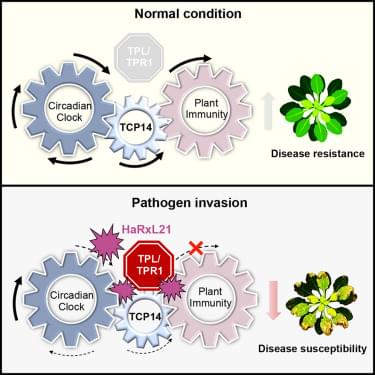
Wang et al. identify the transcription factor TCP14 as a critical nexus linking the circadian clock and plant defense. The study reveals how the pathogen effector HaRxL21 hijacks this connection by recruiting TPL/TPR1 repressors to disarm TCP14, thereby providing a mechanistic understanding of how pathogens overcome circadian-gated immunity.

【Evaluation of Pirfenidone for the Treatment of Acute Respiratory Distress Syndrome: A Case Report】 Full article: (Authored by Carlie Cressey Brown, et al., from University of Colorado Skaggs School of Pharmacy and Pharmaceutical Sciences (USA), etc.)
Acute respiratory distress syndrome (ARDS) is an acute hypoxemic lung injury typically caused by a predisposing factor such as infection, aspiration, transfusion or shock. While accepted management includes lung protective ventilation strategies, there is currently no mainstay pharmacologic treatment for ARDS. Due to its anti-inflammatory, antioxidant, and antifibrotic properties, pirfenidone presents as a potential therapeutic option for patients with ARDS. This paper presents a case of a patient with ARDS secondary to pneumonia who was refractory to standard therapies and effectively treated with pirfenidone.
Background: Acute respiratory distress syndrome (ARDS) is an aggressive, inflammatory lung injury with a high mortality rate. While accepted management includes lung protective ventilation strategies, there is currently no mainstay pharmacologic treatment for ARDS. Adjunctive pharmacologic treatment may include glucocorticoids, neuromuscular blockade and inhaled pulmonary vasodilators. Due to its anti-inflammatory, antioxidant, and antifibrotic properties, pirfenidone presents as a potential therapeutic option for patients with ARDS. Case Report: We present a patient treated with pirfenidone for ARDS. Our patient was a 31-year-old man who presented to the hospital with dyspnea on exertion and concern for relapsed acute myeloid leukemia. After a complex hospital course, the off-label use of pirfenidone 801 mg three times daily was pursued to treat his ARDS. The patient’s ARDS resolved after 10 days of pirfenidone, with no adverse effects, and he was discharged. Conclusions: This case illustrates the potential utility of pirfenidone in the management of ARDS. After no improvement with widely accepted strategies including lung protective ventilation and steroids, the patient demonstrated recovery after the initiation of pirfenidone. We can infer correlation but not causation in this setting, prompting the need for further prospective randomized clinical trials to establish pirfenidone as a therapeutic option in ARDS.
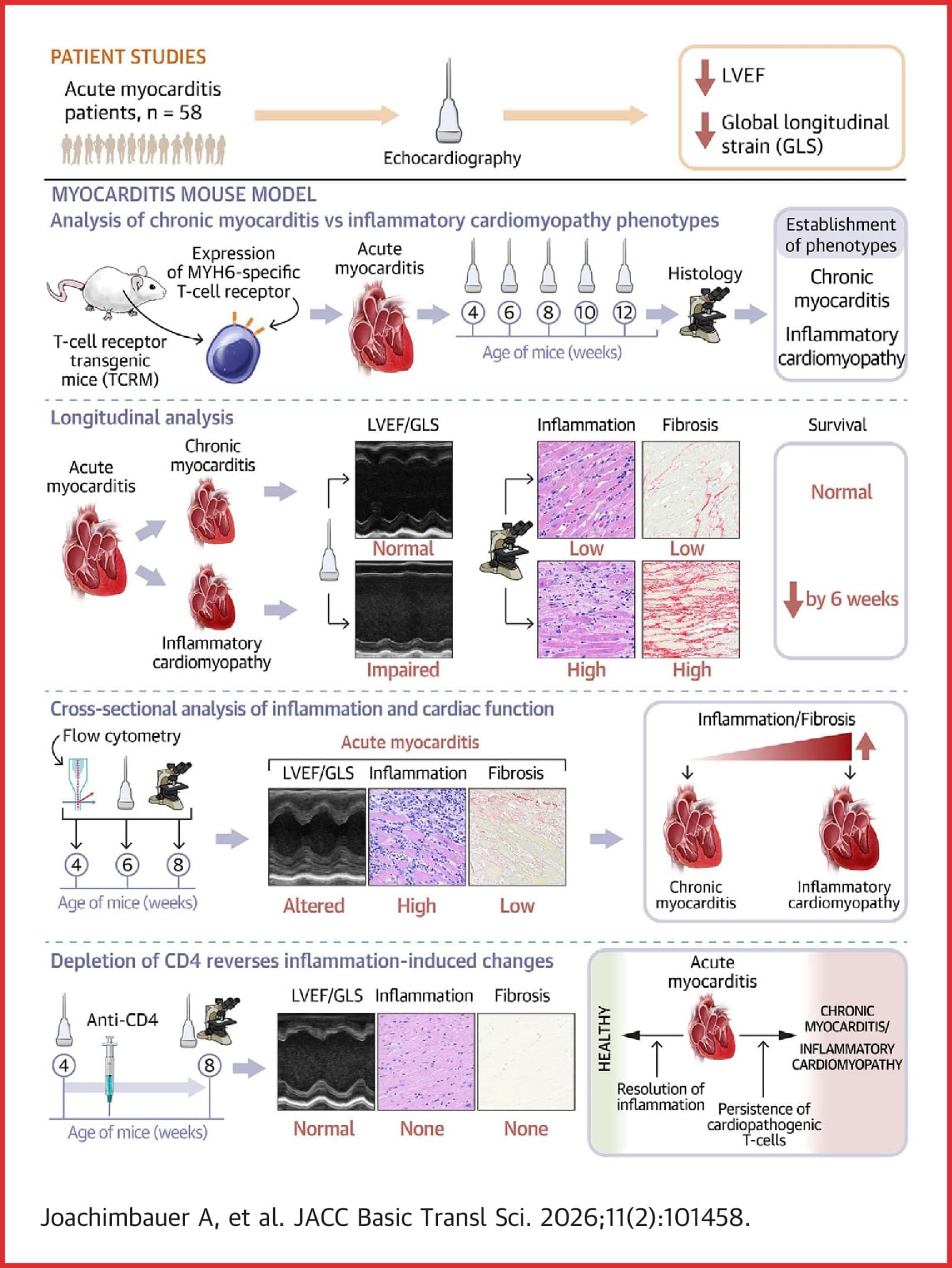
In this JACCBTS article, Joachimbauer et al. demonstrate that cardiopathogenic CD4+ T cells induce acute yet reversible inflammation-driven myocardial changes, and that the persistence of these cells is a key factor driving functional cardiac remodeling.
This website uses a security service to protect against malicious bots. This page is displayed while the website verifies you are not a bot.
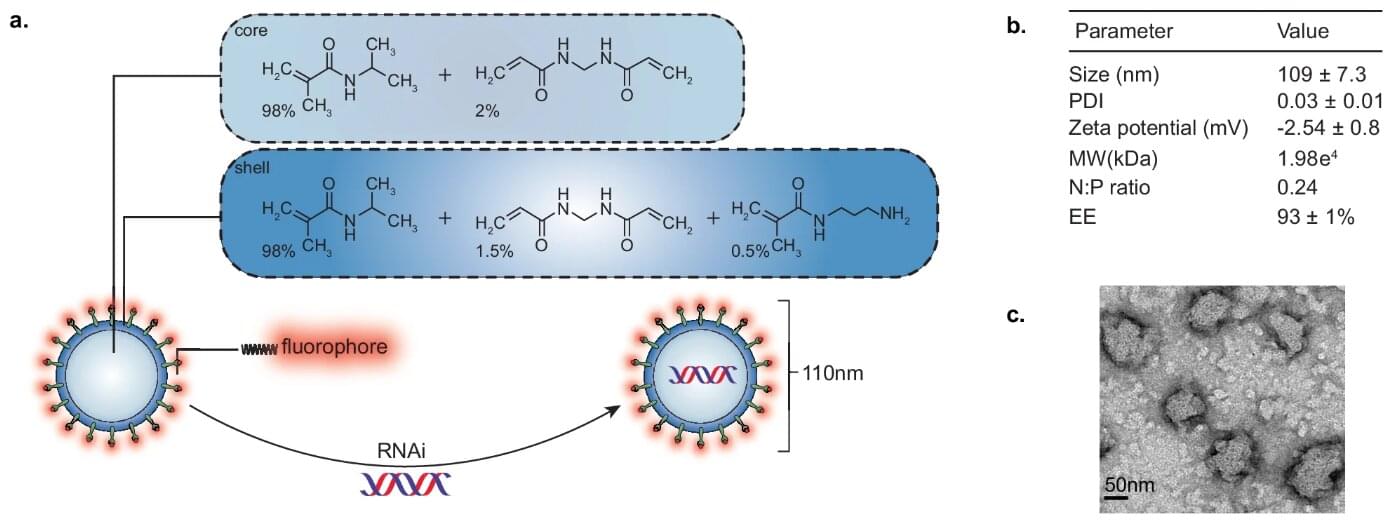
Exhaustion creeps in. Appetite vanishes. Hair thins. The person in the mirror looks gaunt. It’s the paradox of cancer treatment: The same drugs meant to save a life can also wear the body down. Nick Housley, assistant professor in Georgia Tech’s School of Biological Sciences, wants to change that. He studies where cancer drugs go once they’re inside the body, including places they were never intended to reach. Some of the medicine finds the tumor. The rest interacts with healthy tissue.
This approach has saved millions of lives. It can also create punishing side effects. “The problem isn’t that these drugs don’t work,” said Housley. “It’s that they affect far more of the body than they need to.”
In an observational cohort study, serum magnesium was not a strong predictor of hemorrhagic transformation after mechanical thrombectomy. stroke.
ELetters should relate to an article recently published in the journal and are not a forum for providing unpublished data. Comments are reviewed for appropriate use of tone and language. Comments are not peer-reviewed. Acceptable comments are posted to the journal website only. Comments are not published in an issue and are not indexed in PubMed. Comments should be no longer than 500 words and will only be posted online. References are limited to 10. Authors of the article cited in the comment will be invited to reply, as appropriate.
Comments and feedback on AHA/ASA Scientific Statements and Guidelines should be directed to the AHA/ASA Manuscript Oversight Committee via its Correspondence page.
Obesity is an independent driver of cardiovascular disease (CVD), mediated through adverse haemodynamic loading, insulin resistance, systemic inflammation, endothelial dysfunction and prothrombotic pathways. Contemporary obesity therapies show cardiovascular (CV) benefits beyond improvements in traditional risk factors. Across large CV outcome trials, glucagon-like peptide 1 receptor agonists consistently reduce three-point major adverse CV events (MACE) in patients with overweight, obesity and established CVD with and without diabetes. In obesity-related heart failure of preserved ejection fraction, semaglutide and tirzepatide improve symptoms and functional capacity and reduce worsening heart failure events, while effects on CV mortality remain uncertain.