JUST PUBLISHED: the roles of protein s-palmitoylation in cancers: from dynamic modulation to therapeutic potential.
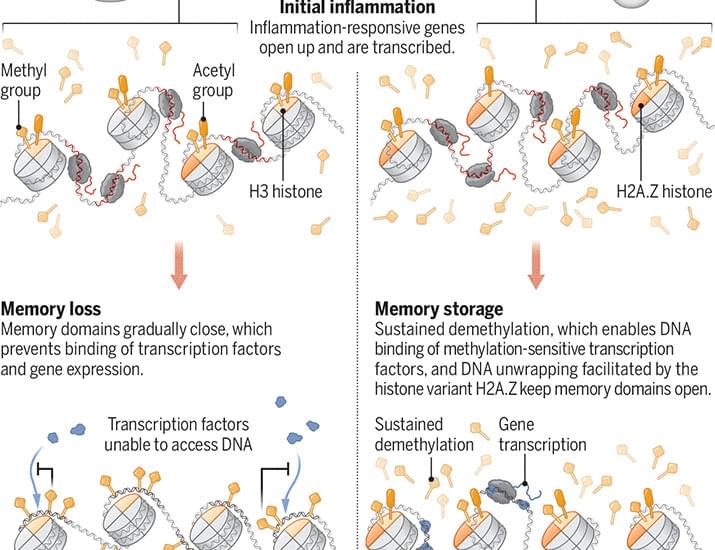
In a new Science study, researchers report that specific regions dense in cytosine and guanosine dinucleotides are epigenetically modified during inflammation to enable gene expression and that these changes persist during the animal’s lifetime.
The finding has implications for understanding how the genome determines the longevity of memory, which affects tissue fitness.
Learn more in a new Science Perspective.
Specific DNA sequence features encode the persistence of epigenetic memory of inflammation.
Guillaume Blot and Przemyslaw Sapieha Authors Info & Affiliations
Science

Developing tau tangles doesn’t mean a person has Alzheimer’s disease – in fact, it happens to nearly everyone to varying degrees. But because these changes start in the locus coeruleus, some brain researchers – myself included – see this area as a canary in the coal mine for developing Alzheimer’s disease.
We are exploring whether stopping or slowing down tau tangles in this brain region, or otherwise maintaining its health, may be a way to interrupt how the disease ultimately unfolds and to prevent other aspects of cognitive aging.
Emerging research from my lab and others is investigating the idea that a therapy called vagus nerve stimulation, which is already widely used for other health conditions, could be one way of keeping the locus coeruleus functioning properly.

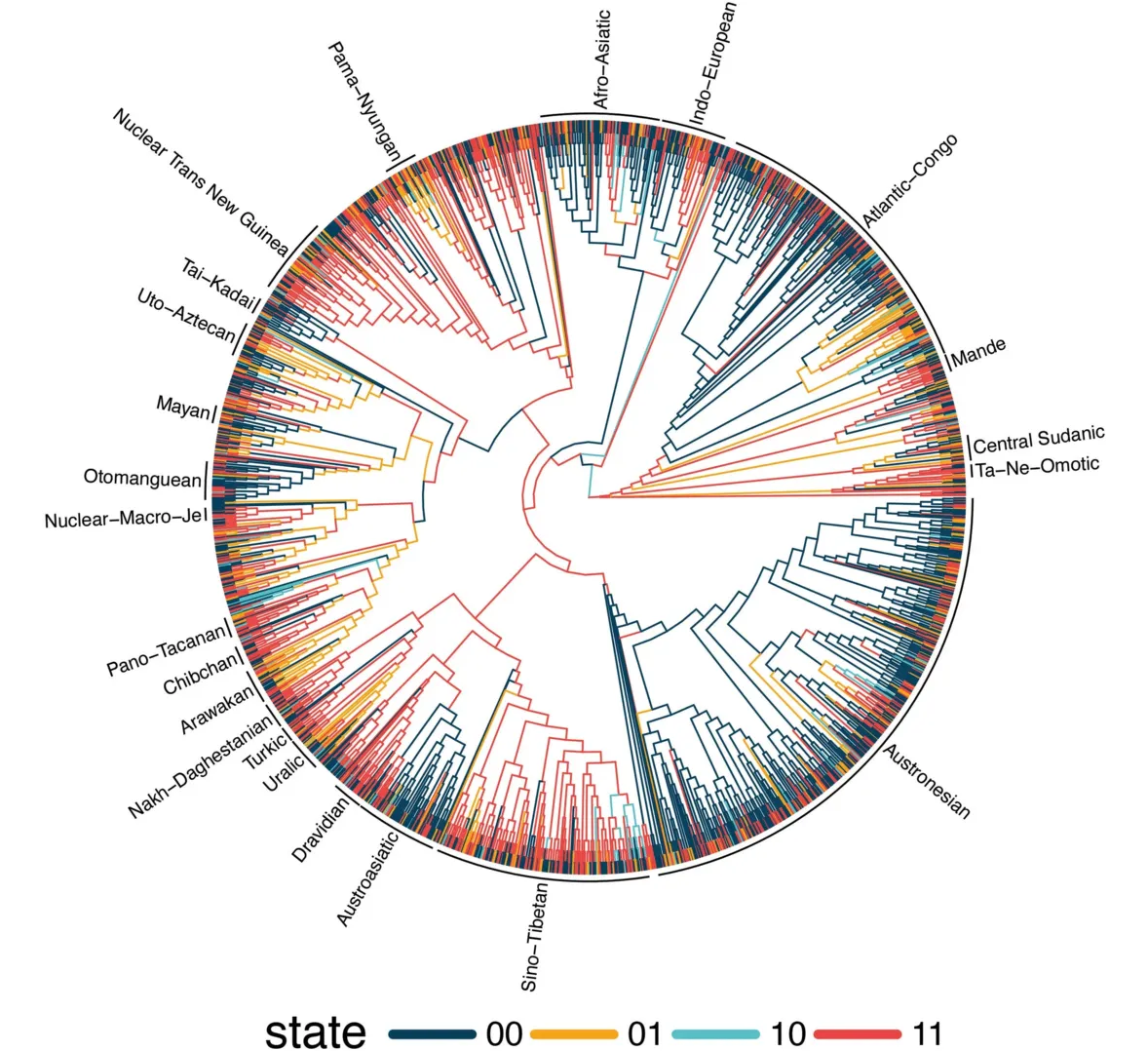
A massive new analysis of over 1,700 languages shows that some long-debated “universal” grammar rules are actually real. By using cutting-edge evolutionary methods, researchers found that languages tend to evolve in predictable ways rather than randomly. Key patterns—like word order and grammatical structure—keep reappearing across the globe. The results suggest shared human thinking and communication pressures shape how all languages develop.

Extending life is only part of the goal in aging research. Scientists also want more people to reach old age in good health, with fewer differences in when individuals die. This ideal outcome is often described as “squaring the survival curve,” where most deaths are pushed into a narrow window late in life rather than spread out across many years.
To test how close current science comes to that goal, University of Sydney researchers revisited a large meta-analysis of studies in vertebrates. They focused on three widely studied interventions: dietary restriction, rapamycin, and metformin. While all are linked to longevity, they work in different ways.
Dietary restriction involves reducing calorie intake without causing malnutrition. It has been known for more than a century to extend lifespan in animals and is thought to act in part by dialing down a key cellular growth pathway called mTORC1, which helps regulate metabolism and aging. Because strict diets are difficult to maintain, scientists have searched for drugs that mimic these effects. Rapamycin directly blocks mTORC1 activity, while metformin, a common diabetes medication, influences the same pathway indirectly by altering how cells sense energy levels.