Editor’s Note: NASA updated this article on Wednesday, March 11, to reflect confirmation of Van Allen Probe A’s re-entry.
Artificial intelligence seeks to emulate the faculties of the human mind through computational systems, a synthetic recreation of our brains’ capabilities to perceive, learn, and reason.
Now, a company claims to have taken a totally different tack by simulating the 125,000 neurons and 50 million synaptic connections of an adult fruit fly’s brain — and then letting it roam inside a Matrix-like virtual environment.
In a video shared by Eon Systems cofounder Alex Weissner-Gross, the crudely animated insect can be seen stretching its legs inside a simulated sandbox, rubbing its front feet together and using its labellum to drink from a small bowl.
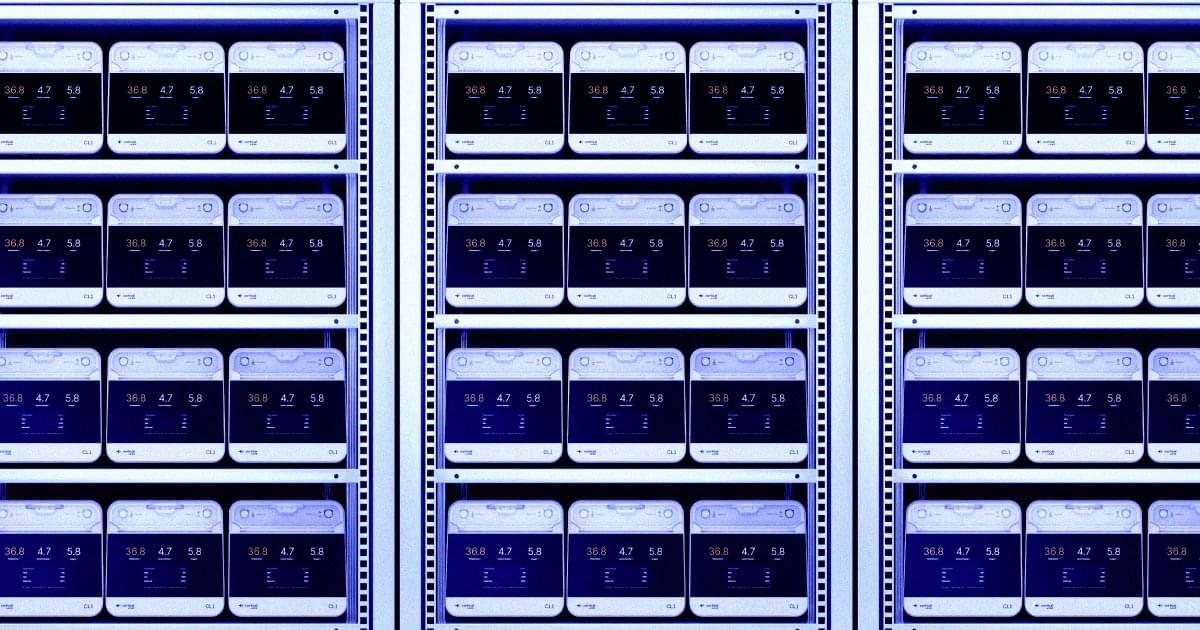
Now, Cortical Labs is ready to scale up the operation. As Bloomberg reports, the company says it’s working on “biological data centers” in Melbourne, Australia, and Singapore. Simply put, instead of relying on Nvidia chips like AI companies, Cortical Labs is planning to outfit its futuristic facilities with racks of CL1 biological computers, powered by many more human brain cells, instead.
The company refers to this approach as “wetware,” an unsettling new take on software and hardware terminology. Simply put, the computers send electrical signals to neurons derived from human blood stem cells. The chips embedded within record those neurons’ responses as the output.
The company teamed up with DayOne Data Centers, to develop the two facilities. The Melbourne data center will house 120 CL1 units, while DayOne is planning to deploy as many as 1,000 units at the one in Singapore.
Dr. Nicolas Rouleau is a neuroscientist, bioengineer, and Assistant Professor of Health Sciences at Wilfrid Laurier University. He wrote the award-winning essay, ‘An Immortal Stream of Consciousness: The scientific evidence for the survival of consciousness after permanent bodily death,’ in which he argues that the transmissive theory of consciousness may actually be more consistent with emerging scientific insights than the dominant assumption that the brain generates consciousness.
In this conversation with Hans Busstra, Rouleau shares the main arguments from his essay, which touch upon his collaboration with Dr. Michael Persinger, the inventor of the ‘God Helmet,’ and his work with Michael Levin on ‘mind blindness’—the idea that science may be searching for mind in too restricted a place by focusing almost exclusively on neurons.
More information on Dr. Nic Rouleau:
https://www.wlu.ca/academics/facultie… website: https://www.rouleaulab.com/ Further reading and scientific references discussed in this video: Rouleau’s BICS Essay: ‘An Immortal Stream of Consciousness: The scientific evidence for the survival of consciousness after permanent bodily death.’ https://www.bigelowinstitute.org/inde… Rouleau, N., Levin, M., et al. (2025) (Preprint; forthcoming in Philosophical Transactions of the Royal Society). Brains and Where Else? Mapping Theories of Consciousness to Unconventional Embodiments. https://tinyurl.com/439rrn8z Rouleau, N., & Levin, M. (2023). The Multiple Realizability of Sentience in Living Systems and Beyond. eNeuro, 10(11). https://tinyurl.com/2s4bdtmm Rouleau, N. & Cimino, N. (2022). A Transmissive Theory of Brain Function: Implications for Health, Disease, and Consciousness. NeuroSci, 3. https://www.mdpi.com/2673-4087/3/3/32 McCraty, R., et al. (2018). Long-term study of heart rate variability responses to changes in the solar and geomagnetic environment. https://tinyurl.com/254x3b9t Rouleau, N., & Persinger, M. A. (2016). Differential responsiveness of the right parahippocampal region to electrical stimulation in fixed human brains: Implications for historical surgical stimulation studies. Epilepsy & Behavior, 60181–186. https://tinyurl.com/uc5jbr Rajaram, M., & Mitra, S. (1981). Correlation between convulsive seizure and geomagnetic activity. Neuroscience Letters, 24, 187–191. https://tinyurl.com/3snrs4cs Chapters 0:00 Introduction 4:00 What Nic Rouleau would say to William James about his theory of transmissive consciousness 7:14 What do we know empirically about how electromagnetic fields influence our brains? 10:27 How scientifically rigorous are the empirical data on the influence of the Earth’s magnetic field on brains? 11:35 On Nic’s mentor, Dr. Michael Persinger, the inventor of the God Helmet 14:42 Research on post-mortem brain tissue 18:09 What mental states are influenced by magnetic fields? 18:58 Electromagnetic effects in dead vs. living brains 19:45 On Michael Levin and the paradigm shift due to bioelectricity 21:24 Influencing the thoughts of deceased people 25:33 Are biological forms stored in the Earth’s magnetic field? 30:21 Shielding brains from electromagnetic fields 33:12 Mind blindness: we only see 1% of the minds out there 38:55 What is the best way out of mind blindness? 41:06 Plant-based computation 42:00 The Self-Organizing Units Lab (SOUL) and what Nic is working on 43:23 Minds in a Petri dish 46:13 What counts as embodiment? 48:44 Phenomenal consciousness on different levels 53:06 What theories of consciousness can get us out of the behaviorist trap? 57:25 Nic’s award-winning essay on consciousness beyond death 1:00:55 Intermediary states of consciousness, the Bardo Thodol 1:04:46 Consciousness when the radio, the brain, is completely broken 1:06:35 Why exactly is electromagnetism a better explanation of consciousness beyond death than NDEs or OBEs? 1:11:58 How does the God Helmet work? 1:17:31 Which electromagnetic fields influence our consciousness and which ones don’t? 1:23:59 Can all of consciousness be stored in the Earth’s magnetic field? 1:27:08 Children with past-life memories: could electromagnetism play a role there? 1:29:51 How do quantum theories of consciousness relate to the work of Nic? 1:33:42 Do our brains connect electromagnetically with each other? 1:35:28 Nic on the hard problem of consciousness 1:38:00 Aren’t you just a materialist 2.0? 1:40:25 On the meaning of Nic’s work Copyright © 2026 Essentia Foundation. All rights on interview content reserved.
Personal website: https://www.rouleaulab.com/
Further reading and scientific references discussed in this video:
Rouleau’s BICS Essay: ‘An Immortal Stream of Consciousness: The scientific evidence for the survival of consciousness after permanent bodily death.’ https://www.bigelowinstitute.org/inde…
Rouleau, N., Levin, M., et al. (2025) (Preprint; forthcoming in Philosophical Transactions of the Royal Society). Brains and Where Else? Mapping Theories of Consciousness to Unconventional Embodiments. https://tinyurl.com/439rrn8z.

“Adobe fails to adequately disclose to consumers that by signing up for the ‘Annual, Paid Monthly’ subscription plan, they are agreeing to a year-long commitment and a hefty early termination fee that can amount to hundreds of dollars,” the complaint read.
This lawsuit is finally closed, with Adobe agreeing to pay $75 million worth of services for free to the affected customers and an extra $75 million to the Department of Justice.
However, the company doesn’t agree with the accusations made against it.
NVIDIA unveiled the next iteration of its DLSS (Deep Learning Super Sampling) technology with DLSS 5, claiming to achieve “photorealism” via a new real-time neural rendering model.
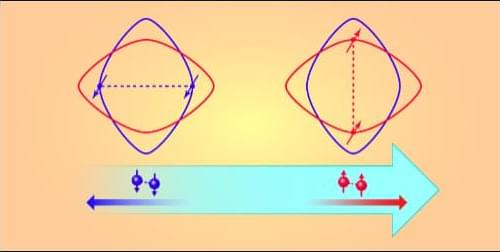
Materials from a new class of magnets could host permanent dissipationless spin currents when they enter a superconducting state.
Superconductors are famous for transporting electric charge with zero resistance. This ability underpins technologies such as MRI scanners, quantum computers, and sensitive magnetometers known as superconducting quantum interference devices. However, in the field of spintronics—which seeks to process information using electron spin rather than charge—achieving a similar long-range dissipationless transport has remained elusive. In ordinary metals, electron spins are highly susceptible to scattering and spin-orbit coupling, both of which cause spin currents to decay over short distances. Although research in superconducting spintronics based on ferromagnets has made progress [1, 2], ferromagnets produce stray magnetic fields that interfere with external circuit elements, and their internal magnetic fields tend to destroy superconductivity.

All the essential ingredients to make the DNA and RNA underpinning life on Earth have been discovered in samples collected from the asteroid Ryugu, scientists said Monday.
The discovery comes after these building blocks of life were detected on another asteroid called Bennu, suggesting they are abundant throughout the solar system.
One longstanding theory is that life first began on Earth when asteroids carrying fundamental elements crashed into our planet long ago.
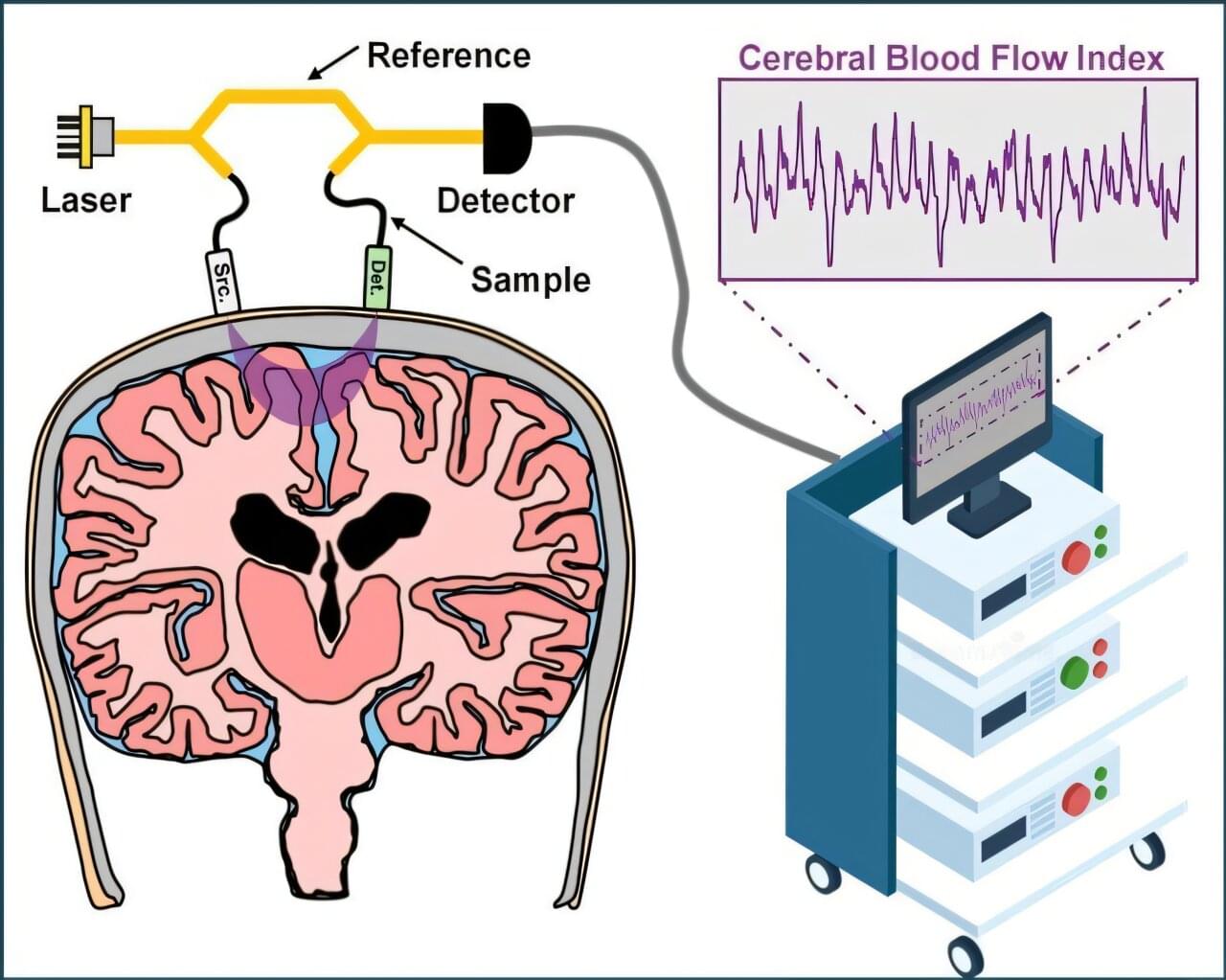
Cerebral blood flow is essential for normal brain function and often perturbed in neurological disease. If one shines a source of coherent light on perfused tissue, the detected speckles, or “grains” of light fluctuate, or “dance,” at a rate proportional to blood flow in the volume sampled by the light. In brain tissue, this concept can be harnessed to measure the cerebral blood flow index (CBFi).
However, to date, implementations of this principle for noninvasive adult human brain monitoring—collectively known as diffuse correlation spectroscopy (DCS)—have achieved limited brain sensitivity. This is because the brain is 1–2 centimeters deep beneath the scalp and skull, meaning that the light must sample the superficial tissue before reaching the brain.
While the collection points can be moved further from the source to address this issue by improving sampling of the brain, this strategy requires many photon-counting channels to detect highly attenuated light far from the source. DCS becomes prohibitively expensive as the number of channels increases.