Toggle light / dark theme

Get the latest international news and world events from around the world.

Log in for authorized contributors

Ericsson US discloses data breach after service provider hack

Ericsson Inc., the U.S. subsidiary of Swedish networking and telecommunications giant Ericsson, says attackers have stolen data belonging to an undisclosed number of employees and customers after hacking one of its service providers.

Headquartered in Stockholm and founded in 1876, the parent company is a communications tech leader with nearly 90,000 employees worldwide.

In data breach notification letters sent to affected individuals and filed with the California Attorney General on Monday, Ericsson said that a service provider who was storing personal data for employees and customers discovered a breach on April 28, 2025.

Dutch govt warns of Signal, WhatsApp account hijacking attacks

Russian state-sponsored hackers have been linked to an ongoing Signal and WhatsApp phishing campaign targeting government officials, military personnel, and journalists to gain access to sensitive messages.

This report comes from the Netherlands Defence Intelligence and Security Service (MIVD) and the Netherlands General Intelligence and Security Service (AIVD), who confirmed that Dutch government employees have been targeted in the attacks.

The Dutch intelligence agencies say the operation relies on phishing and social-engineering techniques that abuse legitimate authentication features to take over accounts and covertly monitor new messages.

“At First, We Thought Something Was Wrong” — NASA DART Mission Reveals a Cosmic Snowball Fight

Images from NASA’s DART mission revealed the first direct evidence that asteroids in a binary system can exchange rocks and dust. Slow moving debris from the asteroid Didymos appears to have struck its moon Dimorphos, leaving distinctive streaks scientists describe as “cosmic snowballs.” Around 1

Chemistry in Pictures: Glowing with pride

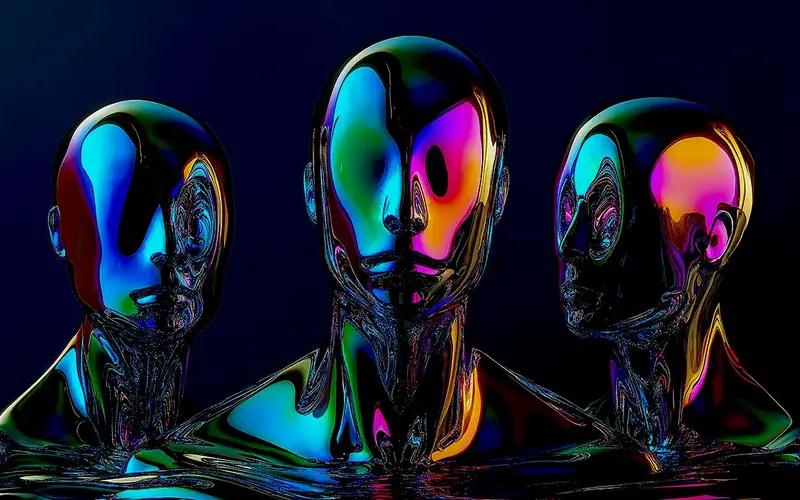
“It looks like a tiny solar system. But instead of planets, it’s a snapshot of my research journey in the lab,” says Sadiya Tanga, a chemistry graduate student at Ashoka University. Tanga’s work has focused on a type of drug molecule called proteolysis-targeting chimeras, or PROTACs for short. PROTACs have two active ends, one that grabs a target protein and another that grabs a molecular flag that tells the cell to break down the whole assembly as waste. “Each glowing flask and sphere holds a different compound I worked hard to design and synthesize,” Tanga says. “The colors you see are from parts of the molecules that shine under UV light.”

Neuroimaging Biomarkers of Disease Progression and Cognitive Change in Patients With Retinal Vasculopathy With Cerebral Leukoencephalopathy

The official journal of the Guarantors of Brain. Provides researchers and clinicians with original contributions in neurology by publishing a wide range of original studies in neurological science, in addition to practical clinical articles.

Scientists discover hidden brain cells that may stop Alzheimer’s tau buildup

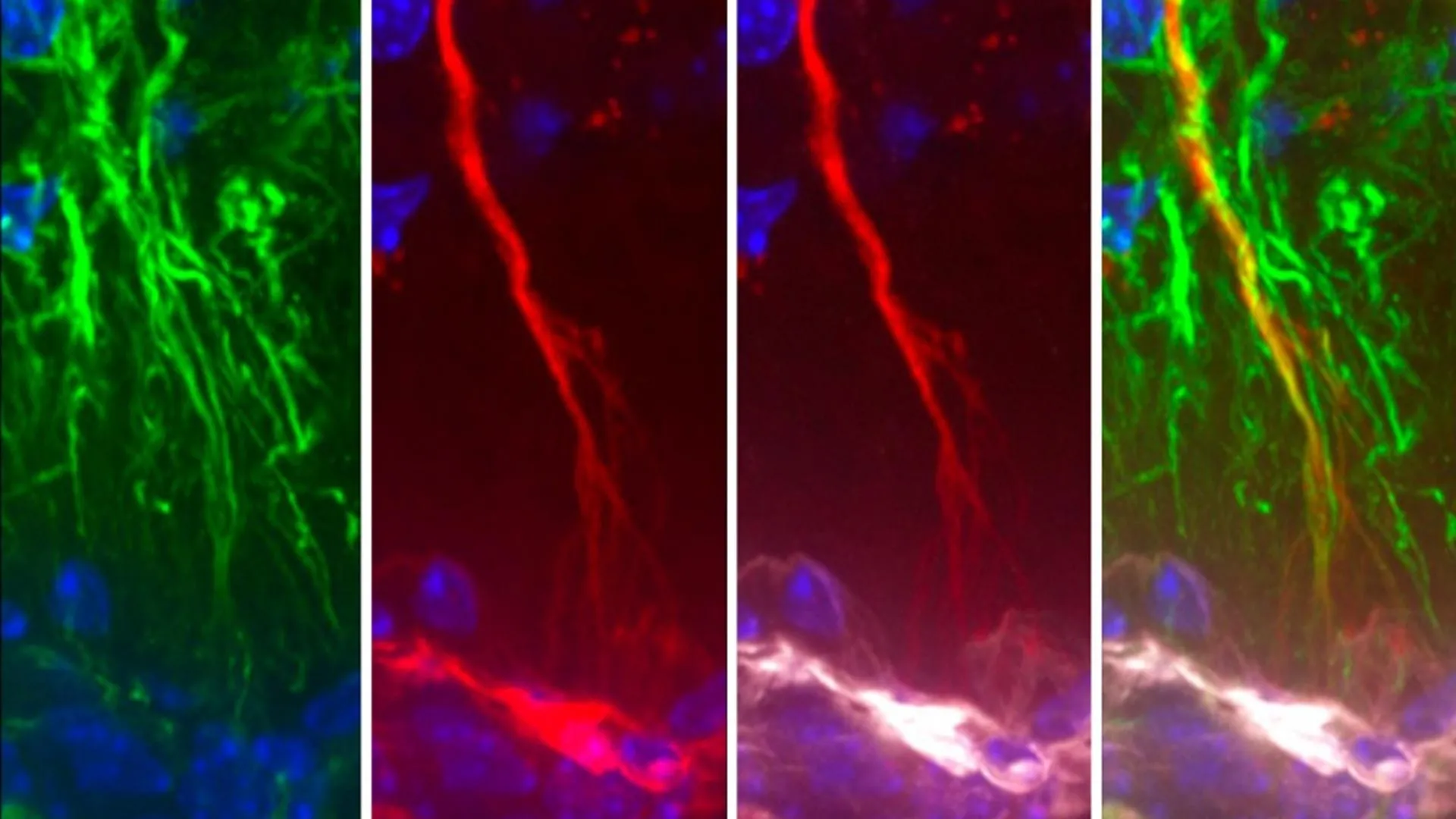
Scientists have uncovered a surprising new role for little-known brain cells called tanycytes that may influence the development of Alzheimer’s disease. These specialized cells appear to help remove toxic tau protein from the brain by transporting it from the cerebrospinal fluid into the bloodstream. When tanycytes become damaged or dysfunctional, tau can accumulate in the brain, a hallmark of Alzheimer’s.

Circulating MALAT1 in Preeclampsia and Association With Cardiometabolic Risk

RESEARCH ARTICLE: Circulating MALAT1 in Preeclampsia and Association With Cardiometabolic Risk @tovelekva


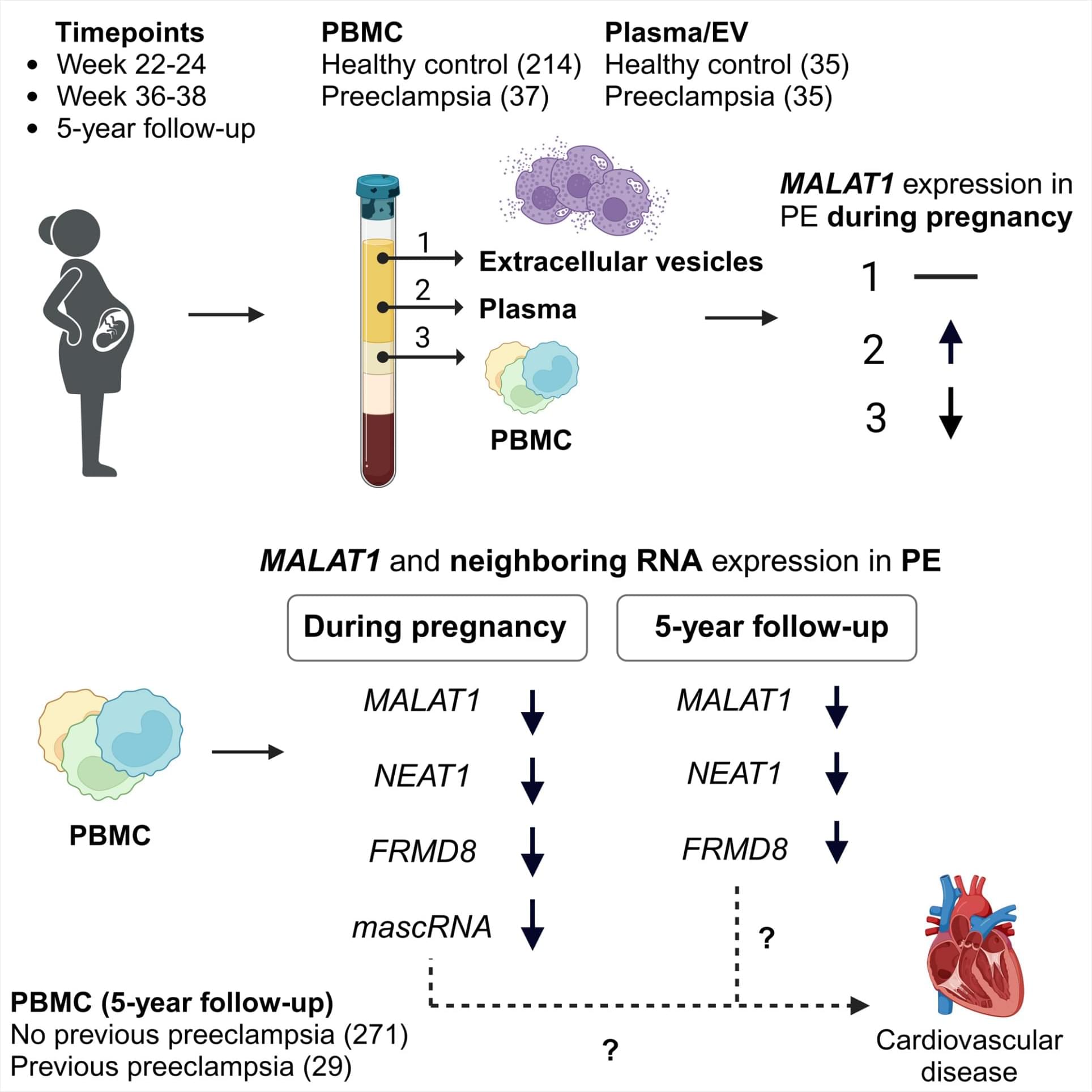
BACKGROUND: Preeclampsia is a hypertensive disorder affecting 2% to 8% of pregnancies. Women with a history of preeclampsia have an increased risk of cardiovascular disease. The long noncoding RNA MALAT1 is shown to regulate inflammatory responses linked to cardiovascular disease. MALAT1 is decreased in preeclampsia placentas and may have a cis-regulatory function on neighboring RNAs. METHODS: Expression of MALAT1, NEAT1, mascRNA, SCYL1, and FRMD8 was assessed in peripheral blood mononuclear cells, and MALAT1 in plasma and extracellular vesicles, at 22 to 24 and 36 to 38 weeks of gestation in healthy (n=214) and preeclampsia (n=37) women from the STORK cohort study (STORe barn og Komplikasjoner, translated as Large Babies and Complications) and at 5-year follow-up in women with and without history of preeclampsia (n=29; n=271).

Transhumanism: the future or the world’s most dangerous idea?

For centuries we treated technology as a tool, and now a new movement insists it is becoming the future of the human species itself.

Transhumanists like Harari and Kurzweil predict the merger of humans and machines, even the rise of a “digital God.” But critics fear this proposed future, calling transhumanism “the world’s most dangerous idea.”

Is the future one where technology is not merely a source of innovation but the basis for a new account of what it is to be human, or are claims of eternal life and new forms of intelligence just fanciful nonsense?

Joining the debate are transhumanist pioneer Zoltan Istvan, physicist and consciousness researcher Àlex Gómez-Marín, philosopher of mind Susan Schneider, and Softmax co-founder Adam Goldstein.

Tap the link now to watch the full debate.


We have for centuries sought technological progress. But now some are making the radical claim that technology is the future of the human race. ‘Effective accelerationists’ have won high-profile Silicon Valley support and claim we should accelerate technology to.

/* */