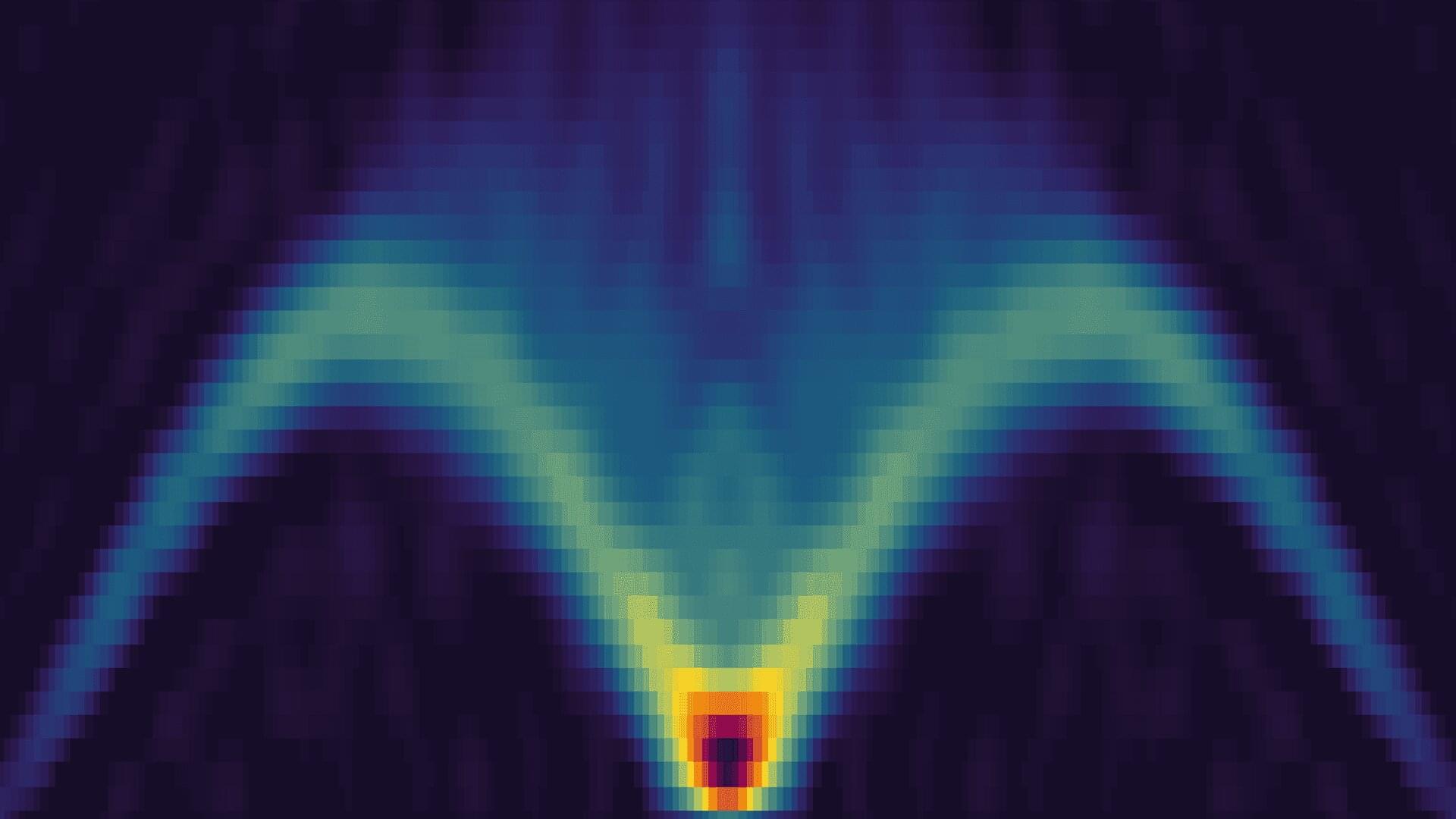
Coherently projecting a quantum state may allow it to be probed from a distance. This is now demonstrated for a Yu–Shiba–Rusinov state using a quantum corral.
Diabetic kidney disease (DKD) is the leading cause of end-stage renal disease; however, few biomarkers of its early identification are available. The aim of the study was to assess new biomarkers in the early stages of DKD in type 2 diabetes mellitus (DM) patients. This cross-sectional pilot study performed an integrated metabolomic profiling of blood and urine in 90 patients with type 2 DM, classified into three subgroups according to albuminuria stage from P1 to P3 (30 normo-, 30 micro-, and 30 macroalbuminuric) and 20 healthy controls using high-performance liquid chromatography and mass spectrometry (UPLC-QTOF-ESI MS). From a large cohort of separated and identified molecules, 33 and 39 amino acids and derivatives from serum and urine, respectively, were selected for statistical analysis using Metaboanalyst 5.0. online software.
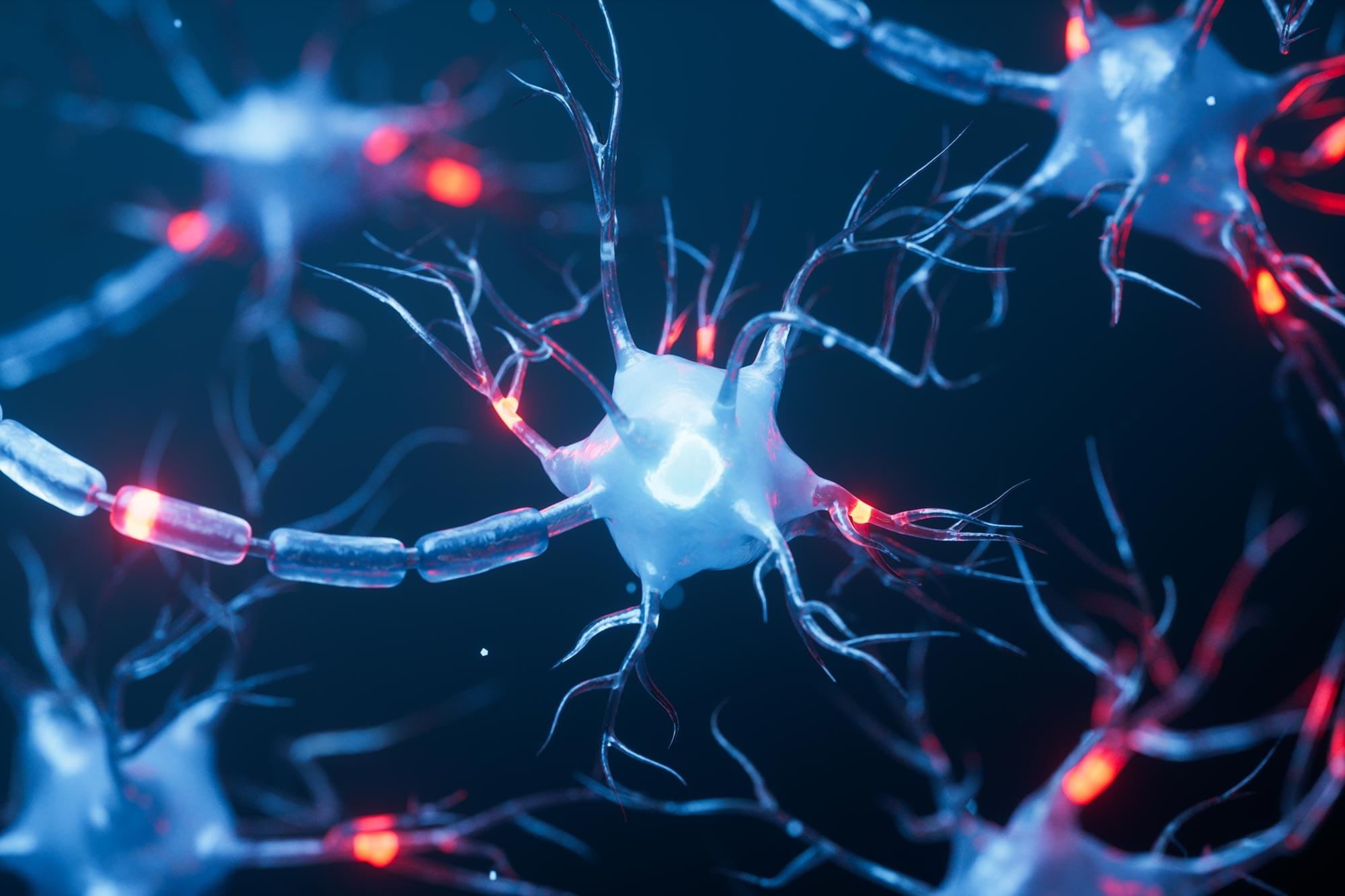
Researchers around the world are studying how the human brain achieves its extraordinary complexity. A team at the Central Institute of Mental Health in Mannheim and the German Primate Center—Leibniz Institute for Primate Research in Göttingen has now used organoids to show that the ARHGAP11A gene plays a crucial role in brain development. If this gene is missing, key processes involved in cell division and structure become unbalanced.
The human brain distinguishes us from other living beings like no other organ. It enables language, abstract thinking, complex social behavior, and culture. But how can this extraordinarily powerful organ develop, and how is it ensured that nerve cells and supporting cells form in exactly the right places to create the complexity of the human brain?
A team led by Dr. Julia Ladewig at the Central Institute of Mental Health (CIMH) in Mannheim and Dr. Michael Heide at the German Primate Center (DPZ) in Göttingen has investigated this question at the molecular level.
Heraclitus famously argued that you can’t step into the same river twice. Here, philosopher JB Manchak argues that the whole universe is like that – and that such a universe has some interesting knock-on consequences. One being that although one can add more structure to a Heraclitus spacetime – by adding a big sign saying “here is the centre of the universe!” What one can’t do, Manchak argues, is reduce symmetries in a Heraclitus spacetime by adding such a sign. To illustrate the point, imagine the universe is a giant puzzle in which each event in space and time is a piece. In a non-Heraclitus universe, some pieces would be able to fit in several places. But in a Heraclitus universe, Manchak argues, there is exactly only one way to put the puzzle pieces of the universe together.
The ancient Greek philosopher Heraclitus is known for his theory of constant flux: “It is not possible to step twice into the same river.” It turns out that one can explore this idea within the context of Einstein’s general relativity. A four-dimensional “Heraclitus spacetime” is a model of the universe in which no two events have the same structure. This means that such models exhibit a radical type of spacetime asymmetry.
In what follows, I will first introduce the notion of Heraclitus spacetime within general relativity. To do this, a few basic definitions will be needed as well as a related discussion of spacetime symmetries. Next, I will highlight a curious result: if a model universe has the Heraclitus property, then its local structure completely fixes its global structure as well. In other words, bits of information encoded at each event allow one to piece together what the universe is like in its entirety (e.g. its shape). Finally, I will sketch a way in which the radical asymmetry present in a Heraclitus spacetime can be used to clarify a number of other topics in the philosophy of spacetime physics.
The passage of time may be linear, but the course of human aging is not.
Rather than a gradual transition, your life staggers and lurches through the rapid growth of childhood and the plateau of early adulthood, to an acceleration in aging as the decades progress.
A study has identified a turning point at which that acceleration typically takes place: at around age 50.