Satellites are studying the impacts on pollution and night lighting of measures taken to slow the spread of COVID-19.


Circa 2019
The development of new so-called metamaterials could lead to dramatic advances in military technology, particularly the ability to hide from sensors—even the human eye. Metamaterials, engineered composites designed to manipulate the electromagnetic spectrum, could lead to “invisible” tanks and armored vehicles, submarines undetectable by sonar, and weapons with improved seekers and guidance systems.
The big caveat though is that metamaterials are currently pretty difficult to manufacture and are still years away from full-scale production.
A new article in the October issue of the U.S. Naval Institute Proceedings outlines potential military applications for metamaterials. Metamaterials of plastic and metal and engineered in lattice-like patterns up to a billionths of a meter in scale. The result is a surface or material that can manipulate an object’s magnetic or electrical field in ways traditional building materials cannot. This allows them to alter how energy waves across the electromagnetic spectrum (visual light, radar, radio, acoustic waves, etc.) interact with them with some pretty stunning implications.


The most common materials in the world, including plastic, steel, glass or wood have distinct molecular and chemical properties that give them intrinsic qualities, such as strength, flexibility or transparency. But an entirely different class of materials, called metamaterials, are coming onto the scene.
Artificially engineered, these materials have unique geometries and physical structures that can manipulate any mechanical or electromagnetic wave that passes through them. Metamaterials can perform a host of futuristic tricks; they can absorb sound waves to produce silence, bend light to create an invisibility cloak and dampen seismic waves to safeguard a building against an earthquake.
Metamaterial applications are numerous, but here are five of the coolest.



Vir Biotechnology, a San Francisco-based biotechnology firm, said Wednesday that laboratory testing showed two of its antibody drugs appeared to neutralize the coronavirus that causes Covid-19 and that it would pursue testing them in people.
The company said that human tests of the drugs could begin in three to five months, putting it roughly in line with two other efforts to produce anti-coronavirus antibodies. Regeneron, based in Tarrytown, N.Y., has said that its antibodies could enter trials by early summer — and that its treatment, if it proves effective, could be available for some uses in the fall. Eli Lilly, which is developing anti-SARS-CoV-2 antibodies with AbCellera, a Vancouver biotech, has said it hopes to begin human tests in four months.
“Stopping this disease will take a combination of prevention and treatment approaches,” Vir CEO George Scangos said in a statement. “At Vir, we are fortunate that our existing antibody platform gave us a running start against COVID-19, and we have the internal and partnered capabilities to work on multiple approaches.”

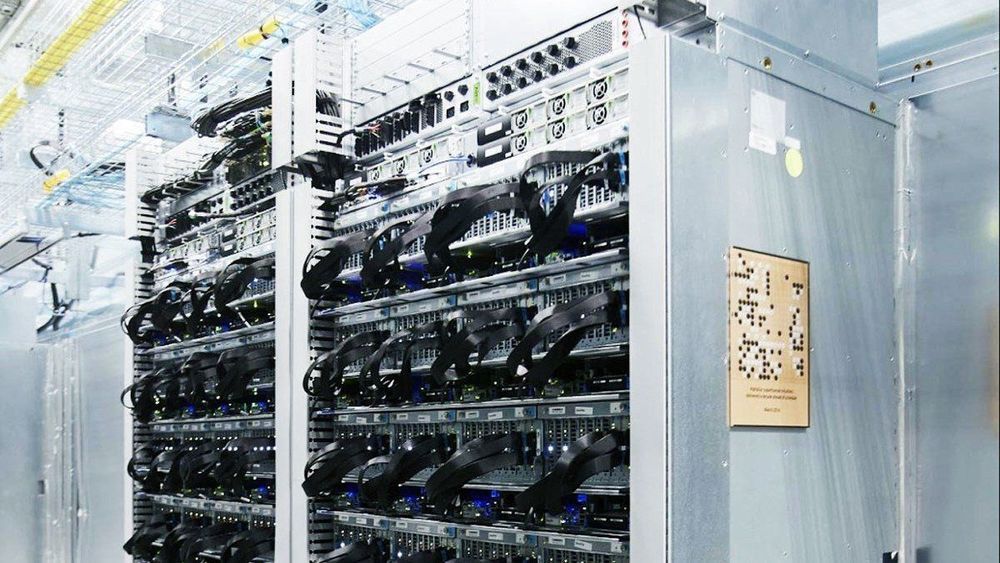
A new reinforcement-learning algorithm has learned to optimize the placement of components on a computer chip to make it more efficient and less power-hungry.
3D Tetris: Chip placement, also known as chip floor planning, is a complex three-dimensional design problem. It requires the careful configuration of hundreds, sometimes thousands, of components across multiple layers in a constrained area. Traditionally, engineers will manually design configurations that minimize the amount of wire used between components as a proxy for efficiency. They then use electronic design automation software to simulate and verify their performance, which can take up to 30 hours for a single floor plan.
Time lag: Because of the time investment put into each chip design, chips are traditionally supposed to last between two and five years. But as machine-learning algorithms have rapidly advanced, the need for new chip architectures has also accelerated. In recent years, several algorithms for optimizing chip floor planning have sought to speed up the design process, but they’ve been limited in their ability to optimize across multiple goals, including the chip’s power draw, computational performance, and area.