Do you need to experience racism in order to feel empathy for the victims of racist attacks? A new virtual reality video from SBS will transport users into the receiving end of a racist spray to see how they cope. Expect it to be uncomfortable and deeply personal.
My niece shared this with me; and the 1st thing of course that came to mind was VR/ AR funerals/ ceremonials as so many including myself cannot always be there doesn’t mean we could not engage/ participate in an event like a funneral or wedding. Maybe marriage via VR is a business just like a funeral via VR could be.
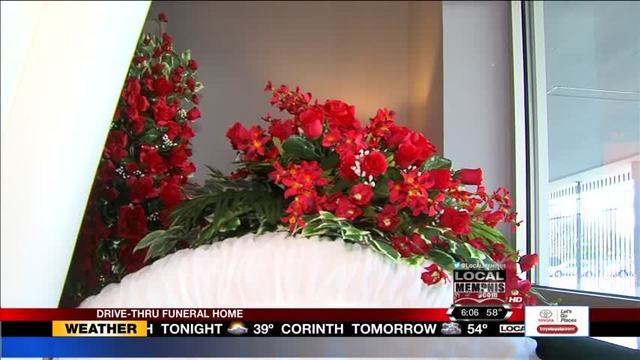
MEMPHIS, Tenn. (localmemphis.com) — A funeral home off Lamar Avenue is offering a different service from its competitors. You can drive up, say your final goodbyes to your loved ones, and you don’t even have to get out the car.
Ryan Bernard, owner of R. Bernard funeral home, says he got the idea from a funeral home in California. His main goal is to make it more convenient for families who are already dealing with losing a loved one.
Bernard wants his funeral home to stand out from the rest, so his family business is offering drive-thru services.
The Quantum World of Digital Physics: Can a virtual reality be real?
“Quantum physics requires us to abandon the distinction between information and reality.” Anton Zeilinger.
Part 1. Information and Simulated Reality.
Digital physicists suggest that all realities are virtual which means this is as “real ” as it gets.
Digital physics sees everything as information, it provides a different way of describing what is happening at the quantum level. Seeing as the universe appears to be composed of elementary particles whose behavior can be completely described by the quantum switches they undergo that implies that the universe as a whole can be described by bits. Every state is information and every change of state is a change in information. From this it can be said that the history of the universe is in effect a huge and ongoing quantum computation.
The question is not whether disruptive technologies will transform the healthcare job market, but rather how and when will it happen. Healthcare navigators, augmented/virtual reality operation planners and nanomedicine engineers in the second part of my article series about future jobs in healthcare.
If I dare show this to my nephews, we will never see them again.
When the Arcade Hotel Amsterdam opened last year, owner Daniel Salmanovich couldn’t help but smile when his hotel had people wanting what is known as the world’s first gaming hotel. It has its doors closed now until it will reopen in May for a much bigger expansion.
Currently, it has nine rooms that, as Travel Daily News puts it, “an exquisite offer of cult consoles, console games and retro gaming facilities in the lobby — traveling gamers could hardly believe their eyes.” To further boost the hotel’s features and offers, the management has decided to renovate the hotel together with creating more rooms which bring it to 43.
It will take them €800,000 to have it realized when they would be including game rooms with virtual reality gadgets and the newest consoles and gaming PCs. Lonely Planet noted that “that’s on top of the current crop of gaming machines on offer including Ataris, Nintendo Entertainment Systems, Gameboys, PlayStations, Game Cubes, Super Nintendos, N64s, and Xboxes.”
Interesting write up some fiction and some non-fiction brought together on a common theory about Quantum. I do have a huge curiosity around the work going on the parallel states research and the job postings by some companies for psychics. Wouldn’t it be funny that if all these folks who thought they saw something like a spirit really did due to Quantum parallel states? What if Musk and others who believe we’re living in VR was actually true and was because of the same thing with the psychics? Who knows; but does make one think for a minute about what if.
The theoretical physicist has written a bold book that deals with the biggest questions, taking in quantum theory and free will along the way.
In this month’s issue of VICE magazine, we review the best VR headsets, Mark O’Connell’s new book on transhumanism, and a new startup working to get digital art on your walls.
This story appeared in the February Issue of VICE magazine. Click HERE to subscribe.
Archaeology isn’t an easy job, but it becomes easier in virtual reality, if you can walk around ancient buildings as if they were still there.
Lithodomos VR, an Australian virtual reality archaeological startup, knows this and has raised $900,000 in Australian dollars ($679,000 in U.S. dollars) in a seed funding round.
Melbourne-based Lithodomos VR creates what it calls breathtaking, archaeologically accurate reconstructions of the ancient world in VR for use in the tourism, education and entertainment industries. It has contracts for content in Spain, museum installations, a video in the Berlin Film Festival (VR category), an app in Jerusalem, and that is just a start.