Learn more about Synthetic Gaussian Splatting and get Olli Huttunen’s Blender tool.
Category: virtual reality – Page 2
THE FOREST KING | Red Iron Road | Full Episode
Set in a suffocating, over-commercialized future, a young boy’s desire for success and status leads him into a terrifying and deadly new reality through the lens of a mysterious VR game.
His desperate father must now race against both time and technology to save his dying son.
But the boy is the only one who can save himself — before becoming another faceless pawn of the Forest King.
Adapted from the poem “The Forest Tsar” (1818) by Vasiliy Zhukovsky.
🎬 THE FOREST KING
The second installment of the animated horror anthology RED IRON ROAD.
Each episode is a standalone short film (10–20 minutes) inspired by European literature, produced with unique creative partners in distinctive visual styles.
🏆 Festival Highlights.
• World Premiere – Nightmares Film Festival (Ohio, USA, 2022)
• Nominations – FilmQuest, Blood in the Snow Film Festival, Animaze.
🌐 Official Sites:
https://www.lakesideanimation.com/for… 🎥 Credits Directed & Written By: Lubomir Arsov Produced By: Lakeside Animation Animation By: Art Light & Riki Group (Petersburg Animation Studio) Musical Score By: Lars Korb Starring: Carlo Rota, Tom Rooney, Jaiden Cannatelli 📖 Full Cast & Crew: https://www.imdb.com/title/tt23845934… 📺 Where to Watch Season 1 of Red Iron Road: Amazon Prime Video (subscription required): https://www.primevideo.com/detail/0PB… TubiTV (free streaming): https://tubitv.com/movies/100014990/r… Plex (free streaming): https://tubitv.com/movies/100014990/r… Hoopla Digital (free with library card): https://www.hoopladigital.com/televis… Kanopy (free via library or university): https://www.kanopy.com/en/product/140… Apple TV (subscription to Prime Video required): https://tv.apple.com 🔔 Subscribe for new animated horror shorts and exclusive content! Follow Red Iron Road & Lakeside Animation: Facebook: / redironroadseries Instagram:
/ redironroadseries TikTok:
/ lakesideanimation LinkedIn:
/ lakeside-animation 🔖 Hashtags: #RedIronRoad #AdultAnimation #Games #Anthology #Animation #AnimatedAnthology #HorrorAnimation #SlavicMythology #AnimatedShortFilm #LakesideAnimation #EuropeanHorror #AnimationStudio #FolkHorror #AnimatedHorror #CreepyTales #ClassicLiterature #AnimationForAdults © 2022 Ghost Train Productions Inc.
Retina e-paper promises screens ‘visually indistinguishable from reality’
In what could be an industry shifting breakthrough, researchers have created a screen about the size of a human pupil with a resolution that breaks through the limits of pixels. The invention could radically change virtual reality and other applications.
While most video screens such as those on our phones, TVs, and stadium jumbotrons seem to improve in resolution on a monthly basis, there has been an issue in improving the resolution of the tiny screens required in virtual reality apps. The problem is that as the screen moves closer to the human eye, the pixels that comprise it need to get smaller and smaller. Yet, if pixels get too small, their function starts to degrade and the image suffers. On a micro-LED screen, for example, pixels can’t get much smaller than one micrometer wide before losing their ability to render a clear, crisp image.
So instead of relying on pixels, researchers from Chalmers University of Technology, the University of Gothenburg and Uppsala University in Sweden turned to a different technique. They created what they’ve termed “metapixels” out of tungsten oxide, a material that can switch from being an insulator to a metal based on its electrical state. The metapixels reflect light differently based on their size and how they’re arranged, and can be manipulated by an electrical current. In a way, they function much like the pigments in bird’s feathers, which can take on different colors based on how the light is hitting them.
New Models Show How Solar ‘Tornadoes’ Could Wreak Havoc on Earth
Weather forecasting is a powerful tool. During hurricane season, for instance, meteorologists create computer simulations to forecast how these destructive storms form and where they might travel, which helps prevent damage to coastal communities.
When you’re trying to forecast space weather, rather than storms on Earth, creating these simulations gets a little more complex.
To simulate space weather, you would need to fit the Sun, the planets, and the vast empty space between them in a virtual environment, also known as a simulation box, where all the calculations would take place.
‘Embodied’ AI in virtual reality improves programming student confidence
Researchers have found that giving AI “peers” in virtual reality (VR) a body that can interact with the virtual environment can help students learn programming. Specifically, the researchers found students were more willing to accept these “embodied” AI peers as partners, compared to voice-only AI, helping the students better engage with the learning experience.
“Using AI agents in a VR setting for teaching students programming is a relatively recent development, and this proof-of-concept study was meant to see what kinds of AI agents can help students learn better and work more effectively,” says Qiao Jin, corresponding author of a paper on the work and an assistant professor of computer science at North Carolina State University.
“Peer learning is widespread in the programming field, as it helps students engage in the learning process. For this work, we focused on ‘pAIr’ learning, where the programming peer is actually an AI agent. And the results suggest that embodying AI in the VR environment makes a real difference for pAIr learning.”
Scientists unveil breakthrough pixel that could put holograms on your smartphone
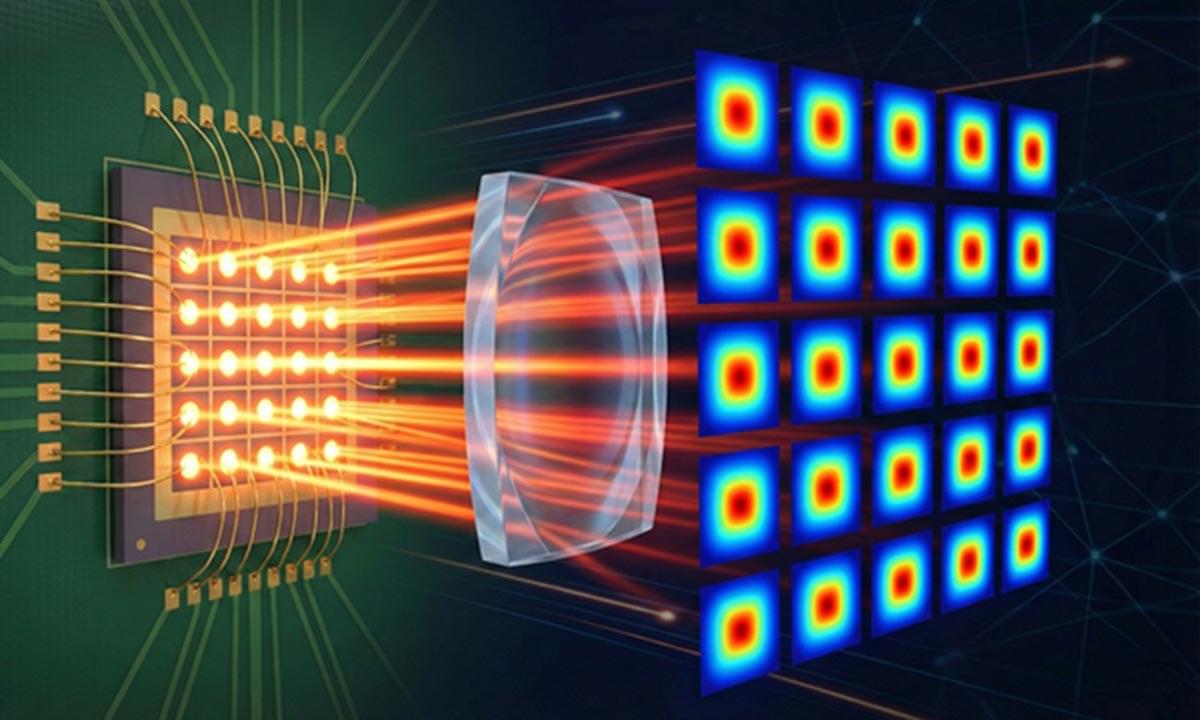
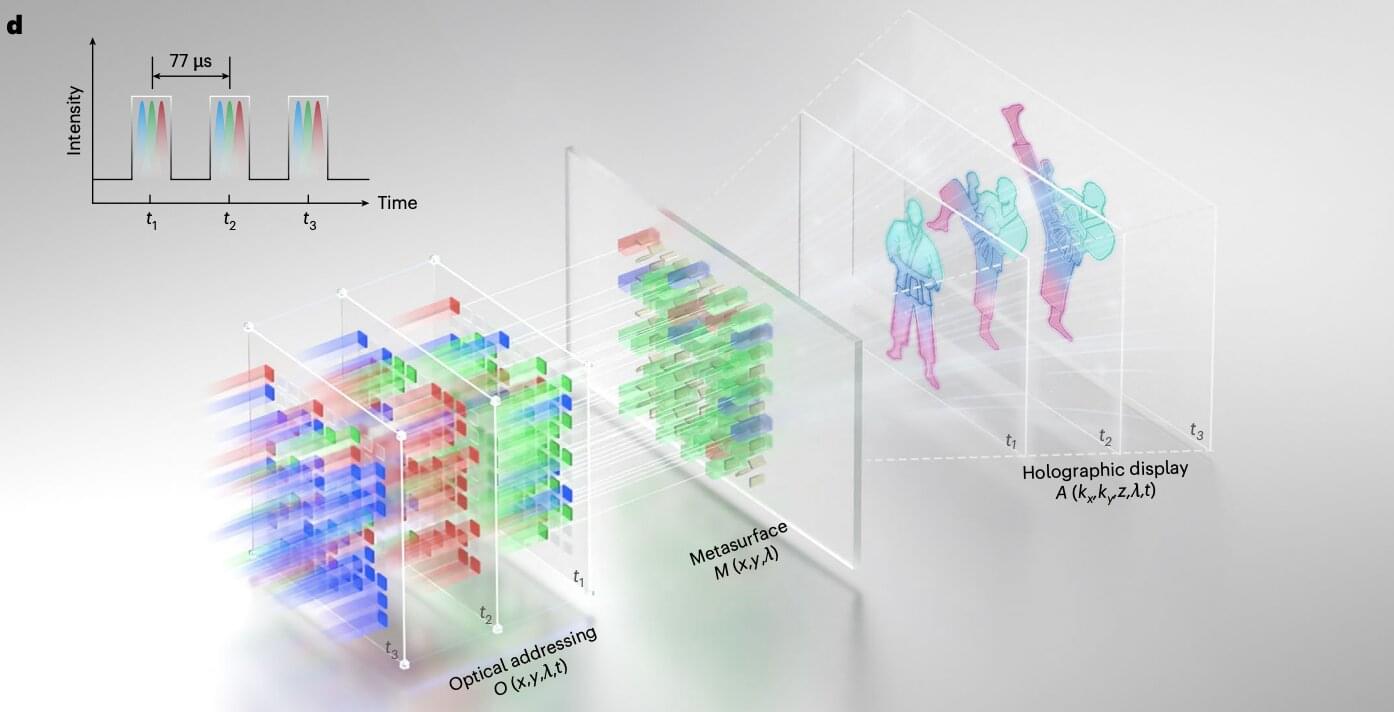
A team at the University of St Andrews has unlocked a major step toward true holographic displays by combining OLEDs with holographic metasurfaces. Unlike traditional laser-based holograms, this compact and affordable method could transform smart devices, entertainment, and even virtual reality. The breakthrough allows entire images to be generated from a single OLED pixel, removing long-standing barriers and pointing to a future of lightweight, miniaturized holographic technology.
CEA-Leti to Present Breakthrough Toward Ultra-Compact, High-Resolution AR/VR Displays at MicroLED Connect Conference
Interesting.
GRENOBLE, France – Sept. 16, 2025 – CEA-Leti and the Centre for Research on Heteroepitaxy and its Applications (CRHEA) today announced R&D results that have cleared a path toward full-color microdisplays based on a single material system, a long-standing goal for augmented and virtual reality (AR/VR) technologies.
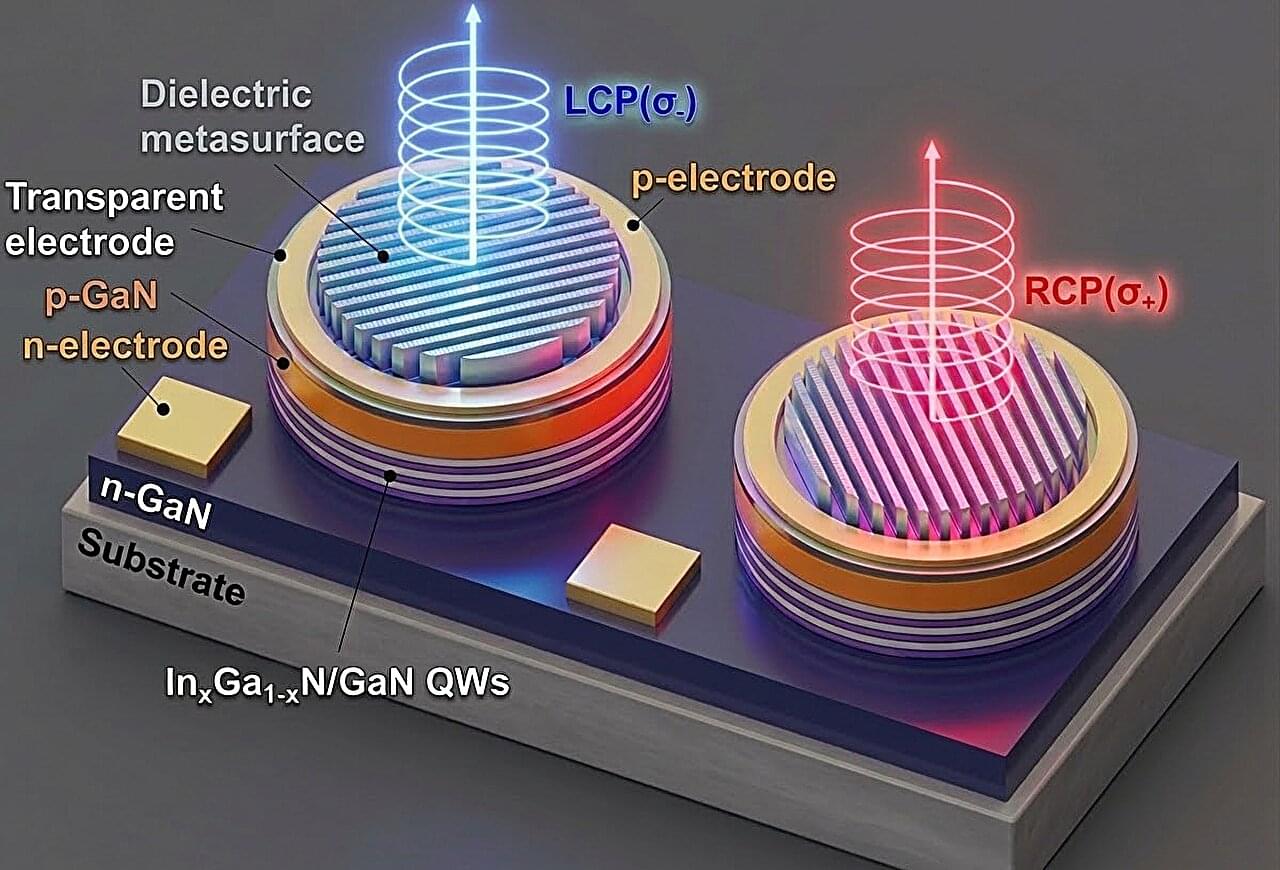
The project, presented in a paper published in Nature Communications Materials, developed a technique for growing high-quality InGaN-based quantum wells on sub-micron nanopyramids, enabling native emission of red, green, and blue (RGB) light from a single material system. Titled “Regular Red-Green-Blue InGaN Quantum Wells With In Content Up To 40% Grown on InGaN Nanopyramids”, the paper will be presented at the MicroLED Connect Conference on Sept. 24, in Eindhoven, the Netherlands.
Microdisplays for immersive devices require bright RGB sub-pixels smaller than 10 × 10 microns. According to the paper, “the use of III-nitride materials promises high efficiency micro-light emitting diodes (micro-LEDs) compared to their organic counterparts. However, for such a pixel size, the pick and place process is no longer suitable for combining blue and green micro-LEDs from III-nitrides and red micro-LEDs from phosphide materials on the same platform.” Red-emitting phosphide micro-LEDs also suffer from efficiency losses at small sizes, while color conversion methods face challenges in deposition precision and stability.
Engineers send a wireless curveball to deliver massive amounts of data
High frequency radio waves can wirelessly carry the vast amount of data demanded by emerging technology like virtual reality, but as engineers push into the upper reaches of the radio spectrum, they are hitting walls. Literally.
Ultrahigh frequency bandwidths are easily blocked by objects, so users can lose transmissions walking between rooms or even passing a bookcase.
Now, researchers at Princeton Engineering have developed a machine-learning system that could allow ultrahigh frequency transmissions to dodge those obstacles. In an article in Nature Communications, the researchers unveiled a system that shapes transmissions to avoid obstacles coupled with a neural network that can rapidly adjust to a complex and dynamic environment.
Nissan confirms design studio data breach claimed by Qilin ransomware
Nissan Japan has confirmed to BleepingComputer that it suffered a data breach following unauthorized access to a server of one of its subsidiaries, Creative Box Inc. (CBI).
This came in response to the Qilin ransomware group’s claims that they had stolen four terabytes of data from CBI, including 3D vehicle design models, internal reports, financial documents, VR design workflows, and photos.
“On August 16, 2025, suspicious access was detected on the data server of Creative Box Inc. (CBI), a company contracted by Nissan for design work,” stated a Nissan spokesperson to BleepingComputer.
Invisible Mobile Robots Can Make Deliveries To VR & AR, Princeton Researchers Show
Researchers made a robot that can make deliveries to VR. They call it Skynet.