Dumping pesticides and using ducks instead. đŠ đŠ đŠ.
Category: sustainability – Page 635
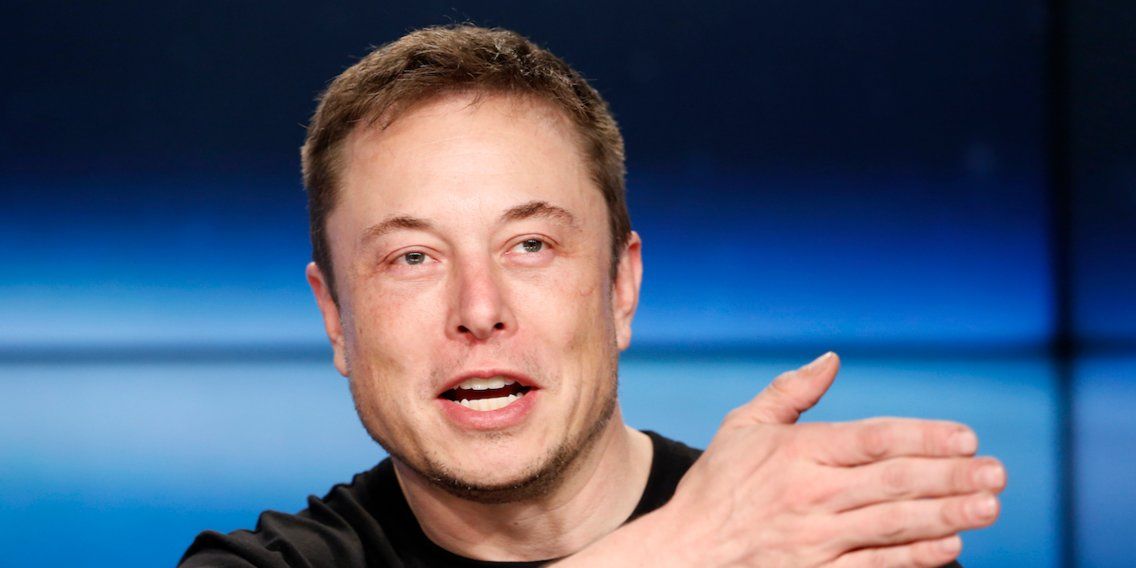
Mars Colony Would Be a Hedge Against World War III, Elon Musk Says
Humanityâs brutal and bellicose past provides ample justification for pursuing settlements on the moon and Mars, Elon Musk says.
The billionaire entrepreneur has long stressed that he founded SpaceX in 2002 primarily to help make humanity a multiplanet species â a giant leap that would render us much less vulnerable to extinction.
Human civilization faces many grave threats over the long haul, from asteroid strikes and climate change to artificial intelligence run amok, Musk has said over the years. And he recently highlighted our well-documented inability to get along with each other as another frightening factor. [The BFR: SpaceXâs Mars Colony Plan in Images].
Softbank to Build Worldâs Biggest Solar Park in Saudi Arabia
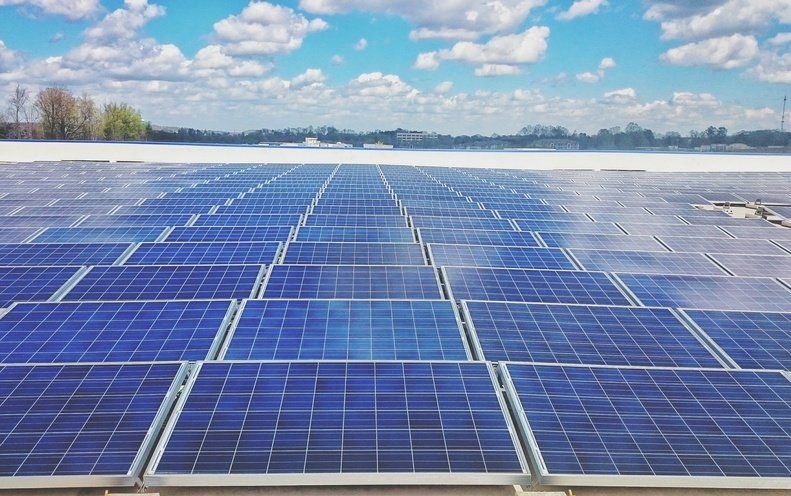
SoftBank founder Masayoshi Son said he envisions the project, which runs the gamut from power generation to panel and equipment manufacturing, as a way to help wean Saudi Arabia off its dependence on oil for electricity, create as many as 100,000 jobs and shave $40 billion off power costs. The total capacity to be built under its umbrella will be 200 gigawatts by 2030, the company said.
Saudi Arabia and SoftBank Group Corp. signed a memorandum of understanding to build a $200 billion solar power development thatâs exponentially larger than any other project.
Clean power is shaking up the global geopolitics of energy
This special report will look at the energy transition from the perspective of America, the EU and China as well as petrostates such as Russia and Saudi Arabia. It will pinpoint winners and losers. It will argue that America is at risk of squandering an early lead, obtained by using natural gas and renewables to slash emissions, promoting clean technology and helping pioneer the Paris agreement. China is catching up fast. Saudi Arabia and Russia are in most obvious peril.
TO ENTER TAFT, two hours north of Los Angeles, you drive along the âPetroleum Highwayâ, past miles of billboards advertising Jesus. Godâs country is also oil country. Spread over the sagebrush hills surrounding the town are thousands of steel pumpjacks (pictured), contraptions that suck oil out of the ground. They look like a herd of dinosaurs. Some Californians would describe the oil industry in the same way.
The oil produced at Taft is not produced by hydraulic fracturing, or fracking, as much of it is in Texas and North Dakota. It is so heavy it needs to be steamed out of the ground, in a process known locally as âhuff and puffâ. Yet Kern County, with Taft on its western edge, produces 144m barrels of oil a year, the second highest output of any county in America. Fred Holmes, a third-generation oilman and patron of the West Kern Oil Museum, says he is proud of the heritage, however much it irks local drivers of electric Tesla cars that the Golden State has such a carbon-heavy underbelly. âOil is renewable energy. It just takes longer to renew,â he quips. He has built a giant wooden derrick at the museum to celebrate it.
Get our daily newsletter
Upgrade your inbox and get our Daily Dispatch and Editorâs Picks.
Elon Musk Has Plans To Disrupt At Least Eight Established Industries
In this modern day David and Goliath battle (multiplied by eight), one man is trying to take down a bevy of behemoth industries. CB Insights reports, âElon Musk thinks and acts on a larger, more cosmic scale than weâre accustomed to⊠His main projects take on almost every major industry and global problem conceivable, and imagine a disruptive fundamental rewiring of that space or sector.â
*This article comes to us courtesy of EVANNEX (which also makes aftermarket Tesla accessories). Authored by Matt Pressman.
So which sectors are on Muskâs hit list? CB Insights looks at: â8 different industries where Musk and his companies operate to understand how they have begun to change,â transform and mold them into Muskâs futuristic vision. Digital Journal provides a top-line recap highlighting the scope and breadth of what Elon Musk is attemptingâŠ
Stephen Hawking Lived Beyond His Body
For all of us, the act of being and thinking requires a network of complex support. The late physicistâs disability made it visible.
Midnight. As I was browsing the internet, I saw, like shooting stars, emails suddenly appear and disappear from the right-hand corner of my computer screen. The first from CNN announcing the death of Stephen Hawking, the second from an editor at The Atlantic asking me to write about him.
I had written about the man for 10 yearsâas a biographer of some sort, or an anthropologist of science to be more precise, studying the traces of Hawkingâs presence. But now I felt a powerless inertia, unable to write anything. I didnât think I would be affected by his death, but it touched me deeply. I was overwhelmed by the numerous articles that started to appear all over the world doing precisely what I had studied for so long and so carefully: recycling over and over again the same stories about him. Born 300 years after the death of Galileo Galilei, holder of Cambridgeâs Lucasian Chair of Mathematics (once held by Isaac Newton), and now ⊠died on the same day Albert Einstein was born. The life paths of historyâs most iconic scientists intersected in weird ways. The puzzle seemed complete: Hawking had fully entered the pantheon of the great.
The freshest herbs in Manhattan were grown in this office building basement
New York Cityâs discerning high-end chefs often ship in rare herbs and edible flowers from other states or even overseas. But Farm.One, an organic farm in the basement of an office building in Manhattan, can pick and deliver the precious leaves and flowers within the same day, says Robert Laing, the companyâs CEO.
With its stacked shelves of hydroponic plants and grow lights, Farm. One is part of a growing movement of vertical farming across the world. The tech-enabled system uses less space and water than traditional farming.
Watch the video above to learn more about how it works.