Toggle light / dark theme

Aptera opens orders on 1,000-mile solar EV that never needs charging

Circa 2020


Since electric vehicles first started hitting the mainstream, people have been asking “why doesn’t that have a solar panel roof?” The answer has always been the same: solar panels just don’t generate that much power. That’s not a huge problem for solar racers, with their ultra-light weight and super-aerodynamic shapes, but for the minuscule daily range a solar roof would give you on your typical daily driver, you’re still gonna need to plug it in.

Ah, but what if your daily driver was the closest thing on the road to a solar racer? An EV truly designed with ludicrous levels of efficiency as the primary goal? Something so aerodynamically slippery that it makes a mockery of the production car world? Well, that’s the Aptera. And its manufacturers claim that its 180 small solar panels, making up an area of more than three square meters (32.3 sq ft), will harvest enough energy that many drivers will never have to charge it.

The top-spec Aptera can self-generate as much as 45 miles (72 km) of range per day in ideal conditions, which is more than twice the average daily mileage of American car owners. And that doesn’t have to be a terribly large amount of energy, thanks to its extreme frugality.

Tesla Model Y pre-production units start rolling out in Giga Texas

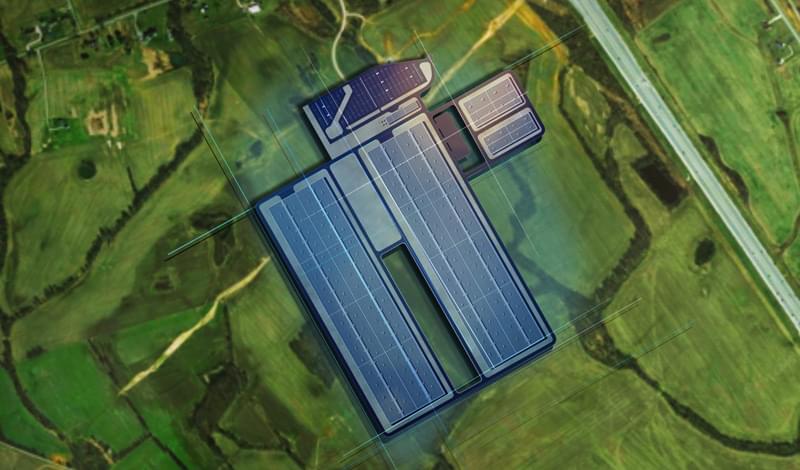
When Gigafactory Texas was starting its construction, officials in the area started to fondly describe the project’s pace as the “Speed of Elon” on account of its rapid progress. This “Speed of Elon” seems to have never let up since Giga Texas broke ground about 13 months ago as the first image of a pre-production Tesla Model Y was just shared online.

The image was initially shared on Instagram, and it depicted a black Model Y that looked fresh out of the production line. The post was eventually deleted, but not before the image was shared across platforms such as Twitter and Reddit. It’s difficult not to be excited, after all, considering that Giga Texas broke ground just over a year ago in July 2020.

Based on the recently-shared image, it appears that Giga Texas’ Model Y production facility is now ready to start cranking out the all-electric crossovers, at least to some degree. The vehicle was not alone in the picture either, as another Model Y in the background could also be seen passing through the assembly line.

Tesla’s 4680 battery cell pilot production line hits 70–80% yield: report

Tesla has a number of programs that have the potential to change markets, and one of these is arguably the 4,680 cells. Created using a dry electrode process and optimized for price and efficiency, the 4,680 batteries could very well be the key to Tesla’s possible invasion of the mainstream auto and energy market. If Tesla pulls off its 4,680 production ramp, its place at the summit of the sustainable energy market would be all but ensured.

Unfortunately, Tesla’s publicly disclosed target for the 4,680 cells’ production ramp appears to have been made on “Elon Time.” This means that during Battery Day last year, Tesla’s target of hitting a capacity of 10 GWh by late September2021included some optimistic assumptions. Similar to other projects like Elon Musk’s Alien Dreadnaught factory, however, the pilot production of the 4,680 cells have met some challenges.

Tesla admitted to these difficulties during the Q22021earnings call, when Elon Musk explained that one of the main challenges in the 4,680 cell production ramp was related to the batteries’ calendaring, or the process when the dry cathode material is squashed to a particular height. Partly due to the use of nickel in the 4,680 cells, which are extremely hard, some of the calendar rolls end up being dented.

The potential of deep learning in managing power networks

Dr. Valentin Robu, Associate Professor and Academic PI of the project, says that this work was part of the NCEWS (Network Constraints Early Warning System project), a collaboration between Heriot-Watt and Scottish Power Energy Networks, part funded by InnovateUK, the United Kingdom’s applied research and innovation agency. The project’s results greatly exceeded our expectations, and it illustrates how advanced AI techniques (in this case deep learning neural networks) can address important practical challenges emerging in modern energy systems.


Power networks worldwide are faced with increasing challenges. The fast rollout of distributed renewable generation (such as rooftop solar panels or community wind turbines) can lead to considerable unpredictability. The previously used fit-and-forget mode of operating power networks is no longer adequate, and a more active management is required. Moreover, new types of demand (such as from the rollout EV charging) can also be source of unpredictability, especially if concentrated in particular areas of the distribution grid.

Network operators are required to keep power and voltage within safe operating limits at all connection points in the , as out of bounds fluctuations can damage expensive equipment and connected devices. Hence, having good estimates of which area of the network could be at risk and require interventions (such as strengthening the network, or extra storage to smoothen fluctuations) is increasingly a key requirement.

Privacy-sensitive machine learning

Smart meter data analysis holds great promise for identifying at risk areas in distribution networks. Yet, using smart meter data can present significant practical constraints. In many countries and regions, the rollout of smart meters does not provide full coverage, as installation is voluntary and many customers may reject installing a smart meter at their home. Moreover, even places where there is a successful smart meter roll-out, privacy restrictions must be taken into account and, in practice, regulators considerably constrain what private data from smart meters network operators have access to.

/* */