Toggle light / dark theme

Army of seed-firing drones will plant 100 million trees by 2024

That’s 25 times faster, at 80 percent the cost of conventional means.

Combating climate change and biodiversity loss is a complicated matter, causing prolonged and perhaps tedious conversations. But what if there was a cooler way to achieve all that?

Enter Australian start-up AirSeed Technology and their swarms of seed-firing drones that are planting 40,000 trees a day to fight deforestation. The company and its incredible technology were featured Wednesday on * Euro Green News*. drone that can plant 40,000 trees a day could be essential in fighting deforestation.

Physicist designs magnetic thrust engine that could rocket us to the Red Planet

Circa 2021


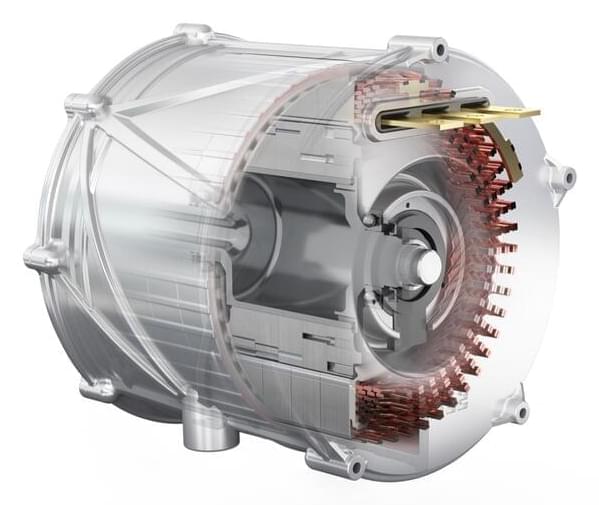
With SpaceX continuing the testing phase for Starship and enthusiasm spreading for an actual crewed flight to Mars, an interesting magnetic thrust rocket concept conceived by physicist Fatima Ebrahimi at the US Department of Energy’s (DOE) Princeton Plasma Physics Laboratory (PPPL) might make the mission much more cost effective.

The feasibility of safe, sustainable propulsion systems that will outperform traditional chemical-based rocket engines on deep space voyages, not only in our own solar system but someday perhaps to a distant galaxy outside the Milky Way, is foremost on astrophysicists’ minds.

Ion thrusters, once the standard mode of acceleration for imaginative sci-fi authors and now the preferred positioning engine for NASA scientists and engineers in their satellites, might have greater endurance and are a lot cheaper to operate but generate a minuscule amount of thrust for acceleration purposes. This isn’t exactly a viable option for a trip to the Red Planet where hundreds of tons of spacecraft are being moved across the heavens.

What The Next-Generation Silent Drone Looks Like

Drones with ion drive. now if could rig it up with indefinite batteries and solar power skin and a tesla wave receiver system.


Undefined Technologies has revealed the new design of its ion drone MIAMI, APRIL 18, 2022 – Undefined Technologies, a Florida-based tech startup, has unveiled the new aesthetic design of its silent eVTOL drone powered by ion propulsion. The concept vehicle named “Silent Ventus™” uses proprietary technology to fully use the ion cloud surrounding the craft to generate high levels of ion thrust in atmospheric air. “Silent Ventus™ is a vivid example of our intent of creating a sustainable, progressive, and less-noisy urban environment,” says Tomas Pribanic, Founder and CEO of Undefined Technologies. “The design brings us closer to our final product and enables us to showcase the dual-use of our technology.”

Fast-acting enzyme breaks down plastics in as little as 24 hours

The idea of deploying enzymes to break down plastic waste is gaining momentum through a string of breakthroughs demonstrating how they can do so with increasing efficiency, and even reduce the material to simple molecules. A new study marks yet another step forward, with scientists leveraging machine learning to engineer an enzyme that degrades some forms of plastic in just 24 hours, with a stability that makes it well-suited to large-scale adoption.

Scientists have been exploring the potential of enzymes to aid in plastics recycling for more than a decade, but the last six years or so has seen some significant advances. In 2016, researchers in Japan unearthed a bacterium that used enzymes to break down PET plastics in a matter of weeks. An engineered version of these enzymes, dubbed PETase, improved the performance further, and in 2020 we saw scientists develop an even more powerful version that digested PET plastics at six times the speed.

A team at the University of Texas set out to address some of the shortcomings of these enzymes so far. According to the scientists, the application of the technology has been held back by an inability to function well at low temperatures and different pH ranges, lack of effectiveness directly tackling untreated plastic waste, and slow reaction rates.

Gaia-Based Theosophy: Conception and Birth of the Living Earth

“The Earth has entered a radically new era, understood by scientists as the Anthropocene: a time when humanity reckons with massive geologic and biospheric forces we, as anthropos, have set in motion. The agency of Nature and the reality of humanity as a collective geologic force is becoming understood differently, even within the Western paradigm. It is a new world our children will inherit, for if humanity is to survive, we must come into new realizations of our place within the planetary life-support systems. To lay a path for future generations through the evolutionary steps that humanity must now take to learn to live in balance with the planet, science must come to balance with Spirit.” ―Oberon Zell, GaeaGenesis.

#OberonZell #GaeaGenesis #GaiaHypothesis #SyntellectHypothesis #GlobalMind #theosophy #consciousness


In the early 1970s, celebrated philosopher and mystic Oberon Zell was the first to propose the radical idea that the biosphere of Earth was a single living superorganism. His initial article on the subject electrified the emerging modern movement of Earth-based spirituality, generating volumes of correspondence, lecture tours, and further articles in various journals and books.

The excitement was the result of a simple yet profound idea. Imagine for a moment that Earth is alive. Not just teeming with living things, but a living, vital organism encompassing the whole of the planet. This is how Oberon Zell imagines it in GaeaGenesis 0, but it is more than imagination or mere metaphor. GaeaGenesis is the first work to fully integrate the mythological, spiritual, biological, and social history of what has become known as the Gaea Thesis. It builds upon this history by exploring the profound implications of the thesis, which is as significant to our understanding of the world and our place in it as the heliocentric theory of the solar system and Darwin’s theory of evolution once were.

GaeaGenesis culminates five decades of work developing Zell’s thesis, building on his own original ideas as well as those of renowned scientists, philosophers and spiritualists who preceded him. The works of mythologist Joseph Campbell are referenced, as are the studies of psychologist Carl Jung, whose concept of a “Collective Unconscious” ushered in a new understanding of a human-based Global Mind. In addition, GaeaGenesis draws upon the work of Nobel Prize-winner Al Gore to illustrate the emerging realization that climate change affects a vast web of interdependent ecosystems.

/* */