Toggle light / dark theme

This 17-Year-Old Designed a Motor That Could Potentially Transform the Electric Car Industry

His new prototype had 39 percent greater torque over a traditional motor.

A young engineer called Robert Sansone won the first prize, and winnings of $75,000, at this year’s Regeneron International Science and Engineering Fair (ISEF), the world’s largest international high school STEM competition.

As per Smithsonian Magazine, his new invention could one day transform the electric vehicle (EV) industry. It is a synchronous reluctance motor with improved performance over previous models.


Robert Sansone is a natural born engineer. From animatronic hands to high-speed running boots and a go-kart that can reach speeds of more than 70 miles per hour, the Fort Pierce, Florida-based inventor estimates he’s completed at least 60 engineering projects in his spare time. And he’s only 17 years old.

A couple years ago, Sansone came across a video about the advantages and disadvantages of electric cars. The video explained that most electric car motors require magnets made from rare-earth elements, which can be costly, both financially and environmentally, to extract. The rare-earth materials needed can cost hundreds of dollars per kilogram. In comparison, copper is worth $7.83 per kilogram.

Open-source software enables researchers to visualize nanoscale structures in real time

Computer chip designers, materials scientists, biologists and other scientists now have an unprecedented level of access to the world of nanoscale materials thanks to 3D visualization software that connects directly to an electron microscope, enabling researchers to see and manipulate 3D visualizations of nanomaterials in real time.

Developed by a University of Michigan-led team of engineers and software developers, the capabilities are included in a new beta version of tomviz, an open-source 3D data visualization tool that’s already used by tens of thousands of researchers. The new version reinvents the visualization process, making it possible to go from microscope samples to 3D visualizations in minutes instead of days.

In addition to generating results more quickly, the new capabilities enable researchers to see and manipulate 3D visualizations during an ongoing experiment. That could dramatically speed research in fields like microprocessors, electric vehicle batteries, lightweight materials and many others.

How data and automation can help with sustainability

Weighing cost vs. benefit

For small business owners, implementing sustainability initiatives may seem more like a pipe dream than a tangible goal, as the technology can be costly to implement. What’s more, businesses that are using technology to drive sustainability must employ talented workers who can tap into those resources and streamline operations for the greatest economic and environmental benefit.

However, as companies can leverage automation and data analytics to increase efficiency, adjust energy usage, reduce waste and otherwise help with sustainability, the cost of investing in automation is worth it. By giving company leaders the ability to see the big picture in terms of carbon footprint, data and automation can help optimize operations and improve a company’s bottom line.

Self-charging, ultra-thin device that generates electricity from air moisture

Imagine being able to generate electricity by harnessing moisture in the air around you with just everyday items like sea salt and a piece of fabric, or even powering everyday electronics with a non-toxic battery that is as thin as paper. A team of researchers from the National University of Singapore’s (NUS) College of Design and Engineering (CDE) has developed a new moisture-driven electricity generation (MEG) device made of a thin layer of fabric—about 0.3 millimeters (mm) in thickness—sea salt, carbon ink, and a special water-absorbing gel.

The concept of MEG devices is built upon the ability of different materials to generate electricity from the interaction with moisture in the air. This area has been receiving growing interest due to its potential for a wide range of real-world applications, including self-powered devices such as wearable electronics like health monitors, electronic skin sensors, and information storage devices.

Key challenges of current MEG technologies include water saturation of the device when exposed to ambient humidity and unsatisfactory electrical performance. Thus, the electricity generated by conventional MEG devices is insufficient to power and is also not sustainable.

Is propane a solution for more sustainable air conditioning?

Current severe heatwaves that will likely increase in severity and frequency in the future are driving a rise in the use of air conditioners, threatening the environment with their high energy consumption and refrigerants with high warming potential. A new study finds that switching to propane as a refrigerant could lessen the global temperature increase from space cooling.

We spend enormous amounts of energy on fighting off the heat in the summer, or throughout the whole year at lower latitudes—about one-tenth of the total worldwide electricity supply. If current temperature trends continue, the energy demands of space-coolers will more than triple by 2050. Apart from the rise in , space-coolers also threaten the in different ways: by using halogenated refrigerants with high potential.

Split-air conditioners (Split ACs) that use an indoor and an outdoor air unit connected by pipes are the most common appliances used for space-cooling. They mostly utilize HCFC-22 and HFC-410 as refrigerants, both of them characterized by a very high global warming potential score, up to 2,256—meaning that they trap up to 2,256 times more heat than over 100 years. Urged by the Kigali Amendment to the Montreal Protocol, many manufacturers are looking for alternative refrigerants with lower global warming potential scores, such as HFC-32. However, with a global warming potential score of 771, HFC-32 still poses a significant climate hazard.

Plasma-powered oxygen harvesting could help humans live on Mars

We’re talking fuels and fertilizers required for the development of life-support systems on the Red Planet.

In 2015, Vasco Guerra, from the University of Lisbon, happened to attend a lecture by Professor Dava Newman, director of the MIT Media Lab and a former deputy administrator of NASA, on space exploration and the forthcoming NASA missions. Back then, Guerra was leading a project on plasma reforming of carbon dioxide on Earth — how CO2 could be a potential raw material to produce fuels with the help of green energy.

Scientists have been working on plasma technologies to split CO2 into oxygen and carbon monoxide, primarily prompted by the persistent problems of climate change. international team of researchers have introduced a plasma-based method that could convert carbon dioxide into oxygen and produce fuels on Mars.

Back to the drawing board: Reinventing offshore wind turbines

Brandon Ennis, Sandia National Laboratories’ offshore wind technical lead, had a radically new idea for offshore wind turbines: instead of a tall, unwieldy tower with blades at the top, he imagined a towerless turbine with blades pulled taut like a bow.

This design would allow the massive generator that creates electricity from spinning blades to be placed closer to the water, instead of on the top of a tower 500 feet above. This makes the turbine less top-heavy and reduces the size and cost of the floating platform needed to keep it afloat. Sandia filed a patent application for the design in 2020.

However, before he could set his idea in motion, the team needed to build software capable of modeling the response of the turbine and floating platform to different wind and sea conditions to determine the optimal design of the whole system.

New Elon Musk essay: Tesla CEO’s thoughts on technology and humanity

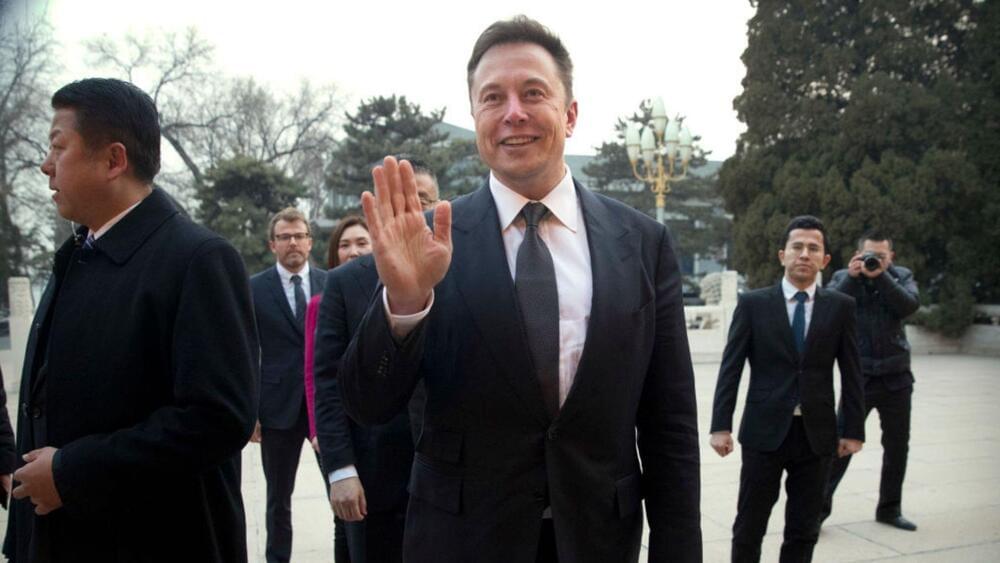
It’s been a while since Elon Musk published an extensive blog post outlining his stance on a specific topic. On the official Tesla website, his last blog post was on August 24, 2018, when he explained his decision to keep Tesla a publicly-traded company. Fortunately, a new Elon Musk essay has been posted in China, outlining the Tesla CEO’s thoughts on a number of topics — from sustainability, the Tesla Bot’s real-world use, Neuralink’s focus on the disabled, and SpaceX’s exploration aspirations.

The new Elon Musk essay was published in China Cyberspace 0, the Cyberspace Administration of China’s (CAC) flagship magazine. A translation of the essay was posted by Yang Liu, a journalist from the state-owned news agency Xinhua 0, on the Beijing Channel blog. As could be seen in Liu’s post, Musk actually discussed a number of topics in detail.

In a way, the publication of the new Elon Musk essay in the CAC’s flagship magazine is significant. As noted by The Register 0, Musk’s essay suggests that Chinese authorities approve of the Tesla CEO’s positions on the topics he discussed. Only a few other foreign entrepreneurs would likely be given the same honor.

/* */