Residents feel trapped and choked by dust, while experts warn environmental damage is ‘solving one problem by creating others’.
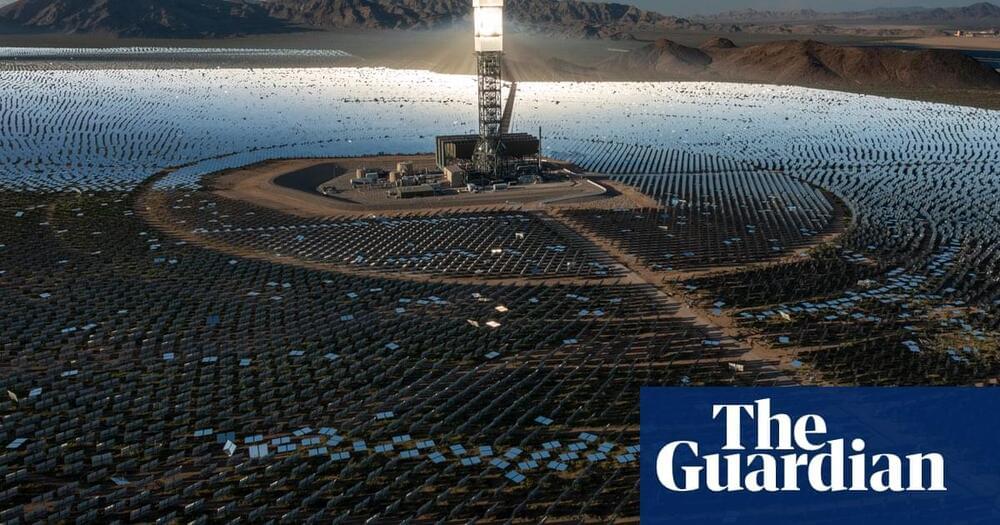
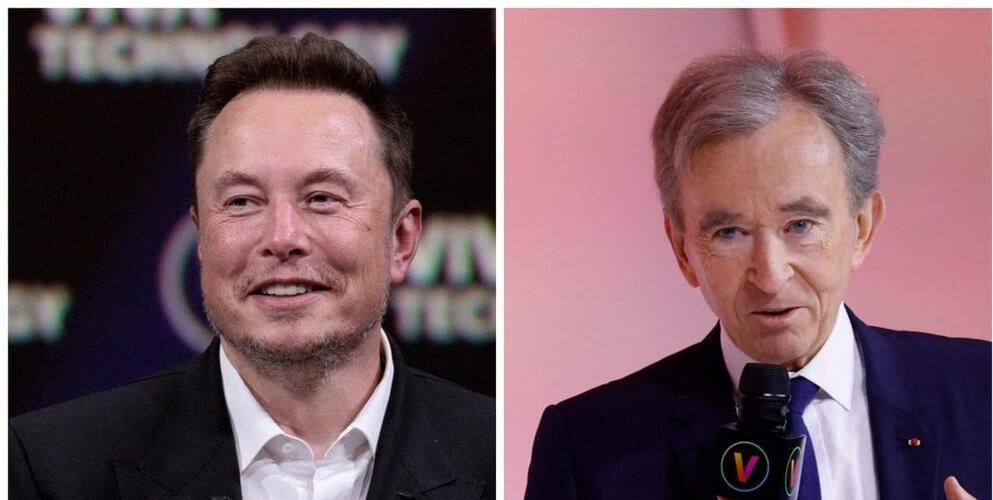
ABB
This is according to a press release by ABB published on Tuesday.

Select packages of frozen fruit sold at H-E-B, Costco and Walmart in Texas are being recalled due to a potential risk of Hepatitis A contamination.
Willamette Valley Fruit Co. is recalling bags of frozen fruit that contain strawberries grown in Mexico.
The recall affects Great Value Sliced Strawberries, Great Value Mixed Fruit, Great Value Antioxidant Blend, Rader Farms Organic Fresh Start Smoothie Blend, and Rader Farms Organic Berry Trio distributed by H-E-B, Costco, and Walmart.
A great video on the history of electric cars. I love the AI voice. Also notice Tesla was incorporated in July 2003 by Martin Eberhard and Marc Tarpenning as Tesla Motors. The company’s name is a tribute to inventor and electrical engineer. Elon Musk was an investor.
While electric vehicles (EV) have only recently begun to challenge the internal combustion engine (ICE) for the future of our roads, EVs have been around for over a century. The long history of EVs has been one of many twists and turns.
In this video, you can get a clear idea about the birth, the downfall, rebirth and the rise of electric cars around the world.
Due to this rise of electric mobility, many vehicle manufacturers have stated their intentions to stop IC Engine car sales in certain locations and go electric. For example, GM plans to stop making gasoline passenger cars, vans, and SUVs by 2035. Cadillac, Honda, Jaguar Land Rover, Mercedes, Mini, Volvo, and Volkswagen have all made similar commitments.
Whilst we may not know exactly what the future holds, together these factors point to a bright future for electric mobility.
To instantly view good quality videos related to sustainable living, nature, energy and climate change, subscribe to Eco snooki now.
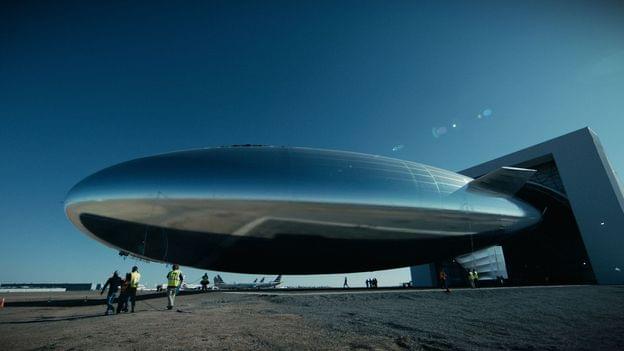
It is June 2022, and a flying machine that looks like a cross between a prehistoric beast and a spaceship is about to take off. Named the Zephyr S, it has long spindly wings the length of an airliner’s. Together with its small, thin body and head, these make it resemble a pterodactyl. Its shimmering tinfoil-like solar panels and lightweight skeletal frame are more like something you’d see on a craft meant for space.
Its mission for the US Army is a secret, but clearly on its manufacturer’s mind is the desire to shatter a few records, particularly that for the longest flight duration for any type of airplane, which has stood for 63 years. In 1959 two men flew a four-seat Cessna light aircraft for 64 days, 22 hours and 19 minutes, refuelling in-flight from a truck.
British aviation pioneer Chris Kelleher designed the first Zephyr in 2002. His vision was of an uncrewed aircraft capable of “eternal flight” in the stratosphere. He foresaw that solar power and lightweight materials would lead to aircraft capable of staying aloft for months, or even years. The Zephyr S is the first production model.
The stratosphere is the second layer of our atmosphere. It begins around 33,000ft (10,000m) and ends at around 160,000ft (48,800m). If an aircraft can fly above 50,000ft (15,150m), it can fly above the turbulent weather that we experience closer to the ground, in the troposphere. The problem is that that high the air is very thin, making flying – and breathing – a challenge.

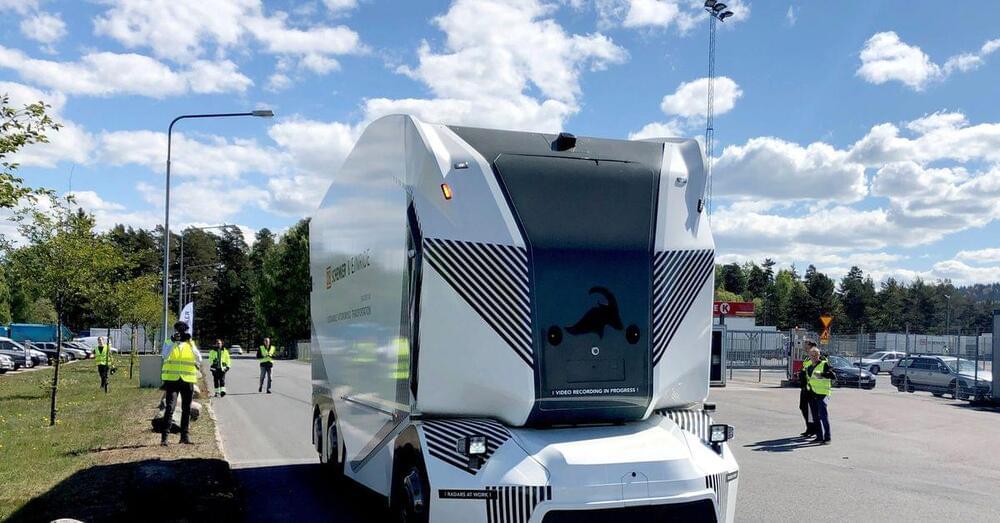
COPENHAGEN, June 14 (Reuters) — Swedish electric self-driving truck company Einride expects to reduce CO2 emissions in Norway by 2,100 tonnes over the coming three years as it partners up with Scandinavia’s leading postal service, PostNord, the company said on Wednesday.
Norway has the world’s highest number of electric vehicles per head of population and aims for all heavy vehicles to be zero-emission by 2040, potentially cutting CO2 emissions by 4.4 million tonnes or nearly 9% of the country’s annual emissions.
“Given Norway’s pioneering work in electrifying passenger vehicles, it’s only logical that they should take a leading role in the electrification of heavy-duty freight as well,” Einride CEO Robert Falck said.
The transition to renewable energy, critical for the world’s future, is limited today by energy storage and transmission challenges. Beaming solar power from space is an elegant solution that […] promises a remarkable payoff for humanity: a world powered by uninterruptible renewable energy.
The California Institute of Technology reports the first successful beaming of solar energy from space down to a receiver on the ground, via the MAPLE instrument on its SSPD-1 spacecraft.
Space-based solar power. Credit: Caltech.
In recent years, space-based solar power has attracted growing interest from both governments and businesses. Driven by advances in satellite technology, materials science, and energy transmission methods, experts increasingly view it as a feasible option for clean energy that is likely to be a commercial reality within the next two decades.