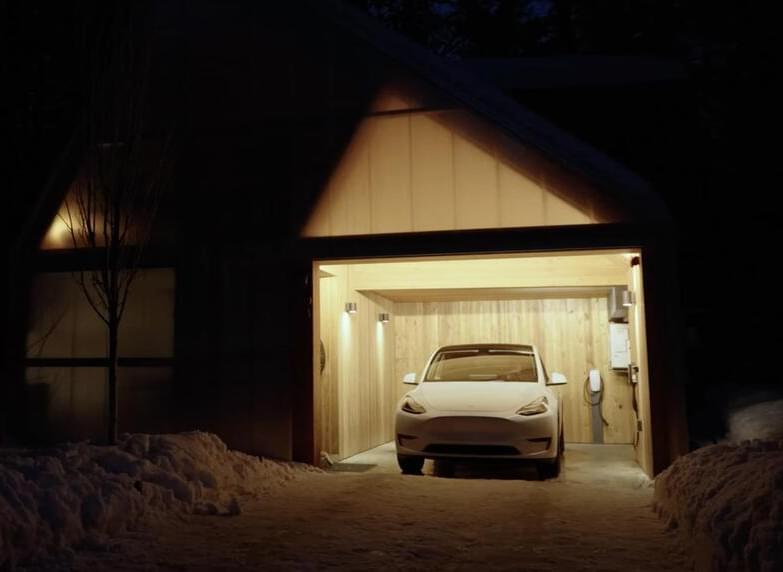
Tesla car insurance rates vary by model. Find out how much it costs and why coverage is more expensive.
Lucid Motors is planning new, affordable models with which to take on the Tesla Model 3 and Model Y. The American automaker recently entered an agreement to supply Aston Martin with electric powertrain components, but company CEO Peter Rawlinson is already focused on what comes next. Speaking with Auto Express, Rawlinson shared some interesting tidbits about future models — including rivals to Tesla’s Model 3 and Model Y.
Once the all-new Gravity SUV arrives in the second half of 2025, Lucid intends to hit Tesla where it hurts. “After Gravity, we’re going to do Model 3 and Model Y competitors. We think around $50,000, maybe $48,000 — something like that. It’s too early to say, but that’s the vision.”
This would bring Lucid ownership within reach of customers who can’t afford the $87,500 required to purchase the Air luxury sedan. When questioned about manufacturing right-hand drive vehicles, Rawlinson said Lucid would love to cater to more markets but is currently focused on getting the Air Sapphire to market.
New research by the University of Liverpool could signal a step change in the quest to design the new materials that are needed to meet the challenge of net zero and a sustainable future.
Published in the journal Nature, Liverpool researchers have shown that a mathematical algorithm can guarantee to predict the structure of any material just based on knowledge of the atoms that make it up.
Developed by an interdisciplinary team of researchers from the University of Liverpool’s Departments of Chemistry and Computer Science, the algorithm systematically evaluates entire sets of possible structures at once, rather than considering them one at a time, to accelerate identification of the correct solution.
Tesla delivered upwards of 466,000 vehicles in the second quarter — 20,000 more than Wall Street’s consensus forecast of about 446,000, it revealed on Sunday. Jim Chanos waved away the strong showing on Twitter, saying it was fueled by price cuts and firmly priced into Tesla’s current valuation.
“Again, ‘blown away’ is a 4% beat on deliveries with huge price cuts? The $800B valuation might just be discounting that…$TSLA,” he tweeted about Elon Musk’s electric-vehicle company.
“Is ‘massive’ 4% for a stock at 10x revenues…? Shouldn’t a company trading at that valuation always exceed expectations? $TSLA,” the short seller wrote in a second tweet.
By now, it should not be breaking news that Tesla is boldly entering the trucking industry with the semi-truck. Elon Musk wants to leave no stone unturned in his quest to up-end industries for the better.
He is not just doing that by producing more advanced and efficient vehicles for the future, he’s also doing it with the kind of factories he builds to produce those vehicles. A factory as big as 138 football fields combined. Boardwalk with hike and biking trail.
Ecological paradise with birds in the trees, butterflies, and fish in the stream. The semi-truck is nothing like what the industry has ever seen. And that’s not even the most interesting part. Why? We will fill you in on all the details in just a sec. Let’s get right into it.
Lhyfe announced that Sealhyfe, the world’s first offshore hydrogen production pilot, has started producing its first kilos of green hydrogen in the Atlantic Ocean, marking a decisive milestone for the future of the sector. The Sealhyfe was successfully towed 20 kilometers out into the Atlantic and connected with the SEM-REV power hub.
The progress in the project demonstrates Lhyfe’s ability to bring about concrete advances in the hydrogen industry and at great strides. In launching the world’s first offshore hydrogen production pilot, Lhyfe wanted to prove the technical feasibility of this kind of initiative and to gain operational experience to facilitate rapid scaling up.
The company has therefore made a bold decision to subject Sealhyfe to the toughest conditions. The platform will be tested under real conditions on a re-engineered floating structure connected to Central Nantes’ SEM-REV offshore testing hub, which is already linked with a floating wind turbine.
Amazon has begun rolling out its custom electric delivery vans from Rivian in Europe, the e-commerce giant said Monday. This will be Rivian’s first commercial shipment of vans outside the United States.
The first tranche of 300 vans will be seen on streets in Munich, Berlin and Dusseldorf in the coming weeks. Amazon already has a fleet of thousands of electric vans operating in Europe, including more than 1,000 e-vans in Germany, the company said. Amazon last year said it plans invest more than €1 billion to electrify its European transportation network.
“Amazon is committed to reaching net-zero carbon by 2040, and reducing our delivery-related emissions is a critical part of this goal,” said Rocco Bräuniger, country manager for Amazon, in a statement. “Last year we delivered more than 45 million packages in Germany with electric vans and e-cargo bikes, and these new additions from Rivian will help us deliver packages more sustainably and to more customers.”
EcoRunner Team Delft.
Range anxiety is not a term that you hear quite often these days. Electric vehicle (EV) manufacturers have ensured that their cars are now adept at traveling long distances on a single charge. However, charging times still need to catch up and offer a quicker way to get back on the road again.
July 3 (Reuters) — Tesla (TSLA.O) shares jumped about 7% on Monday after better-than-expected quarterly deliveries showed that Chief Executive Elon Musk’s plan of boosting volumes through discounts was working.
The day’s gains lifted the top U.S. electric-vehicle manufacturer’s market capitalization by around $57 billion to $887 billion.
At $277, the stock has already more than doubled in value this year and risen far above price targets set by analysts, prompting caution from some brokerages that margins will suffer because of the aggressive discounting spree.