Toggle light / dark theme

Scientists Spot Rare Minimoon Fireball Over Australia

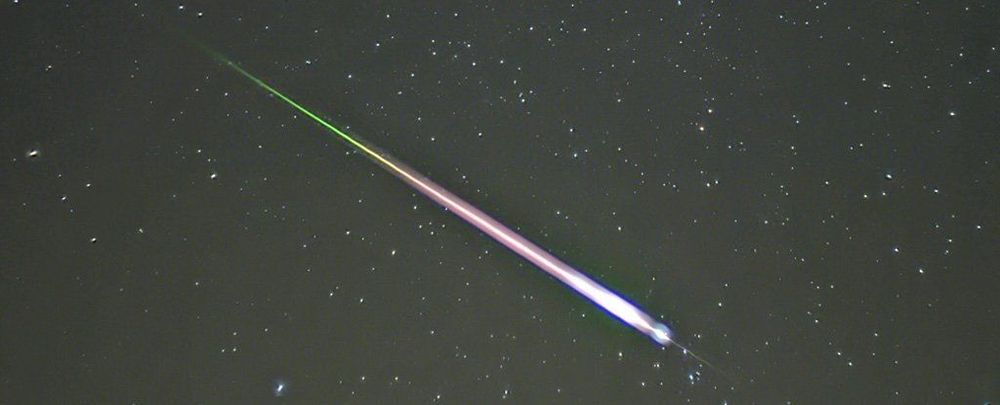
In pouring over data from Australia’s Desert Fireball Network (DFN) — a network of cameras set up across Australia to capture images of minimoon fireballs, or minimoons entering Earth’s atmosphere and burning up — a group of researchers have identified what they think is a minimoon meteor, or fireball.

This is the second time that researchers have identified a TCO blazing through the atmosphere before hitting the ground. In finding the fireball, named DN160822_03, the researchers think that it exploded over the Australian desert on Aug. 22, 2016.

Related: Earth Has ‘Minimoons,’ and They May Solve Asteroid Mysteries.

NASA Astronaut Breaks Down Space Scenes From Film & TV

NASA astronaut Nicole Stott examines scenes depicting space from movies and television and breaks down how accurate they really are. What actually happens when your helmet cracks in space like in Total Recall? Are the spacewalks in Gravity realistic? Could there really be AI on a space station like in 2001: A Space Odyssey?

Still haven’t subscribed to WIRED on YouTube? ►► http://wrd.cm/15fP7B7
Get more incredible stories on science and tech with our daily newsletter: https://wrd.cm/DailyYT
Also, check out the free WIRED channel on Roku, Apple TV, Amazon Fire TV, and Android TV. Here you can find your favorite WIRED shows and new episodes of our latest hit series Tradecraft.
ABOUT WIRED
WIRED is where tomorrow is realized. Through thought-provoking stories and videos, WIRED explores the future of business, innovation, and culture.

NASA astronaut breaks down space scenes from film & TV | WIRED

Mapping our galaxy’s magnetic field

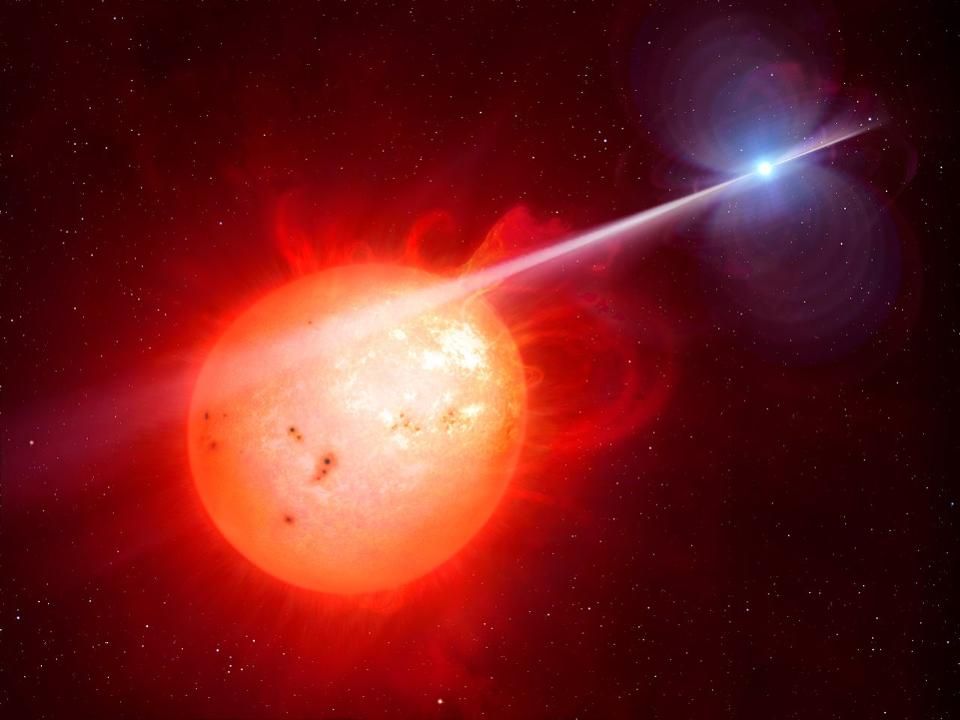
Astronomers from CSIRO and Curtin University have used pulsars to probe the Milky Way’s magnetic field. Working with colleagues in Europe, Canada, and South Africa, they have published the most precise catalogue of measurements towards mapping our Galaxy’s magnetic field in 3D.

The Milky Way’s is thousands of times weaker than Earth’s, but is of great significance for tracing the paths of cosmic rays, star formation, and many other astrophysical processes. However, our knowledge of the Milky Way’s 3D structure is limited.

Dr. Charlotte Sobey, the lead author of the research paper, said “We used pulsars (rapidly-rotating neutron stars) to efficiently probe the Galaxy’s magnetic field in 3D. Pulsars are distributed throughout the Milky Way, and the intervening material in the Galaxy affects their radio-wave emission.”

/* */