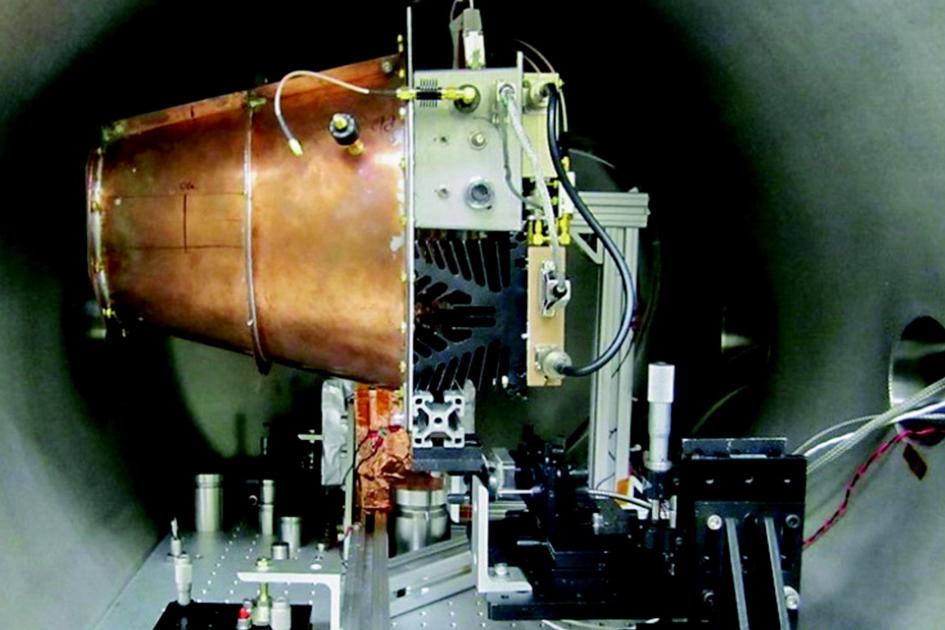
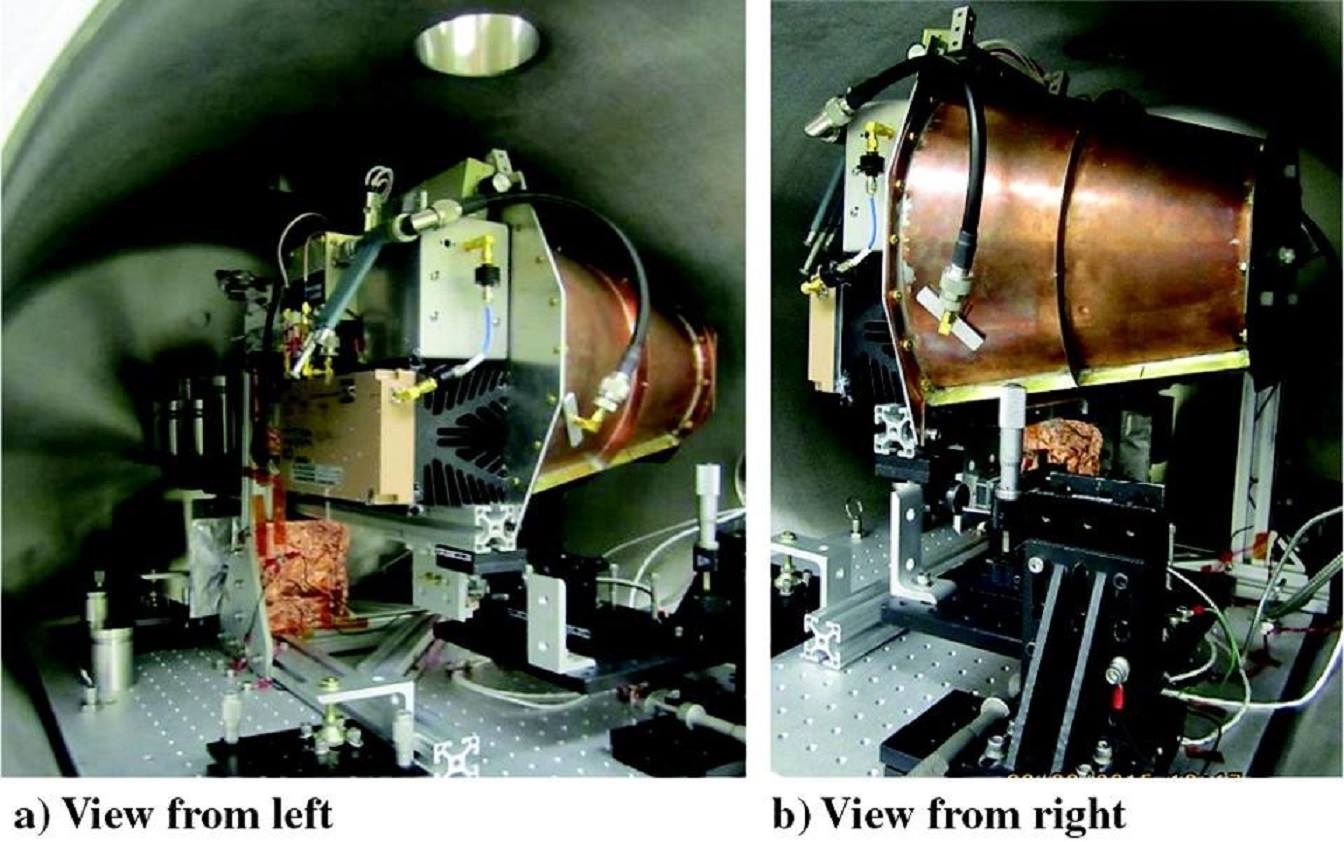
How, exactly, the laws of physics will crumble if NASA’s impossible space engine turns out to really work.
Planetary Resources, Inc., the asteroid mining company, announced today that it has finalized a 25 million euro agreement that includes direct capital investment of 12 million euros and grants of 13 million euros from the Government of the Grand Duchy of Luxembourg and the banking institution Société Nationale de Crédit et d’Investissement (SNCI). The funding will accelerate the company’s technical advancements with the aim of launching the first commercial asteroid prospecting mission by 2020.
Planetary Resources’ Arkyd 6 is equipped with the first commercially licensed mid-wave infrared imager, an essential tool for detecting water on asteroids. Two spacecraft are completed and will test this technology on orbit. Planetary Resources’ President & CEO Chris Lewicki and Luxembourg’s Deputy Prime Minister Etienne Schneider pictured with the Arkyd 6 in Planetary Resources’ clean room facility in Redmond, Washington.
Core hardware and software technologies developed at Planetary Resources were tested on orbit last year. The company’s next mission, now undergoing final testing, will validate the thermographic sensor that will precisely measure temperature differences of objects on Earth. When deployed on future commercial asteroid prospecting missions, the sensor will acquire key data related to the presence of water and water-bearing minerals on asteroids. Obtaining and using these key resources in space promises to fast-track the development of off-planet economic activities as the commercial industry continues to accelerate.

Let’s be honest, we have our fair share of problems on planet Earth: war, floods, disease, poverty, environmental destruction, Justin Bieber (the list goes on and on, really). But we also have a lot of things going for us: the Alcubierre Warp Drive, invisibility cloaks, the Mars rover missions, the discovery of the Higgs (the list goes on and on, really).
How can we weigh all the exciting and inspiring scientific discoveries against all the destruction and chaos? We have an ever expanding list of catastrophes that is coupled with (indeed, that parallels) our unrelenting march towards technological perfection. With such a coupling of unimaginable horrors and magnificent advancements, how can we possibly measure our status as a civilization?
One of the easiest ways to answer this question is to form a scale that will allow us to scientifically measure our technological *abilities* against the technological *possibilities.* Or in layman’s terms, something that will allow us to measure our awesomeness against the total possible awesomeness. Fortunately, there are several ways of conducting such measurements.
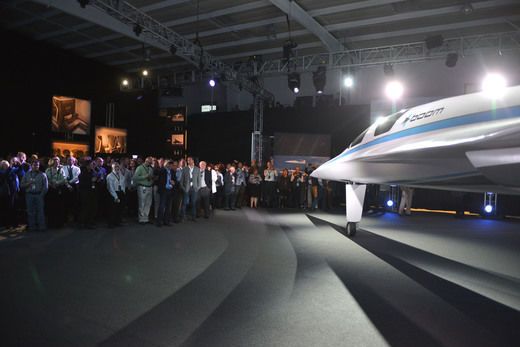
A lot of people are excited about the prospects for supersonic travel and I’m no exception. I’m delighted to share that Virgin Galactic’s manufacturing team, The Spaceship Company, has partnered with Denver-based Boom Supersonic to work on just that.
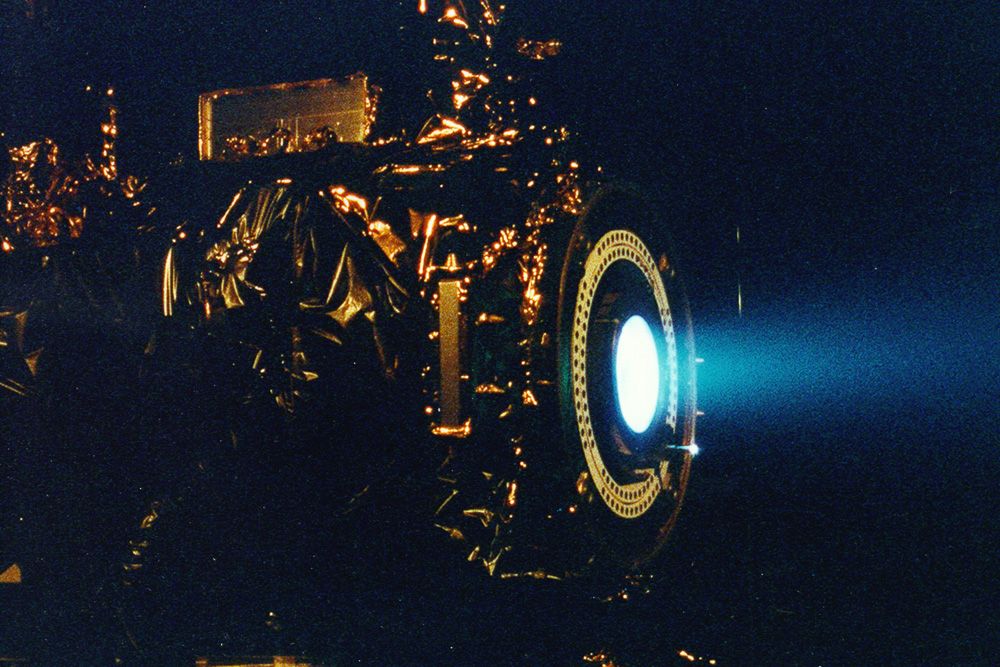
Earlier this month Hacked reported that a draft version of the much expected EmDrive paper by the NASA Eagleworks team, had been leaked. Now, the final version of the paper has been published.
The NASA Eagleworks paper, titled “Measurement of Impulsive Thrust from a Closed Radio-Frequency Cavity in Vacuum,” has been published online as an open access “article in advance” in the American Institute of Aeronautics and Astronautics (AIAA)’s Journal of Propulsion and Power, a prestigious peer-reviewed journal. The paper will appear in the December print issue of the journal.
The final version of the paper is very similar to the leaked draft. In particular, the NASA scientists confirm the promising experimental results:

EMN is a world-class collective of award-winning journalists and researchers whose mission is to be the leading online live streaming news network for alternative news and information. This news and research-driven force will be the recognized source for inquiring minds. From the paranormal to the supernormal, inner space to outer space, whether groundbreaking scientific discoveries or research into the world of the unexplained; EMN is the gateway for inquiring minds uniting a formidable community of truth-seekers worldwide led by the most respected industry leaders committed to the highest level of integrity.
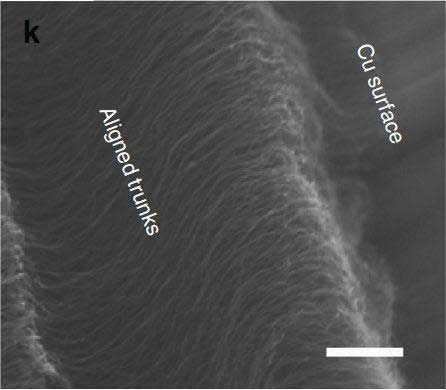
Researchers from Case Western Reserve University, Dayton Air Force Research Laboratory and China have developed a new dry adhesive that bonds in extreme temperatures—a quality that could make the product ideal for space exploration and beyond.
The gecko-inspired adhesive loses no traction in temperatures as cold as liquid nitrogen or as hot as molten silver, and actually gets stickier as heat increases, the researchers report.
The research, which builds on earlier development of a single-sided dry adhesive tape based on vertically aligned carbon nanotubes, is published in the journal Nature Communications (“Carbon nanotube dry adhesives with temperature-enhanced adhesion over a large temperature range”). As far as the researchers know, no other dry adhesive is capable of working at such temperature extremes.
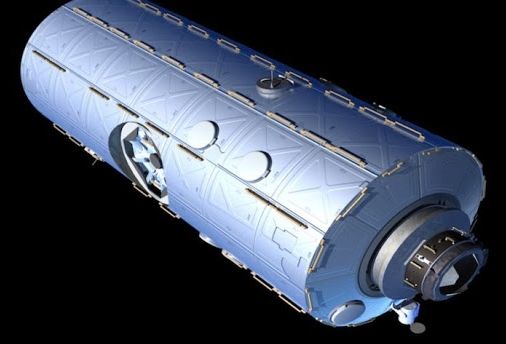
Bigelow Aerospace and Axiom Space — plan to launch habitat modules to orbit in 2020, with the aim of making some money off Earth. If all goes according to plan, private space stations will eventually form the backbone of commercial facilities that replace the International Space Station (ISS), which is currently funded through 2024.
“Hopefully, if we’re successful in the private-sector community, NASA’s going to save a boatload of money, on multiple locations [in orbit] — not just one — with more volume than they’ve ever had before,” Bigelow founder and CEO Robert Bigelow said here Wednesday (Oct. 12) at the 2016 International Symposium for Personal and Commercial Spaceflight (ISPCS). “So, whether it’s Axiom or us or other people, that is the future.”
A new company, named Axiom Space LLC, was incorporated in January, 2016 in Delaware but is based in Houston. Mike Suffredini (former NASA manager of the International Space Station) serves as its president and Kam Ghaffarian, the president and chief executive of SGT, is the chief executive.

“Finding the first planet like Earth beyond our solar system would transform how we think about our place in the universe.”