Toggle light / dark theme

SpaceX drops plans for Port of Los Angeles facility again

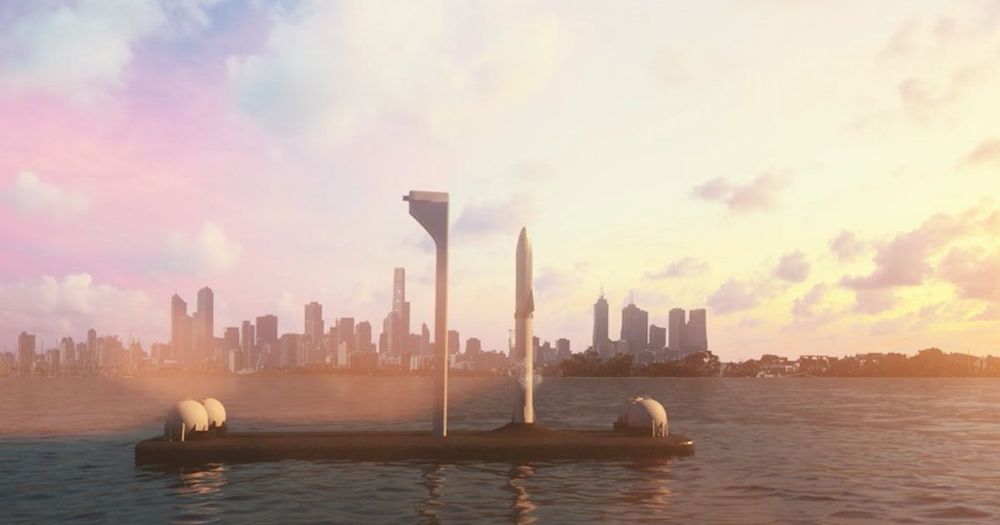
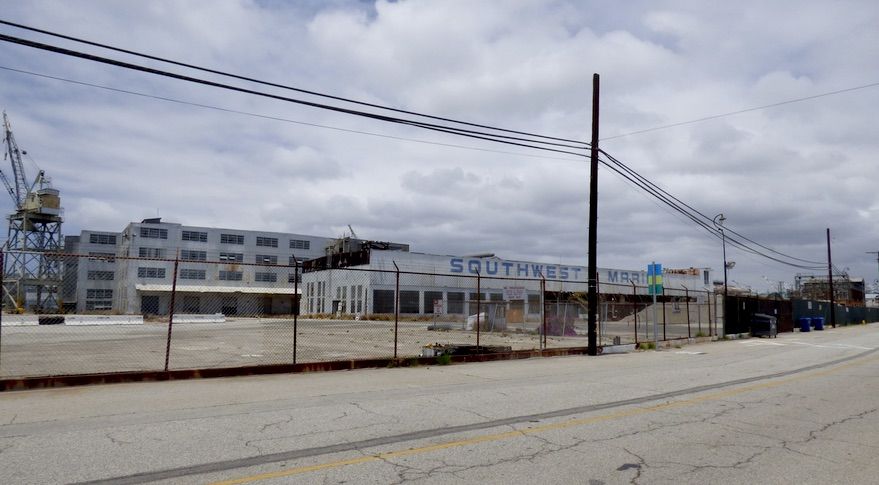
WASHINGTON — For the second time in less than 18 months, SpaceX has abandoned plans to build a manufacturing facility at the Port of Los Angeles for its next-generation Starship launch vehicle.

In a March 27 letter obtained by SpaceNews, SpaceX notified the Port of Los Angeles that it was terminating a lease approved just a month earlier for a parcel of land at the port. News of the lease termination was first reported by the Los Angeles Times.

The letter, signed by Bret Johnsen, SpaceX’s chief financial officer, served as a 45-day notice of SpaceX’s intent to terminate the lease, making the effective end date of the lease May 11. The letter did not explain why the company was terminating the lease.
Tesla investor Ron Baron expects exponential growth for Elon Musk’s car company and SpaceX

Billionaire investor Ron Baron believes there’s still plenty of room for growth for Elon Musk’s Tesla and SpaceX companies.

Baron said Tuesday morning on “Squawk Box” that he believes “there’s 10 times more to go” with Tesla. He also said SpaceX, a privately held company, will grow by a multiple of 20 in the next 10 years. He previously predicted similar growth for Tesla.

Imagining safety zones: Implications and open questions

In May, NASA announced its intent to “establish a common set of principles to govern the civil exploration and use of outer space” referred to as the Artemis Accords.[1,2] The Accords were released initially as draft principles, to be developed and implemented through a series of bilateral agreements with international partners.

The Accords offer the possibility to advance practical implementations of long-held principles in the Outer Space Treaty (OST). They raise a rich set of policy questions as we begin to take the law into new levels of resolution. This bold pursuit of uncharted territories is to be applauded, and yet, there is also the risk of diverging from 53 years of international law.

One the ten principles is focused on Deconfliction of Activities, with “safety zones” named as a specific mechanism of implementation:

Why do Crew Dragon astronauts need to climb up one level using the stairs before ingress?

While watching the launch of SpaceX Crew Dragon, I noticed that, once the astronauts came out of the elevator in the fixed service structure, they had to ‘climb up’ one level using the stairs, before entering the white room through the crew access arm. I’m curious to know why doesn’t the elevator take them directly to the crew access arm level?

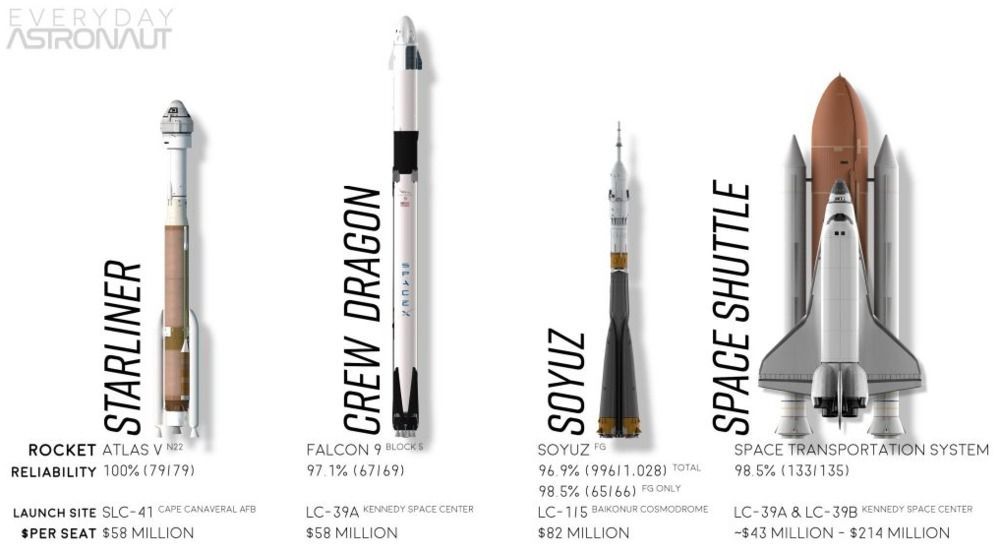
Earlier, I thought the reason might be due to the height difference between the side hatches on the Space Shuttle and Crew Dragon. But after seeing the following image it became evident that the difference is more than one level:

Image: Side by side comparison of rockets

The Design of the SpaceX Spacesuit Explained

On Saturday, May 30 at 3:22pm, for a glorious moment we were given a glimpse of the future of space travel. The successful launch of SpaceX’s Falcon 9 reorbital rocket system carrying the Crew Dragon to the International Space Station was historic in successfully sending NASA astronauts Bob Behnken and Doug Hurley within a privately developed spacecraft. The mission also revealed the next generation of astronautical wear, the SpaceX spacesuit.

Alongside the amount of life-supporting technologies tethered from seat to suit via “umbilical cord”, each spacesuit is bespoke to its wearers for optimal safety and comfort, as described by SpaceX spacesuits and crew equipment manager, Chris Trigg:

/* */