Apple backports CVE-2023–43010 WebKit fix after Coruna exploit kit abused iOS flaws, protecting older iPhones and iPads from memory corruption attacks
PGT-SR reveals that even small pericentric and paracentric inversions carry a small but measurable reproductive risk, challenging assumptions of minimal impact in IVF outcomes.
This website uses a security service to protect against malicious bots. This page is displayed while the website verifies you are not a bot.
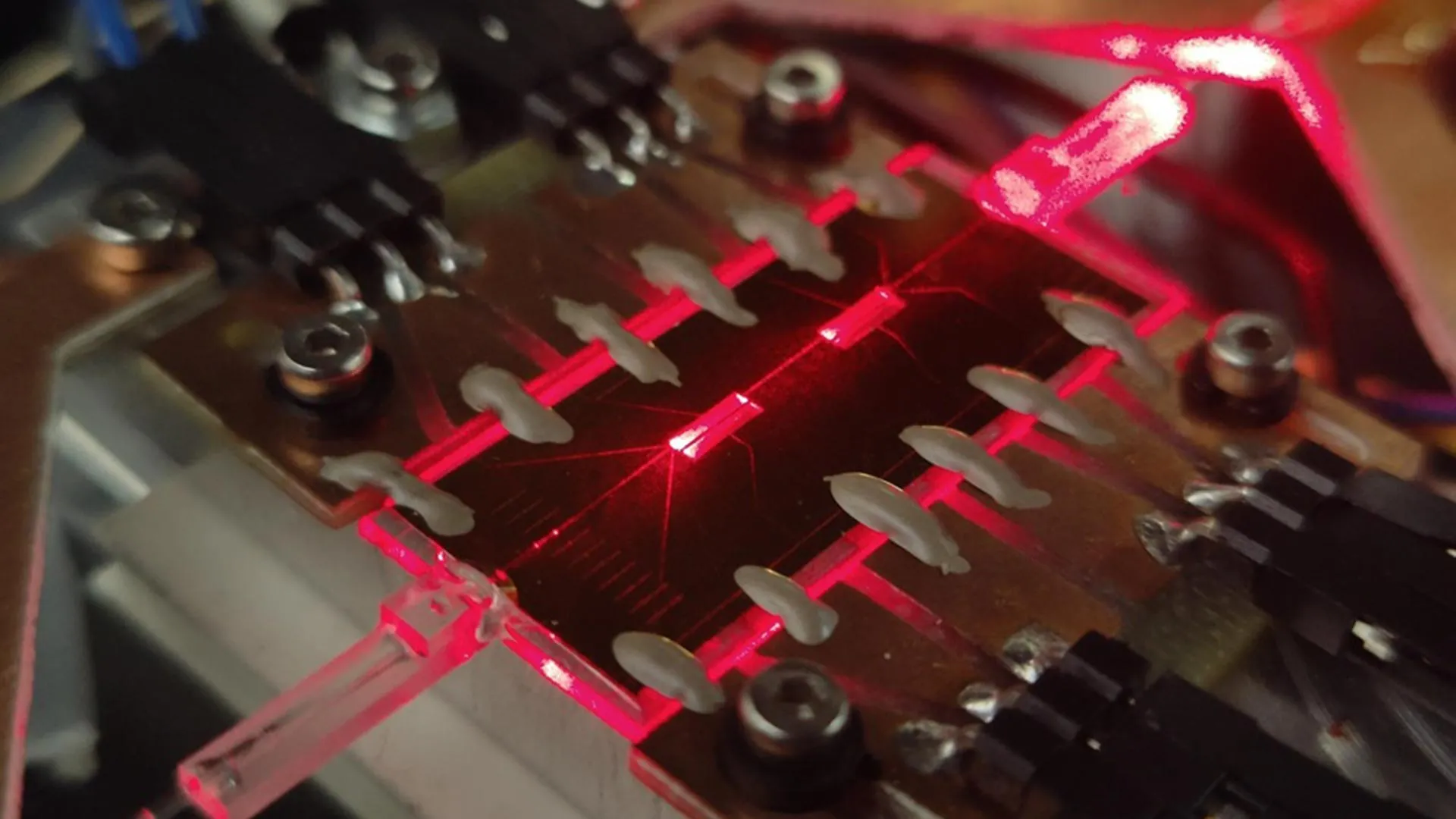
Researchers have developed a technology to invisibly transmit information disguised as background thermal radiation. Using a phenomenon called “negative light,” they transferred 100 kilobits of data per second in a way that was completely undetectable to outside observers.
Most methods for concealing data during transfer involve hiding it among other data or encrypting it in a way that makes it impossible to read without a cipher or other means of decryption. The new technique, by contrast, makes the data almost impossible to intercept because there’s no indication it’s being sent at all. It can also be encrypted through traditional means to further harden security, the team wrote in a paper published March 5 in the journal Light: Science & Applications.
In this JACCBTS article, Joachimbauer et al. demonstrate that cardiopathogenic CD4+ T cells induce acute yet reversible inflammation-driven myocardial changes, and that the persistence of these cells is a key factor driving functional cardiac remodeling.
This website uses a security service to protect against malicious bots. This page is displayed while the website verifies you are not a bot.
Microsoft has released the Windows 10 KB5078885 extended security update to fix the March 2026 Patch Tuesday vulnerabilities, including 2 zero-days and an issue that prevents some devices from shutting down.
If you are running Windows 10 Enterprise LTSC or are enrolled in the ESU program, you can install this update like normal by going into Settings, clicking on Windows Update, and manually performing a ’Check for Updates.’
After installing this update, Windows 10 will be updated to build 19045.7058, and Windows 10 Enterprise LTSC 2021 will be updated to build 19044.7058.
Interestingly, the original extension developer has published several other extensions under their name on the Chrome Web Store, and all of them have received a Featured badge. The developer also has an account on ExtensionHub, although no extensions are currently listed for sale. What’s more, the individual has attempted to sell domains like “AIInfraStack[.]com” for $2,500, stating the “strong keyword domain” is “relevant for [sic] rapidly growing AI ecosystem.”
“This is the extension supply chain problem in a nutshell,” Annex Security said. “A ‘Featured,’ reviewed, functional extension changes hands, and the new owner pushes a weaponized update to every existing user.”
The disclosure comes as Microsoft warned of the malicious Chromium‑based browser extensions that masquerade as legitimate AI assistant tools to harvest LLM chat histories and browsing data.
[Alzheimer’s disease: AD] Zhang et al.: “Increased theta band power was statistically significant in AD patients, highlighting its critical role in AD pathology.”
Your browser extensions or network settings have blocked the security verification process required by www.sciencedirect.com. To resolve this, try the following steps:
Temporarily disable browser extensions:
Computer vision technologies are artificial intelligence (AI)-powered systems that can capture, analyze, and interpret visual data captured from real-world environments. While these systems are now widely used, many of them perform poorly under some lighting conditions and when the light in captured scenes changes abruptly.
Researchers at University of North Carolina at Chapel Hill, Westlake University and other institutes have developed a new artificial eye that draws inspiration from the eyes of humans, cats and other animals. This artificial eye, introduced in a paper published in Science Robotics, could be used to advance the sensing capabilities of robots, advanced security systems and autonomous vehicles.
“Our project grew from a simple problem: traditional machine vision systems (like the cameras deployed in self-driving cars or robots) struggle with extreme light changes, such as changes from pitch black to bright sunlight,” Dr. Kun Liang, first author of the paper, told Tech Xplore.