Toggle light / dark theme

Frontiers: Consciousness science: where are we, where are we going, and what if we get there?

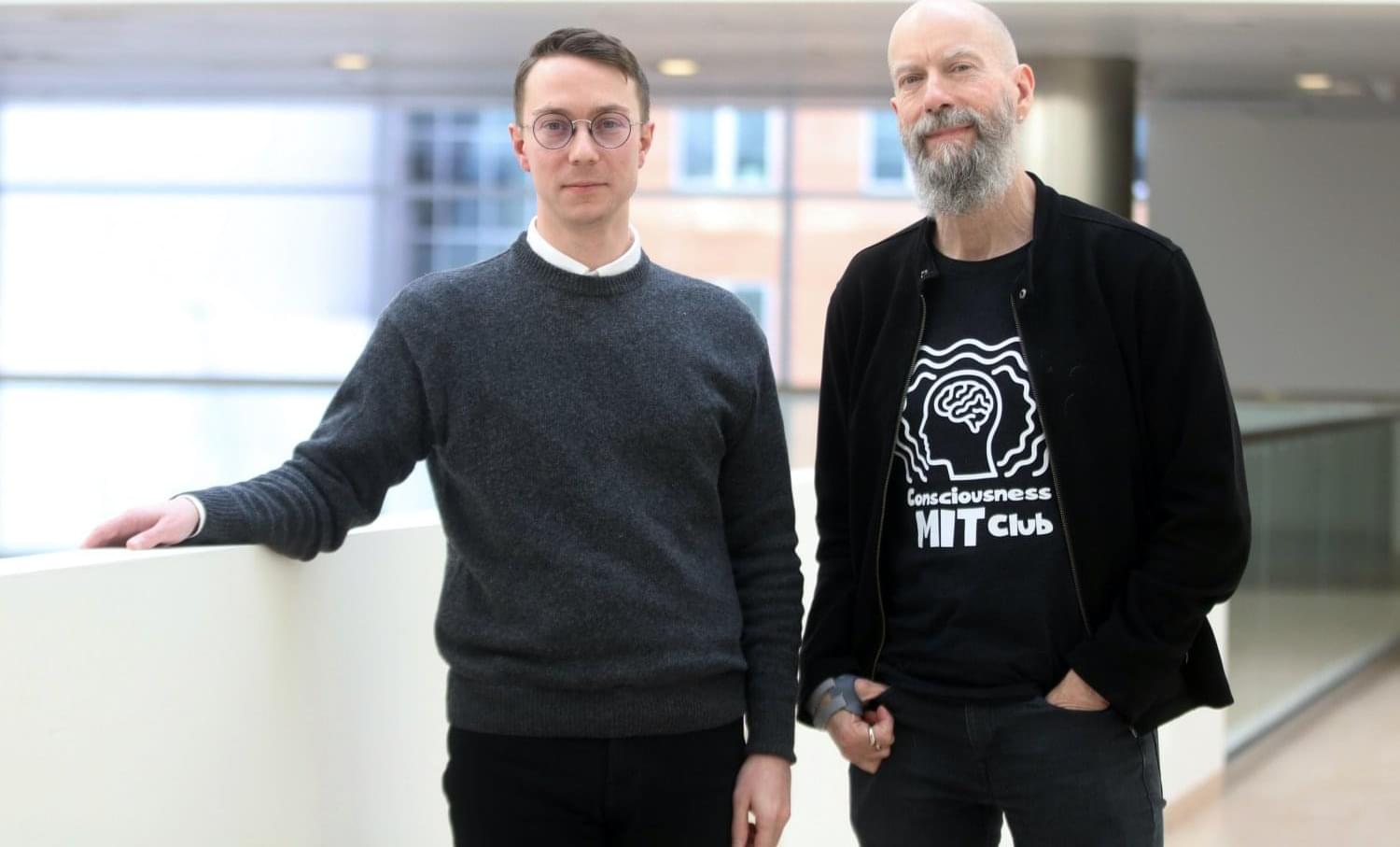
The first distinction is between the notion of the level of consciousness and the notion of the contents of consciousness. In the first sense, consciousness is a property associated with an entire organism (a creature) or system: one is conscious (for example, when in a normal state of wakefulness) or not (for example, when in deep dreamless sleep or a coma). There is an ongoing vibrant debate about whether one should think of levels of consciousness as degrees of consciousness or whether they are best characterized in terms of an array of dimensions (11) or as “global states” (12). In the second sense, consciousness is always consciousness of something: our subjective experience is always “contentful”—it is always about something, a property philosophers call intentionality (3, 13). Here, again, there is some debate over the terms, for example, whether there can be fully contentless global states of consciousness (14) and whether consciousness levels (or global states) and contents are fully separable (11, 15).

The second distinction is between perceptual awareness and self-awareness (note that in this article, we use the terms consciousness and awareness interchangeably). Perceptual awareness simply refers to the fact that when we are perceptually aware, we have a qualitative experience of the external world and of our bodies within it (though of course, some perceptual experiences can be entirely fictive, such as when dreaming, vividly imagining, or hallucinating). Importantly, mere sensitivity to sensory information is not sufficient to be considered as perceptual awareness: the carnivorous plant Dionaea muscipula and the camera on your phone are both sensitive to their environment, but we have little reason to think that either has perceptual experiences. Thus, mere sensitivity is not sufficient for perceptual awareness, as it does not necessarily feel like something to be sensitive. This experiential character is precisely what makes the corresponding sensation a conscious sensation (16).

The key to why the universe exists may lie in an 1800s knot idea science once dismissed

In 1867, Lord Kelvin imagined atoms as knots in the aether. The idea was soon disproven. Atoms turned out to be something else entirely. But his discarded vision may yet hold the key to why the universe exists.

Now, for the first time, Japanese physicists have shown that can arise in a realistic particle physics framework, one that also tackles deep puzzles such as neutrino masses, , and the strong CP problem.

Their findings, in Physical Review Letters, suggest these “cosmic knots” could have formed and briefly dominated in the turbulent newborn universe, collapsing in ways that favored matter over antimatter and leaving behind a unique hum in spacetime that future detectors could listen for—a rarity for a physics mystery that’s notoriously hard to probe.

🌿 International Conference “Anti-Aging: Science and Practice of Healthy Longevity” —

October 21–22, 2025 (Online) 🌿

Dear colleagues and friends.

We are pleased to invite you to the International Scientific Conference “Anti-Aging: Science and Practice of Healthy Longevity”, organized by the Gerontology Section of the Moscow Society of Naturalists (MOIP) at Lomonosov Moscow State University, with the support of the Gerontology Society of the Ural Branch of the Russian Academy of Sciences (URAN).

📅 Dates: October 21–22, 2025 🕛 Time: 12:00–16:00 (Moscow time) 💻 Format: Online participation (free of charge) 🗣️ Working language: Russian.

🔹 October 21 — “Hypoxic Training (Therapy): Modern Aspects of Healthy Longevity Medicine” 🔹 October 22 — “Fundamental and Clinical Gerontology as the Basis of Healthy Longevity Medicine”

The conference will feature leading scientists from Russia, Germany, Belarus, Kyrgyzstan and other countries. Topics include: • Hypoxic therapy and adaptive mechanisms; • Geroprotection and the biology of aging; • Epigenetic reprogramming and cellular rejuvenation; • Applied aspects of active and healthy longevity.

🔗 Connection links: • Day 1 (October 21): https://my.mts-link.ru/j/38630705/5798697072

‘Jump-scare’ science: Study elucidates how the brain responds to fear

In haunted houses across the country this month, threatening figures will jump out of the shadows, prompting visitors—wide-eyed and heart racing—to instinctively freeze and flee.

Evolutionarily speaking, this “innate response” is key to survival, helping a wide variety of animal species escape predators. But when stuck in overdrive it can cause problems for humans.

A University of Colorado Boulder research team has identified a novel brain circuit responsible for orchestrating this threat response. Known as the interpeduncular nucleus (IPN), this dense cluster of specialized neurons not only jump-starts that freeze-and-flee reaction, but dials it down when animals learn there’s no real danger.

SCP-239: The Child Who Can Rewrite Reality | The Science and Ethics of a Sleeping God

Can a child’s imagination alter the laws of physics? In this speculative science essay, we explore SCP-239, “The Witch Child” — a sleeping eight-year-old whose mind can reshape matter, rewrite probability, and collapse reality itself.

We examine how the SCP Foundation’s containment procedures—from telekill alloys to induced comas—reflect humanity’s struggle to contain a consciousness powerful enough to bend the universe. Through philosophy, ethics, and quantum speculation, this essay asks:
What happens when belief becomes a force of nature?

🎓 About the Series.
This video is part of our Speculative Science series, where we analyze anomalous phenomena through physics, cognitive science, and ethics.

📅 New speculative science videos every weekday at 6 PM PST / 9 PM EST.
🔔 Subscribe and turn on notifications to stay at the edge of what’s possible.

💬 Share your theories in the comments below:
Should SCP-239 remain asleep forever, or does humanity have a moral duty to understand her?

#SCP239 #SpeculativeScience #TheWitchChild #SCPFoundation #ScienceFiction #Philosophy #AIExplained #Ethics #SciFiEssay #LoreExplained

USTC Realizes Human Near-Infrared Color Vision via Contact Lens Technology-University of Science and Technology of China

A research team led by Prof. XUE Tian and Prof. MA Yuqian from the University of Science and Technology of China (USTC), in collaboration with multiple research groups, has successfully enabled human near-infrared (NIR) spatiotemporal color vision through upconversion contact lenses (UCLs). The study was published online in Cell on May 22, 2025 (EST), and was featured in a News release by Cell Press.

The Door That Opens to Another Universe: The True Science Behind SCP-4357 “Slimelord”

What if a simple apartment door in Boston opened into another universe?
SCP-4357, also known as “Slimelord,” is one of the strangest and most human anomalies ever recorded — a hyperspatial discontinuity leading to a world of intelligent slug-like beings with philosophy, humor, and heartbreak.

In this speculative science essay, we explore what SCP-4357 means for physics, biology, and the idea of consciousness itself. How could life evolve intelligence in a sulfur-rich world? Why do these beings mirror human culture so closely? And what happens when curiosity crosses the line into exploitation?

Join us as we break down the science, ethics, and wonder behind one of the SCP Foundation’s most thought-provoking entries.

🔔 Subscribe for more speculative science every weekday at 6PM PST / 9PM EST.
💡 Become a channel member for early access and exclusive behind-the-scenes content.
🌌 Because somewhere out there, even the slugs have opinions on Kant.

/* */