Toggle light / dark theme

AI + Synthetic Biology: The Most Transformative Technology in Human History | Ben Lamm (Colossal)

This episode was filmed at the 2026 Abundance360 Summit.

This interview explores the groundbreaking work of Colossal in synthetic biology, de-extinction, and AI integration. Colossal CEO Ben Lamm explains how the company is revolutionizing biodiversity preservation, tackling plastic pollution, and creating living products with immense potential.

Get access to metatrends 10+ years before anyone else — https://qr.diamandis.com/metatrends.

Ben Lamm is Co-founder and CEO of Colossal Biosciences

Peter H. Diamandis, MD, is the Founder of XPRIZE, Singularity University, ZeroG, and A360.

Chapters:

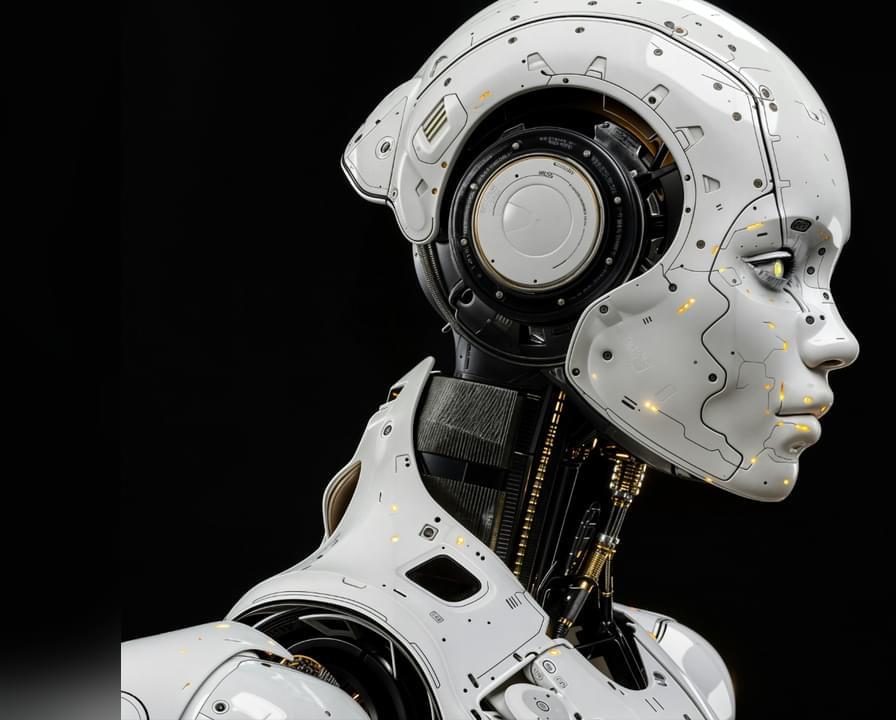
Is Big Tech Teaching Machines To Be Conscious? Google Mind’s Move To Hire A Philosopher Raises Eyebrows

The race to build smarter artificial intelligence has taken an unexpected philosophical turn after Google DeepMind quietly hired an in-house philosopher to investigate the potential for machine consciousness…

…DeepMind is now integrating philosophical reasoning directly into its research pipeline rather than treating ethics as an external concern. This move suggests that Big Tech is no longer viewing sentience as a science-fiction trope but as a technical and moral hurdle, thereby witnessing a transition from building tools to questioning the nature of those tools themselves.

The Google DeepMind philosopher role focuses on the machine sentience debate, aiming to define what it means for a digital system to ‘feel’ or ‘experience’

This internal appointment comes at a time when large language models are becoming increasingly indistinguishable from human interlocutors. While most researchers maintain that these systems are mere statistical predictors, the boundary is thinning. The decision to bring a philosopher into the core development team indicates that Google expects its path toward artificial general intelligence to raise profound questions about awareness and machine rights.


Google DeepMind has hired an in-house philosopher to explore the boundaries of machine consciousness and ethics. This move follows years of controversy surrounding AI sentience and the limits of large language models.

Elon Musk’s xAI sues over Colorado’s AI antidiscrimination law, claiming it’s a threat to Grok’s free speech

Senate Bill 205, passed in 2024, is one of the nation’s first attempts to regulate ‘high-risk’ AI systems and protect consumers from ‘algorithmic discrimination’ — or disparate treatment or impacts on protected classes under Colorado law.

In the complaint, which was filed in federal court in Denver, Musk’s lawyers contend that the law is ‘unconstitutionally vague’ and ‘invites arbitrary enforcement’ because it fails to define some key terms. They also contend that Colorado’s law would cause Musk’s AI chatbot, Grok, to ‘abandon its disinterested pursuit of truth and instead promote the State’s ideological views on various matters, racial justice in particular,’ which they say violates the First Amendment.

‘Unless the implementation and enforcement of SB24-205 is enjoined, it will violate xAI’s constitutional rights and cause irreparable constitutional harm, impose enormous burdens on xAI and the AI industry, and substitute Colorado’s political preferences for the national economic and security imperative of American AI dominance,’ the complaint reads in part…

…State Rep. Briana Titone, D-Arvada, one of Senate Bill 205’s lead sponsors, told The Sun that Musk’s lawsuit seems like a ‘fishing expedition’ that misinterprets the core of the law.

‘This is where the disconnect is. SB 205 is about consequential decisions, not about freedom of speech,’ Titone said. ‘It’s completely detached from it. And they’re trying to use this argument for a law that has nothing to do with what he’s saying. We’re not restricting speech. Our bill does not say that Grok still can’t be a dick.’


The lawsuit was filed at a time when the Trump administration looks to preempt state regulation of AI models through executive fiat.


AI Model Can Help Cut Hospitalizations in Patients With Dialysis

AI models identified patients with end-stage kidney disease (ESKD) receiving hemodialysis who faced an imminent risk for hospital admission due to infections or fluid status abnormalities. When paired with nurse-led case reviews and targeted interventions, this strategy helped avert short-term admissions, demonstrating AI’s potential to guide timely, focused care.


AI-driven interventions reduce the odds of hospitalization within 7 days by 8% in patients with end-stage kidney disease receiving hemodialysis, according to a recent study.

HarmonyGNN boosts graph AI accuracy on four tough benchmarks by up to 9.6%

Researchers have demonstrated a new training technique that significantly improves the accuracy of graph neural networks (GNNs)—AI systems used in applications from drug discovery to weather forecasting. GNNs are AI systems designed to perform tasks where the input data is presented in the form of graphs. Graphs, in this context, refer largely to data structures where data points (called nodes) are connected by lines (called edges). The edges indicate some sort of relationship between the nodes. Edges can be used to connect nodes that are similar (called homophily)—but can also connect nodes that are dissimilar (called heterophily).

For example, in a graph of a neural system there would be edges between nodes representing two neurons that enhance each other, but there would also be edges between nodes that suppress each other.

Because graphs can be used to represent everything from social networks to molecular structure, GNNS are able to capture complex relationships better than many other types of AI systems.

/* */