The robot, called Swifty, recently made quick work of a 20-foot demonstration bore hole through one of the toughest rock types on the planet.

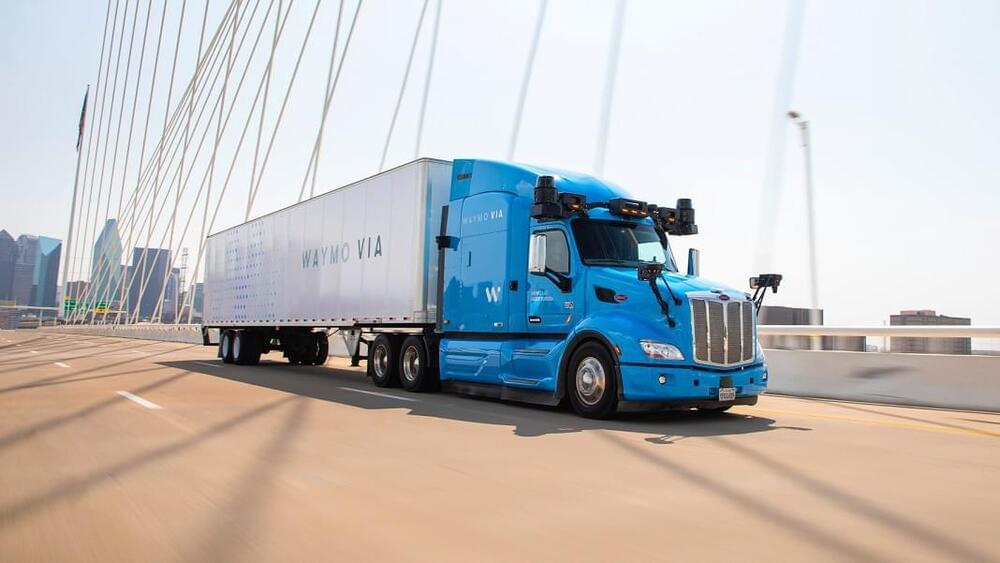
Between a supply chain full of holes, labor shortages across various sectors of the economy, and rising inflation, it’s shaping up to be a somewhat chaotic holiday season. Technology can’t fix all of these problems—or even most of them—but it can help get holiday shipments from point A to point B faster, cheaper, and without as many humans involved. Waymo’s partnership with UPS could mean some of your holiday gifts will be spending time in an autonomous truck on their way to you.
Waymo (which started out as the Google Self-Driving Car Project in 2009 and is still held by Alphabet, but raised $2.5 billion in its first outside funding round in March of 2020) first announced a partnership with UPS in January 2020, in which Waymo Driver was used to help move packages between UPS stores in Phoenix and the UPS hub in Tempe. Waymo’s Chrysler Pacifica minivans drove autonomously, but trained operators were on board to monitor the vehicles.
Last week the two companies announced an expansion of their existing partnership, saying they’ll start autonomous trial runs using Class 8 trucks equipped with the fifth-generation Waymo Driver. They’ll do deliveries for UPS’s North American Air Freight unit between facilities in Dallas-Fort Worth and Houston. Waymo’s initial route for its driverless cargo shipments also ran between Houston and Fort Worth, which the company said is one of the most highly utilized freight corridors in the country. The route is around 260 miles long, much of that a straight shot on Interstate 45.
[Cross posted on Chi-Ning’s blog, the course is open also to non-Harvard people. Chi-Ning is my amazing grad student, who has worked on several aspects related to the course, including quantum computation and neurally-plausible computation. He assembled a great collection of guest speakers and so this course looks like it will be very exciting. Boaz]
In the following January, Harvard GSAS kindly supports me to offer a mini-course on “What is Computation? From Turing Machines to Blackholes and Neurons”. In this blog post, I’m going to share the motivation for teaching this mini-course and give an overview on what you will learn if you are interested in participating!
Computation is not an exotic word for people living in the 21st century. In high school, kids have to learn and do all sorts of computations in arithmetics (and some even start to write computer programs!). For scientists, computational methods become more and more common and sometimes even completely change the paradigm of a field. There are computers of different forms hiding in our daily life ranging from your smartphones to the toy of your pets. Also, from time to time we see excitement on the news about the development of quantum computing and artificial intelligence. Computation has become central in human civilization, however, do we really understand what computation is?
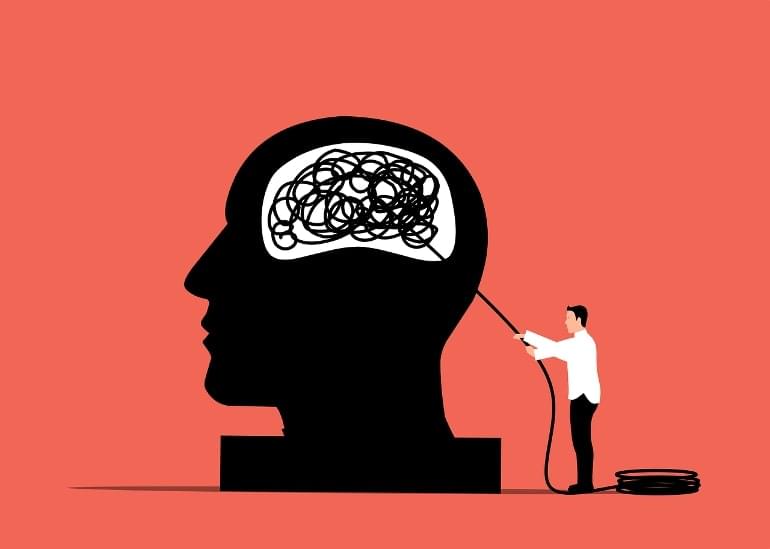
Summary: A new theory suggests consciousness is a state tied to complex cognitive operations, and not a passive basic state that automatically prevails when we are awake.
Source: RUB
Two researchers at Ruhr-Universität Bochum (RUB) have come up with a new theory of consciousness. They have long been exploring the nature of consciousness, the question of how and where the brain generates consciousness, and whether animals also have consciousness.
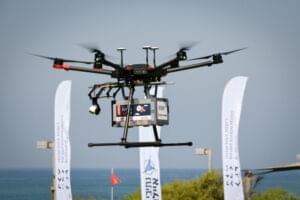
Israel’s National Drone Initiative has launched the fourth phase of its pilot program, which this time will include night operations as well as flights in which cargo will be delivered directly via winches to the end customer.
NDI began flights over urban areas in January 2021, resumed trial flights on Sunday, involving several companies that manage and operate autonomous drone networks.
For the next two weeks, flights will take place day and night above Gush Dan and Yerucham, in order to integrate the use of drones in routine activities such as transportation of basic products, first aid; deploying a drone attached to a vehicle for real-time monitoring of traffic movement with AI-based elements that can provide forecasts, and much more.
AI chips, which are semiconductors designed to accelerate machine learning, have many applications. One of the promising use cases, according to Albert Liu, is using AI chips in autonomous driving vehicles.
That’s why Liu’s AI chipmaking startup Kneron has been quietly racking up investments to march into smart transportation. It recently closed a new round of $25 million funding led by Lite-On Technology, a Taiwanese optoelectronic pioneer, which was a strategic investor in the round. Other investors included Alltek, PalPilot, Sand Hill Angels and Gaingels.
The new proceeds lifted Kneron’s total funding to over $125 million since its inception in 2015. The San Diego-and Taipei-based company has assembled a list of renowned investors, including Hong Kong tycoon Li Ka-Shing’s Horizon Ventures, Alibaba, Qualcomm, Sequoia and Foxconn, the world’s largest electronics manufacturer and Apple’s supplier.
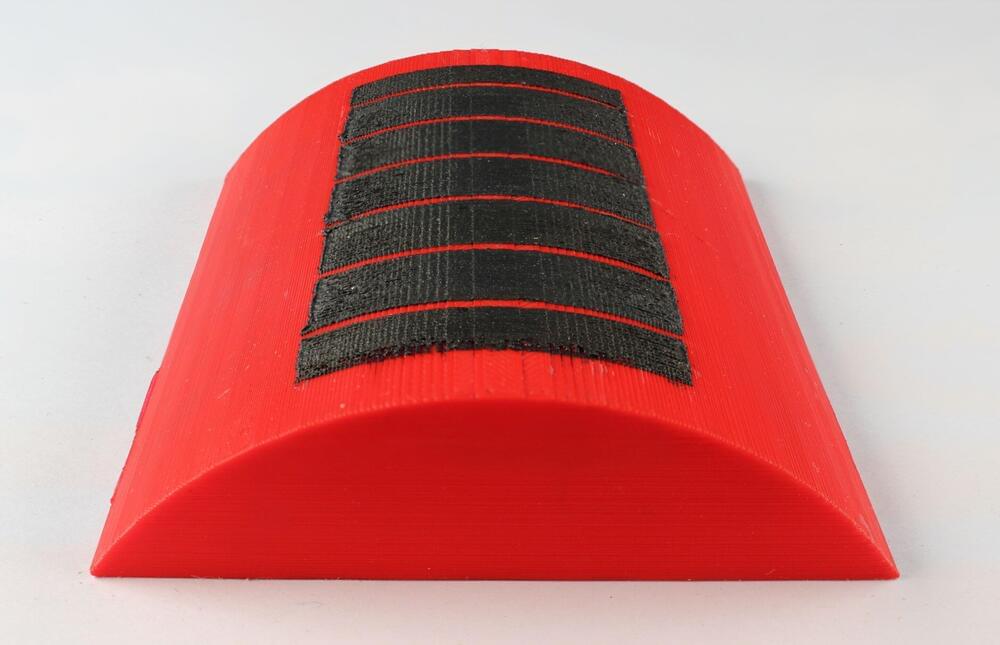
More precise, faster, cheaper: Researchers all over the world have been working for years on producing electrical circuits using additive processes such as robotic 3D-printing (so-called robocasting) with great success, but this is now becoming a problem. The metal particles that make such 3D substrates electrically conductive are exacerbating the problem of electronic waste, especially since the waste generated is likely to increase in the future in view of new types of disposable sensors, some of which are only used for a few days.
This constitutes unnecessary waste, according to Gustav Nyström, head of Empa’s Cellulose & Wood Materials lab: “There is an urgent need for materials that balance electronic performance, cost and sustainability.” To develop an environmentally friendly ink, Nyström’s team therefore set ambitious goals: metal-free, non-toxic, biodegradable. And with practical applications in mind: easily formable and stable to moisture and moderate heat.
And they’re faster than AI.
Researchers at Cortical Labs, a biotechnology startup, have successfully taught human brain cells in a petri dish how to play the 2D table tennis simulation video game “Pong”.
The team managed to create mini-brains consisting of 800,000 to one million living human brain cells in a petri dish, reports New Scientist. Regarding the unlikely study, Brett Kagan, chief scientific officer at Cortical Labs and research lead of the project, says We think… See more.
And they could soon help explore the deep sea.
New York-based firm Pliant Energy Systems is building a marine system reminiscent of the cuttlefish with its rippling underwater motion, a report from The Economist reveals.
The company’s biomimetic machine, called Velox, is based on the principle that propellers are nowhere near as efficient as the fins of sea creatures that are prevalent in nature.