Bionaut Labs aims to use robots smaller than a grain of rice to deliver medications exactly where they are needed and minimize the side effects for the body.

Prof. Chalmers is an Australian philosopher and cognitive scientist specializing in the areas of philosophy of mind and philosophy of language.

To sign up, go to http://brilliant.org/ProRobots/ and register for free.
Also, the first 200 people who click this link will get 20% off a year’s Premium subscription.
✅ Instagram: https://www.instagram.com/pro_robots.
You are on the channel PRO Robots and in this view we present to your attention the news of high technology. Robots as people: the most realistic robot humanoid in the world, luxury patching cars of the future, xenobots — nanorobots that have learned to multiply, nanochip for reprogramming living matter, drones with legs, universal robots, robotic cleaners and other high-tech news in one video! Watch the video to the end and write in the comments, which news seemed the most interesting?
0:00 In this video.
2:25 Ameca Robot-Humanoid.
3:10 XPENG X2 flying car.
4:15 Robotic Systems Lab.
5:20 3D printed feet for drones.
6:10 Silicon nanochip for reprogramming biological tissue in living organism.
6:51 ATEA air cab.
7:23 Google unveiled its new project — Starline.
8:13 University scientists created xenobots that suddenly began to multiply.
9:06 MIRA surgical robot.
9:31 Moxi twin robots.
10:23 American startup DroneDek.
11:00 SOMATIC
11:25 Mid-range rocket — Neutron.
#prorobots #robots #robot #future technologies #robotics.
More interesting and useful content:
The HB1 has a 30m range from the ground but is potentially unlimited if the tether can be supplied from the roof. The robot can be equipped with different attachments such as a brush, robot arm, airless spray, concrete surveying equipment.
To ensure that the robot itself doesn’t fall, it had to undergo extensive electromagnetic compatibility (EMC) testing to make sure that fans, which essentially attach it to the surface, are functioning correctly.
The WMG SME team tested the robot by placing it in the EMC chamber and assessing how it responds to noise. It made sure it didn’t emit any unwanted noise into the atmosphere itself. Using amplifiers to simulate noise and analyzers, the researchers were able to detect any unwanted interference and emissions with the robot and record results.
In this video I discuss the most exciting applications of Silicon Photonics: from Photonic transistors to Photonic AI Processors which are already capable of running neural networks! #PhotonicChips #SiliconPhotonics #PhotonicProcessors.
TImestamps:
00:00 — Silicon Photonics.
03:00 — Photonic Transistor.
04:37 — Photonic AI chip.
12:18 — New Intel Photonic pattents & New Silicon Photonic Lab.
13:47 — Future of AI accelerators.
***
WATCH NEXT:
➞ 3D Wave in Processor Design: https://youtu.be/5fMWUC2MFrA
➞ These Microchips are the Future of AI: https://youtu.be/BDrrjLB7lgE
***
LINKS:
➞ Podcast “Practical AI” the episode on Photonic Computing: https://changelog.com/practicalai/156
➞ Cool ISSCC 2021 Tutorial on Silicon Photonics: https://d3smihljt9218e.cloudfront.net/lecture/15042/slidesho…f08f08.pdf.
➞ Hotchips 2020 SIlicon Photonics for AI Acceleration by LightMatter: https://hc32.hotchips.org/assets/program/conference/day2/Hot…matter.pdf.
***
➞ Support me on Patreon: https://www.patreon.com/AnastasiInTech.
➞ Subscribe for new videos every week! ❤ And leave me a comment below!
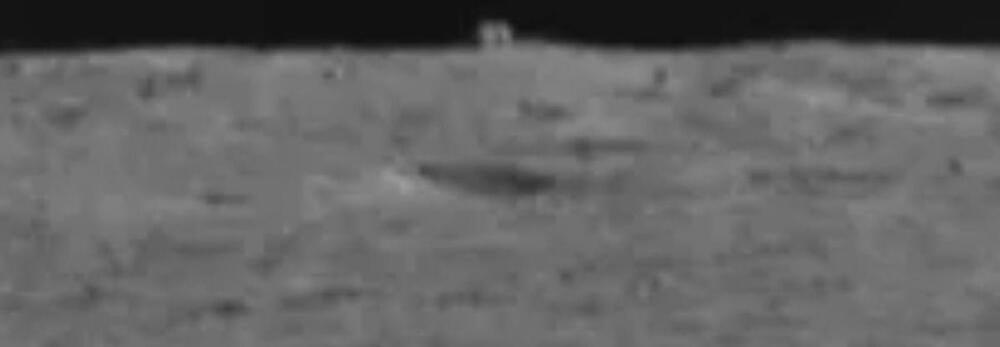
Complex terrain and Yutu 2’s reliance on solar power limit driving speed.
China’s Yutu 2 lunar rover recently spotted something intriguing on the far side of the moon, but it’ll take the vehicle a few months to reach the object for a closer look.
Yutu 2 photographed a strangely cube-shaped rock last month, during the robot’s 36th lunar day of activities. The rover drive team estimates that the object, which has been dubbed the “mystery hut,” to be around 260 feet (80 meters) away. That doesn’t sound far, but it’ll take careful planning and effort by the Yutu 2 team to cover that distance safely.
I’ve seen better. But, always worth a look, for robotics people. We need some DARPA challenge thing for robotic hands.
It’s delicate enough to shake a friend’s hand, but powerful enough to crush its enemies.
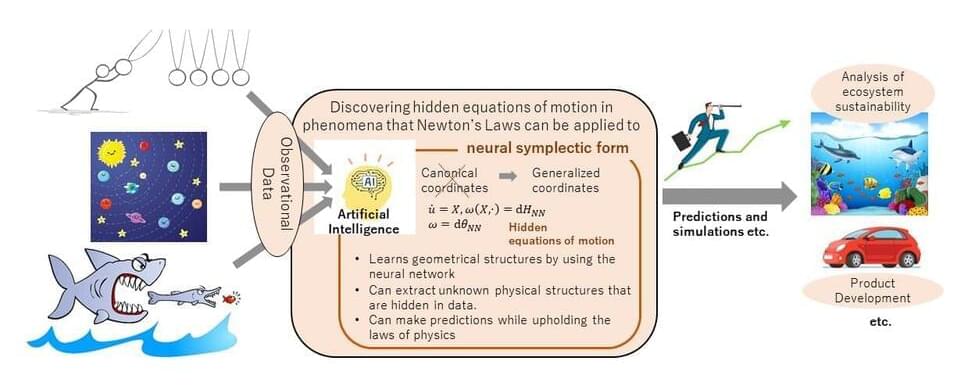
Researchers at Kobe University and Osaka University have successfully developed artificial intelligence technology that can extract hidden equations of motion from regular observational data and create a model that is faithful to the laws of physics.
This technology could enable researchers to discover the hidden equations of motion behind phenomena for which the laws were considered unexplainable. For example, it may be possible to use physics-based knowledge and simulations to examine ecosystem sustainability.
The research group consisted of Associate Professor YAGUCHI Takaharu and Ph.D. student CHEN Yuhan (Graduate School of System Informatics, Kobe University), and Associate Professor MATSUBARA Takashi (Graduate School of Engineering Science, Osaka University).