Details have been disclosed about a now-addressed critical vulnerability in Microsoft’s Azure Automation service that could have permitted unauthorized access to other Azure customer accounts and take over control.
“This attack could mean full control over resources and data belonging to the targeted account, depending on the permissions assigned by the customer,” Orca Security researcher Yanir Tsarimi said in a report published Monday.
The flaw potentially put several entities at risk, including an unnamed telecommunications company, two car manufacturers, a banking conglomerate, and big four accounting firms, among others, the Israeli cloud infrastructure security company added.
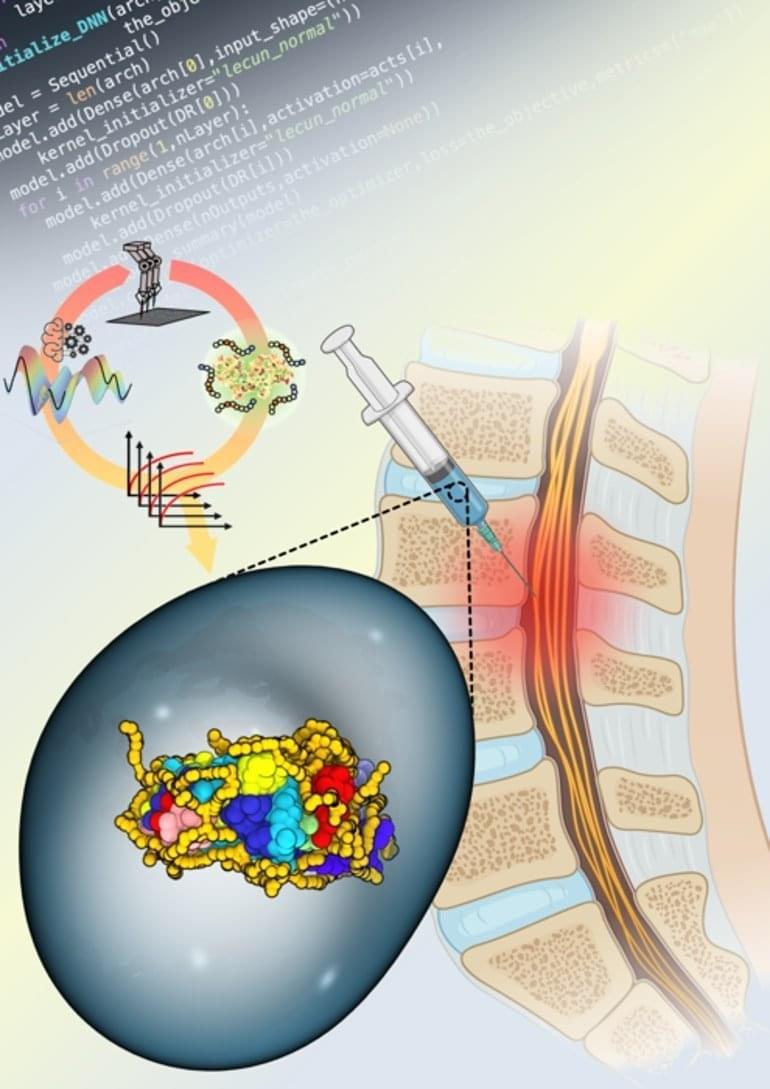
Researchers have successfully stabilized an enzyme that is able to degrade scar tissue as a result of… See more.
Summary: Researchers have successfully stabilized an enzyme that is able to degrade scar tissue as a result of spinal cord injury with the help of AI and robotics.
Source: Rutgers
By employing artificial intelligence (AI) and robotics to formulate therapeutic proteins, a team led by Rutgers researchers has successfully stabilized an enzyme able to degrade scar tissue resulting from spinal cord injuries and promote tissue regeneration.
The study, recently published in Advanced Healthcare Materials, details the team’s ground-breaking stabilization of the enzyme Chondroitinase ABC, (ChABC) offering new hope for patients coping with spinal cord injuries.
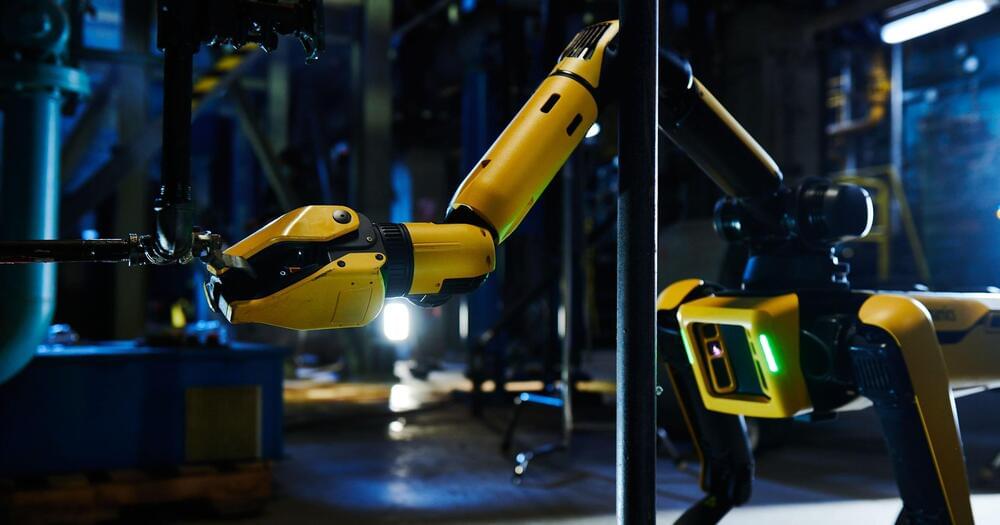
For researchers, a robot that’s easy to build, maintain, and deploy saves time, energy, and budget for the team’s primary goals. Learn what goes into an effecti… See more.
Researchers consider many factors when selecting a robot, but the most important factor is that the robot enables these teams to prioritize the research.
To maintain peak efficiency, solar cells must be regularly cleaned of dust and other accumulated dirt. However, many panels are installed in high or hard-to-reach locations, which makes cleaning them difficult, time-consuming, and also simply dangerous. One solution is to use aerial drones to spray soapy water on dirty solar panels. However, these drones often run out of battery quite quickly. In addition, they also do not make direct contact with the panels, so they may not completely wash away dirt.
To solve these problems, a Belgian startup, ART Robotics, has developed HELIOS, an automated cleaning service for solar panels. It’s a fully autonomous system that can access difficult-to-reach places and eliminates dangerous and costly work.
The system consists of autonomous cleaning robots that can move autonomously over the panels. These are placed on the solar installation using a drone platform. The drone uses its computer vision to spot the photovoltaic array and flies the bot to the exact location. The HELIOS Cleaning Bot is a lightweight robot that can autonomously clean solar panels. An innovative traction system allows the robot to move on inclined surfaces and even cross over to adjacent panels, thoroughly cleaning them using a brush and vacuum combination.
General Atomics Aeronautical Systems, Inc. (GA-ASI) has unveiled its latest jet-powered robotic drone, the Gambit, which is designed to use artificial intelligence and autonomous systems to fly alongside human-piloted aircraft and achieve air dominance.
General Atomics is known mainly for its drones like the SkyGuardian or the Mojave – robotic aircraft with very long endurance that can loiter over an area for extended periods for either reconnaissance or while awaiting the signal to take out a ground target with missiles like the Hellfire.
Now, the company has joined competitors like Boeing and Kratos to produce a full-on combat drone with the lines and performance of a fighter jet. According to GA-ASI President David R. Alexander, Gambit is an Autonomous Collaborative Platform (ACP), a flying team-mate that will work with piloted aircraft, penetrating into combat zones to detect, identify, and target adversaries at range and scale before they can become a threat to its human partner. In this way, fewer lives are put at risk and more time is gained for critical decision-making.
BEIJING — The first electric car with Huawei’s HarmonyOS operating system is set to begin deliveries at a ceremony on Saturday in Shanghai, according to an announcement on social media.
In December, Huawei’s consumer business group CEO Richard Yu spent an hour at a winter product launch event promoting the car, the Aito M5. But the Chinese telecommunications company has emphasized it will not make cars on its own, rather working with auto manufacturers on autonomous driving and other technology.
Seres is the automaker behind the Aito M5. The company is also known as SF Motors and is a Silicon Valley-based subsidiary of automaker Sokon, which is based in Chongqing, China, according to the parent company’s website.
Association between low-density lipoprotein cholesterol and cardiovascular mortality in statin nonusers: a prospective cohort study in 14.9 million Korean adults.
Visit https://brilliant.org/Veritasium/ to get started learning STEM for free, and the first 200 people will get 20% off their annual premium subscription. Digital computers have served us well for decades, but the rise of artificial intelligence demands a totally new kind of computer: analog.
▀▀▀ References: Crevier, D. (1993). AI: The Tumultuous History Of The Search For Artificial Intelligence. Basic Books. – https://ve42.co/Crevier1993 Valiant, L. (2013). Probably Approximately Correct. HarperCollins. – https://ve42.co/Valiant2013 Rosenblatt, F. (1958). The Perceptron: A Probabilistic Model for Information Storage and Organization in the Brain. Psychological Review, 65, 386–408. – https://ve42.co/Rosenblatt1958 NEW NAVY DEVICE LEARNS BY DOING; Psychologist Shows Embryo of Computer Designed to Read and Grow Wiser (1958). The New York Times, p. 25. – https://ve42.co/NYT1958 Mason, H., Stewart, D., and Gill, B. (1958). Rival. The New Yorker, p. 45. – https://ve42.co/Mason1958 Alvinn driving NavLab footage – https://ve42.co/NavLab. Pomerleau, D. (1989). ALVINN: An Autonomous Land Vehicle In a Neural Network. NeurIPS, 1305-313. – https://ve42.co/Pomerleau1989 ImageNet website – https://ve42.co/ImageNet. Russakovsky, O., Deng, J. et al. (2015). ImageNet Large Scale Visual Recognition Challenge. – https://ve42.co/ImageNetChallenge. AlexNet Paper: Krizhevsky, A., Sutskever, I., Hinton, G. (2012). ImageNet Classification with Deep Convolutional Neural Networks. NeurIPS, (25)1, 1097–1105. – https://ve42.co/AlexNet. Karpathy, A. (2014). Blog post: What I learned from competing against a ConvNet on ImageNet. – https://ve42.co/Karpathy2014 Fick, D. (2018). Blog post: Mythic @ Hot Chips 2018. – https://ve42.co/MythicBlog. Jin, Y. & Lee, B. (2019). 2.2 Basic operations of flash memory. Advances in Computers, 114, 1–69. – https://ve42.co/Jin2019 Demler, M. (2018). Mythic Multiplies in a Flash. The Microprocessor Report. – https://ve42.co/Demler2018 Aspinity (2021). Blog post: 5 Myths About AnalogML. – https://ve42.co/Aspinity. Wright, L. et al. (2022). Deep physical neural networks trained with backpropagation. Nature, 601, 49–555. – https://ve42.co/Wright2022 Waldrop, M. M. (2016). The chips are down for Moore’s law. Nature, 530144–147. – https://ve42.co/Waldrop2016
▀▀▀ Special thanks to Patreon supporters: Kelly Snook, TTST, Ross McCawley, Balkrishna Heroor, 65square.com, Chris LaClair, Avi Yashchin, John H. Austin, Jr., OnlineBookClub.org, Dmitry Kuzmichev, Matthew Gonzalez, Eric Sexton, john kiehl, Anton Ragin, Benedikt Heinen, Diffbot, Micah Mangione, MJP, Gnare, Dave Kircher, Burt Humburg, Blake Byers, Dumky, Evgeny Skvortsov, Meekay, Bill Linder, Paul Peijzel, Josh Hibschman, Mac Malkawi, Michael Schneider, jim buckmaster, Juan Benet, Ruslan Khroma, Robert Blum, Richard Sundvall, Lee Redden, Vincent, Stephen Wilcox, Marinus Kuivenhoven, Clayton Greenwell, Michael Krugman, Cy ‘kkm’ K’Nelson, Sam Lutfi, Ron Neal.