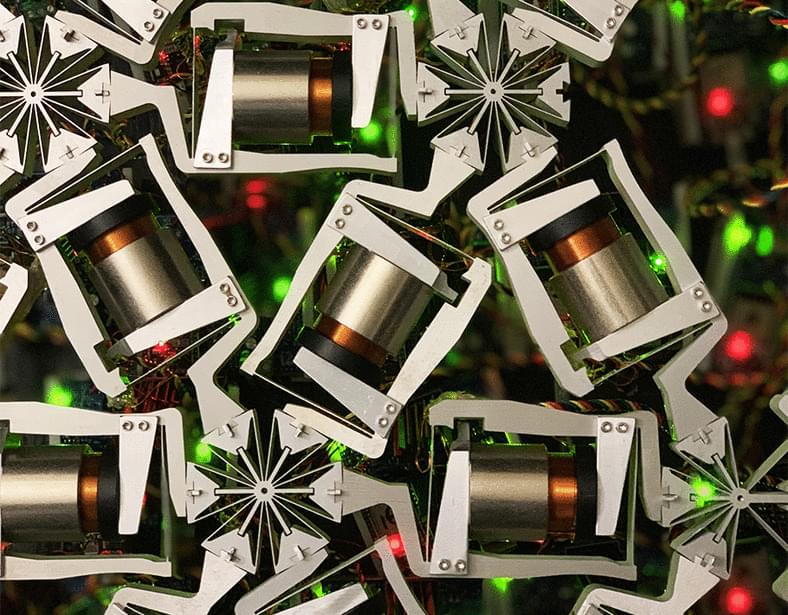
This work studies how a lattice of tunable beams can learn desired behaviors and what factors affect mechanical learning.

On Oct. 9, an unimaginably powerful influx of X-rays and gamma rays infiltrated our solar system. It was likely the result of a massive explosion that happened 2.4 billion light-years away from Earth, and it has left the science community stunned.
In the wake of the explosion, astrophysicists worldwide turned their telescopes toward the spectacular show, watching it unfold from a variety of cosmic vantage points — and as they vigilantly studied the event’s glimmering afterglow over the following week, they grew shocked by how utterly bright this gamma-ray burst seems to have been.
Eventually, the spectacle’s sheer intensity earned it a fitting (very millennial) name to accompany its robotic title of GRB221009A: B.O.A.T. — the “brightest of all time.”


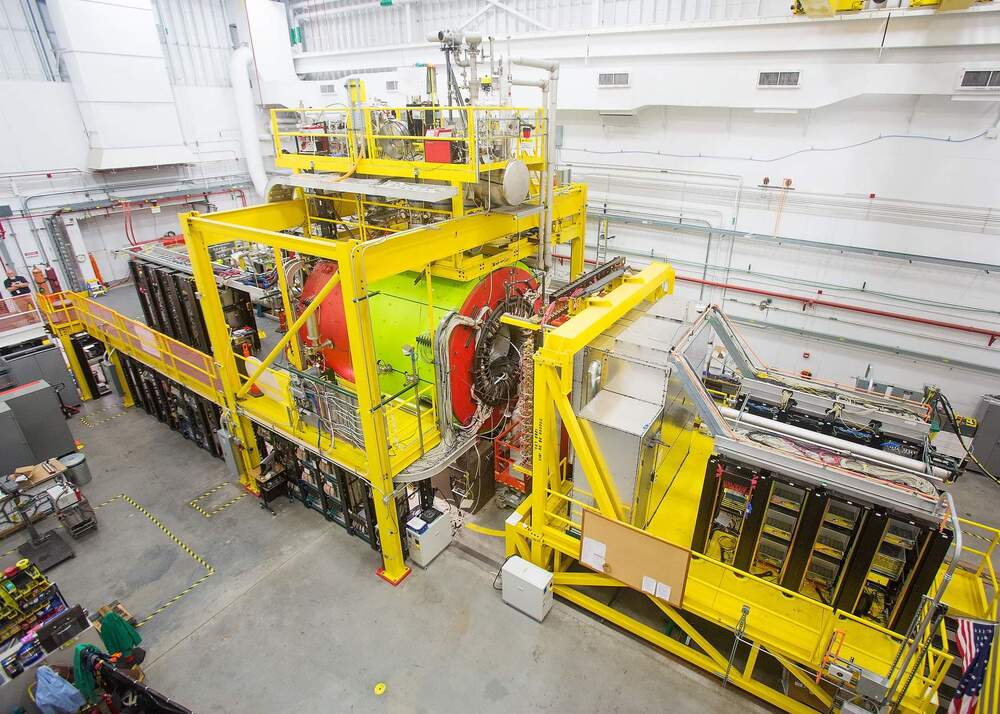
Now, #AI and #MachineLearning systems have proven that they can keep up with the torrent by processing raw experimental data in real-time. https://www.jlab.org/news/stories/trial-run-smart-streaming-readouts
Dr. Ben Goertzel, a self-described Cosmist and Singularitarian, is one of the world’s leading researchers in artificial general intelligence (AGI), natural language processing, cognitive science, data mining, machine learning, computational finance, bioinformatics, and virtual worlds and gaming He has published a dozen scientific books, 100+ technical papers, and numerous journalistic articles.

DeepMind has created an AI capable of writing code to solve arbitrary problems posed to it, as proven by participating in a coding challenge and placing — well, somewhere in the middle. It won’t be taking any software engineers’ jobs just yet, but it’s promising and may help automate basic tasks.
The team at DeepMind, a subsidiary of Alphabet, is aiming to create intelligence in as many forms as it can, and of course these days the task to which many of our great minds are bent is coding. Code is a fusion of language, logic and problem-solving that is both a natural fit for a computer’s capabilities and a tough one to crack.
Of course it isn’t the first to attempt something like this: OpenAI has its own Codex natural-language coding project, and it powers both GitHub Copilot and a test from Microsoft to let GPT-3 finish your lines.