A new technique in quantum storage that operates at room temperature could pave the way for a quantum internet.

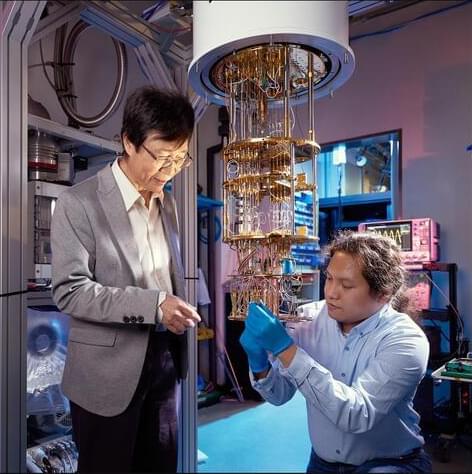
Academia Sinica has achieved a significant milestone in the field of computing with the successful development of a 5-bit superconducting quantum computer in Taiwan, marking a notable advancement in quantum technology. This accomplishment positions Taiwan as a key contributor to quantum computing research and development on the global stage.
In an interview with EE Times, Chii-Dong Chen, the principal investigator of Academia Sinica’s research team, emphasized the pivotal role of international collaboration in advancing Taiwan’s quantum technology research and development agenda.
Under the leadership of Chii-Dong Chen and with support from the National Science and Technology Council, Academia Sinica has demonstrated exceptional proficiency in pushing the boundaries of quantum computing technology. Through partnerships with various international teams, Taiwan has established academic collaborations to facilitate the exchange of knowledge and best practices, as well as provide access to resources, expertise and funding opportunities essential for driving innovation in quantum technology.
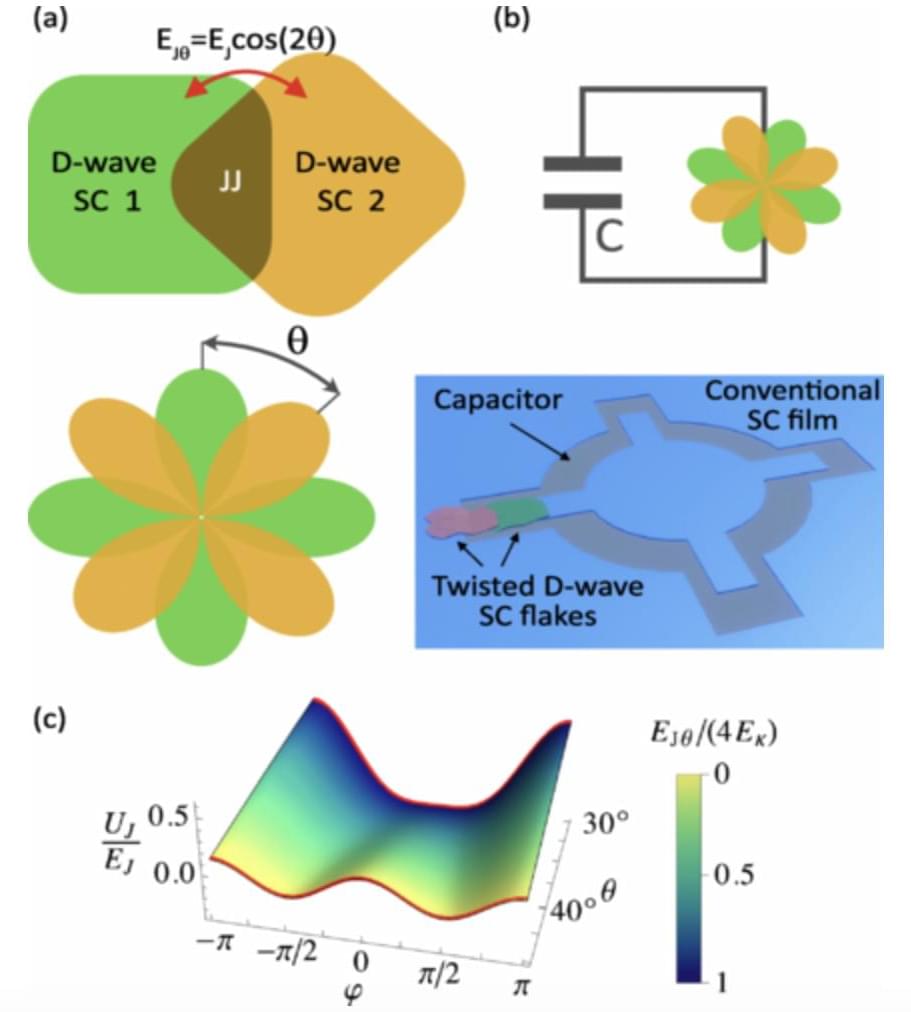

A new fusion of materials, each with special electrical properties, has all the components required for a unique type of superconductivity that could provide the basis for more robust quantum computing. The new combination of materials, created by a team led by researchers at Penn State, could also provide a platform to explore physical behaviors similar to those of mysterious, theoretical particles known as chiral Majoranas, which could be another promising component for quantum computing.
The new study was recently published in the journal Science. The work describes how the researchers combined the two magnetic materials in what they called a critical step toward realizing the emergent interfacial superconductivity, which they are currently working toward.

“Our task,” Fedorov wrote, “is to make nature, the blind force of nature, into an instrument of universal resuscitation and to become a union of immortal beings.”
Fedorov’s writing never turned mainstream, but it did spawn a short-lived, visionary philosophical movement known as Cosmism. Materialized during the Industrial Revolution — a time of unprecedented societal change — the movement generally sought to redefine mankind’s relationship with technology and progress, with the ultimate goal of regulating the forces of nature so that humanity could achieve unity and immortality. The movement offered a more spiritual alternative to both futurism and communism.
Although the latter annihilated Cosmism before it had a chance to mature, its maxims have acquired new relevancy in the age of Big Tech. The following interview with Boris Groys, a distinguished professor of Russian and Slavic studies at New York University and editor of the new book Russian Cosmism, reveals why.




In an experiment reported in the journal Nature, physicists have achieved a remarkable feat by creating the world’s first quantum holographic wormhole. The experiment delves into the profound connection between quantum information and space-time, challenging traditional theories and shedding light on the complex relationship between quantum mechanics and general relativity.
The team, led by Maria Spiropulu from the California Institute of Technology, utilized Google’s quantum computer, Sycamore, to implement the groundbreaking “wormhole teleportation protocol.” This quantum gravity experiment on a chip surpassed competitors using IBM and Quantinuum’s quantum computers, marking a significant leap in the exploration of quantum phenomena.
The holographic wormhole emerged as a hologram from manipulated quantum bits, or “qubits,” stored in minute superconducting circuits. This achievement brings us closer to realizing a tunnel, theorized by Albert Einstein and Nathan Rosen in 1935, that traverses an extra dimension of space. The team successfully transmitted information through this quantum tunnel, further validating the experiment’s success.