Toggle light / dark theme

Historic Breakthrough in Quantum Physics — True Form of Electrons Finally Revealed

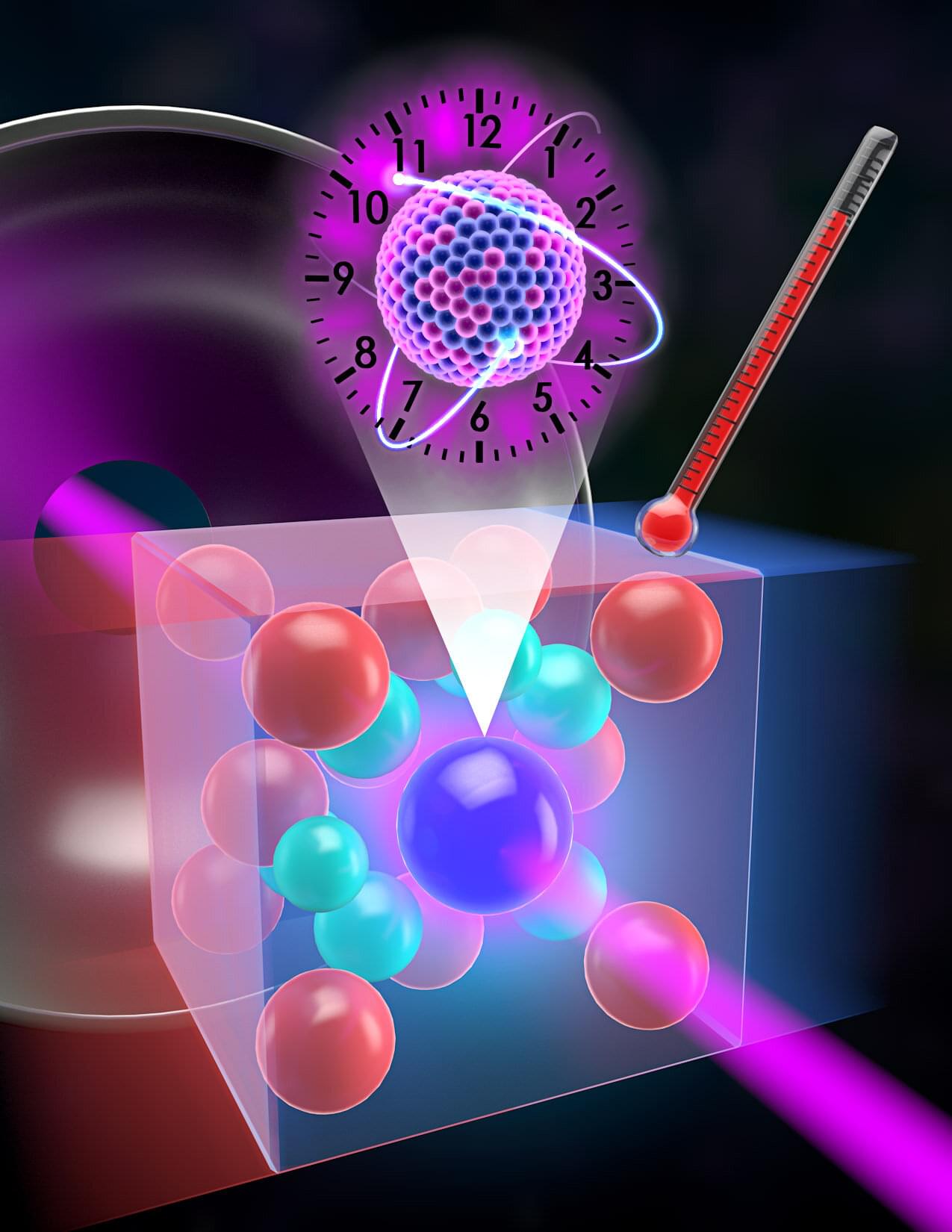
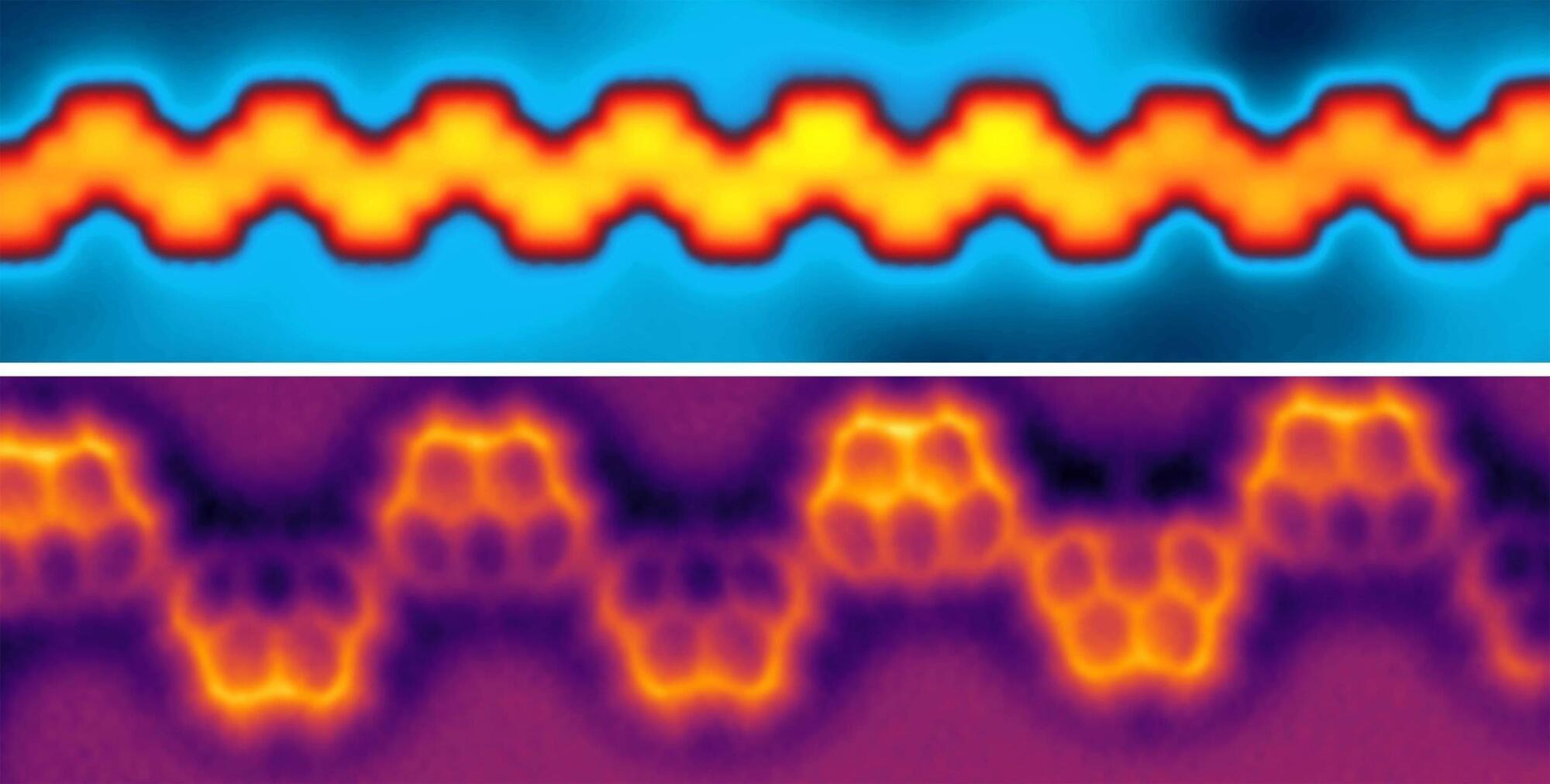
For the first time ever, scientists have managed to snap a picture of an electron’s shape while it moves through a solid. While it doesn’t sound remotely impressive for the average Joe, this discovery gives us a whole new way to look at electrons.

This photographic achievement could lead to big changes in things like quantum computers, futuristic electronics, and maybe even gadgets we haven’t imagined yet. The research was led by physicist Riccardo Comin, a professor at MIT, along with a team of collaborators from various institutions.

“We’ve essentially created a blueprint for uncovering completely new insights that were out of reach before,” explains Comin. His colleague and co-author, Mingu Kang, carried out much of the work at MIT before continuing his research at Cornell University.

Scientists create a quantum register with 13,000 nuclear spins

Quantum networks require quantum nodes that are built using quantum dots.


However, a new study impressively solves these challenges. The study authors successfully used 13,000 nuclear spins in a gallium arsenide (GaAs) quantum dot system to create a scalable quantum register.

Quantum networks require quantum nodes that are built using quantum dots — tiny particles, much smaller than a human hair, which can trap and control electrons, and store quantum information.

Quantum dots are valued for their ability to emit single photons because single-photon sources are key requirements for secure quantum communication and quantum computing applications.

Why even physicists still don’t understand quantum theory 100 years on

Everyone has their favourite example of a trick that reliably gets a certain job done, even if they don’t really understand why. Back in the day, it might have been slapping the top of your television set when the picture went fuzzy. Today, it might be turning your computer off and on again.

Quantum mechanics — the most successful and important theory in modern physics — is like that. It works wonderfully, explaining things from lasers and chemistry to the Higgs boson and the stability of matter. But physicists don’t know why. Or at least, if some of us think we know why, most others don’t agree.

Quantum Experiment Reveals Light Existing in Dozens of Dimensions

A paradox at the heart of quantum physics has been tested in an extraordinary fashion, pushing the boundaries of human intuition beyond breaking point by measuring a pulse of light in 37 dimensions.

Led by scientists from the University of Science and Technology of China, a team of researchers developed a method of testing a type of Greenberger-Horne-Zeilinger (GHZ) paradox according to strict criteria using a fiber-based photonic processor.

Their findings clarify how quantum weirdness operates on a fundamental level, potentially informing future applications in quantum technology. Not to mention reaffirming just how useless our brains are at understanding the operations manual for our Universe’s engine.

Electrons Frozen Yet Free: A Quantum Breakthrough in Graphene

Graphene is an allotrope of carbon in the form of a single layer of atoms in a two-dimensional hexagonal lattice in which one atom forms each vertex. It is the basic structural element of other allotropes of carbon, including graphite, charcoal, carbon nanotubes, and fullerenes. In proportion to its thickness, it is about 100 times stronger than the strongest steel.

Rare earth quantum information

In our group we are researching the new materials and protocols needed for quantum communication, quantum computation and quantum sensing. The systems we use are rare earth ion crystals as they are a particularly promising candidates for building quantum information devices due to their excellent quantum coherence properties. This is crucial requirement to avoid the loss of quantum information through interactions with the local environment.

In our research we combine fundamental knowledge of the materials with the development of new quantum information protocols and device fabrication capabilities. This unique skillset has enabled us to achieve several key milestones in the field of quantum information processing, for example.


Research of the laser physics centre.

The Torus of Perception

What do eyes, quantum collapse, and photon emission have in common?

While experimenting with a simple particle simulation, an unexpected phenomenon emerged that bridges multiple realms of physics and perception.

The simulation, designed to model particles moving in toroidal orbits while attracting each other, spontaneously developed a striking pattern: a perfectly centered emission of particles perpendicular to the toroid’s plane, resembling both an eye and a quantum emission event.

New startup wants to build a conscious quantum computer

Check out my own course, an introduction to quantum mechanics on Brilliant! First 30 days are free and 20% off the annual premium subscription when you use our link ➜ https://brilliant.org/sabine.

A new startup in Canada wants to build the first “conscious” artificial intelligence using quantum computing. What’s their definition of consciousness? Well, it’s based on Roger Penrose’s ideas about consciousness, ORCH-OR. I find this rather confusing because Penrose thinks that consciousness is not computable, so how are we now going to compute it?

This video comes with a quiz which you can take here: https://quizwithit.com/start_thequiz/.… Check out my new quiz app ➜ http://quizwithit.com/ 💌 Support me on Donorbox ➜ https://donorbox.org/swtg 📝 Transcripts and written news on Substack ➜ https://sciencewtg.substack.com/ 👉 Transcript with links to references on Patreon ➜ / sabine 📩 Free weekly science newsletter ➜ https://sabinehossenfelder.com/newsle… 👂 Audio only podcast ➜ https://open.spotify.com/show/0MkNfXl… 🔗 Join this channel to get access to perks ➜ / @sabinehossenfelder 🖼️ On instagram ➜ / sciencewtg #science #sciencenews #quantum #ai.

🤓 Check out my new quiz app ➜ http://quizwithit.com/
💌 Support me on Donorbox ➜ https://donorbox.org/swtg.
📝 Transcripts and written news on Substack ➜ https://sciencewtg.substack.com/
👉 Transcript with links to references on Patreon ➜ / sabine.
📩 Free weekly science newsletter ➜ https://sabinehossenfelder.com/newsle
👂 Audio only podcast ➜ https://open.spotify.com/show/0MkNfXl
🔗 Join this channel to get access to perks ➜
/ @sabinehossenfelder.
🖼️ On instagram ➜ / sciencewtg.

#science #sciencenews #quantum #ai

Human Brain vs. Artificial Intelligence: Reality and Prospects

The idea of creating machines that can think and act like humans is smoothly transforming from fiction to reality. Humanoid robots, digital humans, ChatGPT, and unmanned cars — today there are many applications driven by artificial intelligence that surpass humans in speed, accuracy, efficiency and tirelessness. But only in narrow areas so far.
And yet, this gives us hope to see a real miracle in the near future — artificial intelligence equal or superior to human intelligence in all parameters!
Can AI compare with us? Surpass us? Replace us? Deceive us and pursue its own goals? Today we will tell you how a miracle of nature such as the human brain differs from the main technology of the 21st century — artificial intelligence, and what prospects we have with AI in the future!

The journey of artificial intelligence (AI) is a captivating saga, dating back to 1956 when John McCarthy coined the term at a Dartmouth conference. Through the ensuing decades, AI witnessed three significant booms. Between the 1950s-70s, pioneers introduced groundbreaking neural perception networks and chat software. Though they foresaw AI surpassing human capabilities in a decade, this dream remained unfulfilled. By the 1980s, the second wave took shape, propelled by new machine learning techniques and neural networks, which promised innovations like speech recognition. Yet, many of these promises fell short.

But the tide turned in 2006. Deep learning emerged, and by 2016, AI systems like AlphaGo were defeating world champions. The third boom began, reinforced by large language models like ChatGPT, igniting discussions about amalgamating AI with humanoid robots. Discover more about this fascinating trend in our linked issue.

Our progress in cognitive psychology, neuroscience, quantum physics, and brain research has heavily influenced AI’s trajectory. Especially significant is our understanding of the human brain, pushing the boundaries of neural network development. Can AI truly emulate human cognition?

To understand this, we must comprehend neural networks, computer algorithms mimicking human brain functions. These virtual networks comprise \.

/* */